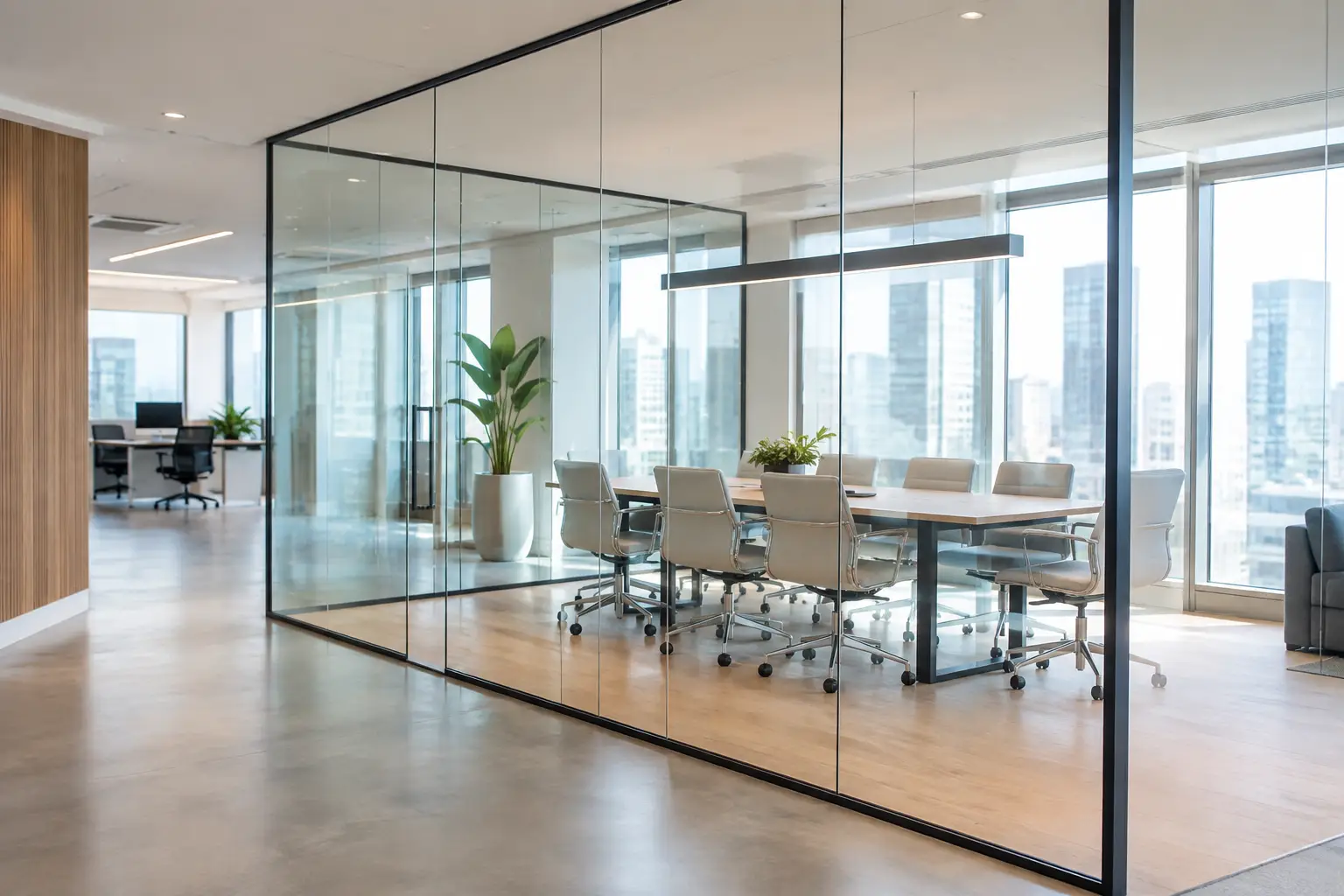
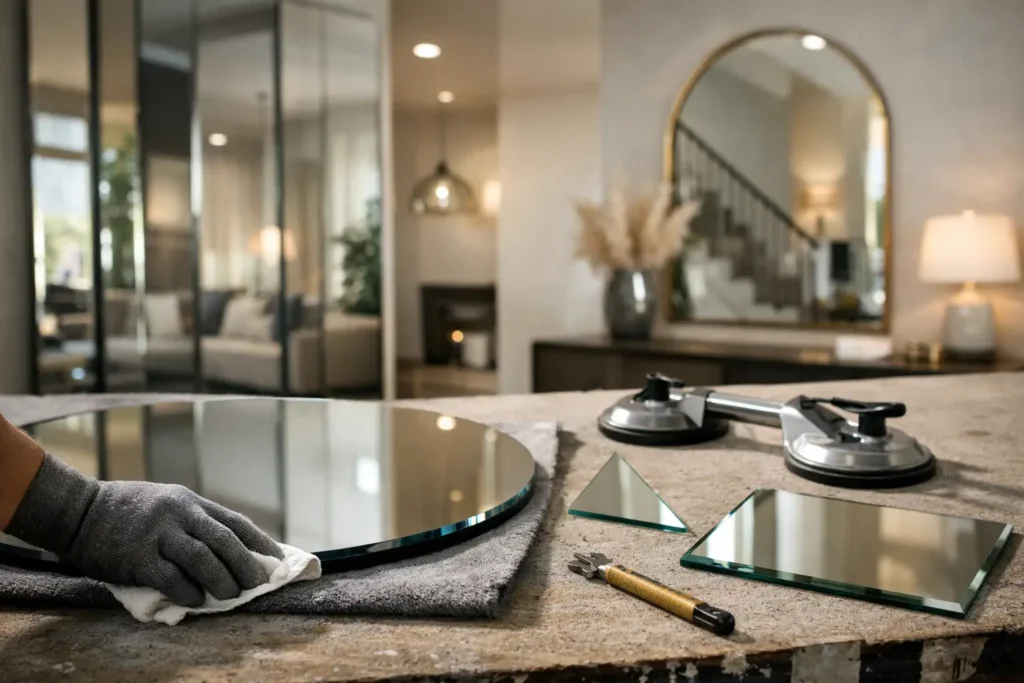
A mirror can occupy an entire wall and still feel quiet. Or it can become the one element that makes a bath, entry, or dressing room feel incomplete when it is undersized, poorly aligned, or visibly distorted. Custom mirror fabrication for home is not simply a matter of ordering glass to a measurement. It is precision mirror work that must account for light, sightlines, wall conditions, edge details, safety, and the architecture around it.
For high-end homes across coastal Southern California, that distinction is often visible before anyone knows why. A properly fabricated mirror appears intentional: its perimeter is consistent, its reflection is clear, and its placement supports the proportions of the room rather than competing with them. The best work begins well before installation day.
Where Custom Mirror Fabrication for Home Makes the Difference
Stock mirrors solve a limited set of problems. They are useful where dimensions are conventional, the wall is flat, and the mirror is intended to function as a simple accessory. Custom fabrication becomes the appropriate approach when a mirror must meet stone, millwork, tile, lighting, or an unusual ceiling line with controlled precision.
The primary bath is often the most demanding location. Twin vanities may call for matching mirrors cut around sconces, wall-mounted faucets, medicine cabinets, or decorative stone returns. A full-height mirror in a dressing room may need to align with cabinet reveals and avoid breaking the visual rhythm of a carefully designed closet system. In an entry or living area, a large decorative mirror can be shaped to reflect a view, expand a narrow passage, or bring daylight farther into the home.
There is also a practical reason to specify custom work. Existing homes are rarely perfectly square. Walls can bow, stone may vary slightly in thickness, and tile lines may not land where a preliminary drawing suggests. Field verification allows the glass to be fabricated for the conditions that actually exist, rather than asking the finished architecture to accommodate a pre-sized product.
Start With What the Mirror Must Do
A mirror should be specified according to its role in the room. That sounds obvious, but it is where many design decisions become clearer.
A vanity mirror needs dependable reflection, appropriate height, and enough width for the people using it. A full-length dressing mirror requires comfortable viewing distance and careful attention to the floor and adjacent doors. A large living-room mirror may be less about grooming than atmosphere, daylight, and the view it captures. Its position deserves the same consideration as artwork.
Before selecting edges or shapes, consider what will sit opposite the glass. A mirror facing an ocean view can introduce extraordinary depth into an interior. One facing an unfinished side yard, a cluttered storage wall, or an aggressive downlight can magnify the wrong feature. Reflection is part of the design, not an afterthought.
Lighting matters just as much. Side sconces generally provide more useful facial lighting than a single fixture above the mirror, while backlit mirror assemblies can create a more sculptural effect. The chosen mirror dimensions should be coordinated with fixture spacing, outlet locations, switch placement, and cabinetry. Leaving these decisions until late in construction often produces unnecessary compromises.
Glass Selection Is More Than Thickness
Mirror glass is available in different thicknesses, tones, and configurations, each with a place in residential work. For large wall mirrors, thickness is a structural and visual consideration. A heavier mirror can offer greater rigidity and a more substantial feel, but it also increases handling demands and requires an installation method suited to the substrate. Smaller decorative applications may allow a thinner material, depending on the design and mounting conditions.
Standard mirror glass has a subtle green cast, most noticeable at exposed edges and against very white stone or lacquered millwork. Low-iron mirror reduces that color shift and is often worth considering in refined bathrooms, contemporary interiors, and projects with pale natural stone. It is not automatically necessary in every room. A warmer interior palette, antiqued finish, or fully concealed edge may make standard mirror the sensible selection.
Antiqued, smoked, bronze, gray, and patterned mirrors introduce another design language. They can soften reflection, add depth to a bar or powder room, or complement darker woods and metal finishes. The trade-off is functional clarity. A decorative antique mirror may be beautiful behind shelving or as a feature wall, but it is usually not the right choice for a primary grooming mirror.
For areas subject to moisture or human impact, the assembly requires additional attention. Safety backing, proper edge finishing, and installation details should be evaluated according to the mirror’s size, location, and applicable code requirements. A qualified glazing contractor can distinguish between a striking concept and a detail that will perform reliably in a wet, active household.
Edgework and Shape Set the Level of Finish
The edge is where custom fabrication becomes immediately apparent. A polished edge gives exposed glass a clean, finished line and is common for contemporary vanities, exercise rooms, and full-height mirrors. A beveled edge introduces a traditional dimensional highlight. Seamed edges are generally intended for locations where the edge will be concealed, such as a mirror set into millwork or behind a frame.
Shapes should be selected with equal restraint. Arched mirrors can echo doorways and soften rectilinear cabinetry. Radius corners may repeat the profile of a freestanding tub or curved hardware. More complex silhouettes can become a defining interior feature, but they demand accurate templates and clear coordination with surrounding finishes.
For oversized or unusually shaped mirrors, seams are sometimes unavoidable. That does not mean they should be casual. Their location should be planned around cabinet divisions, architectural reveals, shelves, or other natural break points. A well-considered seam can recede into the composition. A seam placed through the middle of a reflected face or prominent fixture will remain noticeable every day.
Installation Determines Whether the Work Stays Beautiful
Even exceptional mirror glass can fail visually when installation is rushed. Flatness is critical. If the wall is uneven or an adhesive application is inconsistent, the reflected image may ripple or distort. Large panels also need correct support during curing and a mounting approach appropriate to the mirror’s weight and the wall construction.
Mechanical clips, decorative rosettes, concealed channels, adhesives, or a combination of methods may be used depending on the design. Each has aesthetic and service implications. Exposed clips can suit a tailored, architectural look and allow future removal, while a fully adhered mirror creates a cleaner field but requires careful material selection and substrate preparation. Mirror mastic must be compatible with the mirror backing; the wrong adhesive can damage it over time.
Bathrooms and coastal properties present additional considerations. Moisture can reach mirror edges through gaps in sealant, poorly detailed backsplashes, or inadequate ventilation. In coastal Orange County, salt air and persistent humidity can add to the challenge, particularly near operable windows and exterior-adjacent walls. Proper clearances, edge protection where appropriate, and disciplined installation practices help preserve the reflective backing.
This is also why final field measuring should happen after critical finishes are complete. Tile, stone, cabinetry, and paint-ready walls all affect the finished dimensions. At Capistrano Valley Glass & Mirror, the process is treated as architectural glazing work, not a last-minute accessory installation.
Coordinate Mirrors Early in a Remodel or New Build
The most successful mirror installations are discussed during design development, then measured again near completion. Early coordination gives the project team time to resolve concealed blocking, electrical locations, wall-mounted fixtures, and transitions at stone or millwork. It also lets the designer decide whether the mirror should stop short of the countertop, overlap a backsplash detail, or extend to the ceiling.
In a new build, consider mirrors alongside the vanity design rather than after it is installed. In a renovation, inspect the existing wall before assuming it can accept a large panel. Plaster conditions, old adhesive, recessed niches, and hidden plumbing all influence the installation plan.
A physical showroom can be particularly helpful for comparing edge treatments, glass tones, and decorative mirror samples against real stone, metal, and cabinetry finishes. Photographs are useful, but they do not always reveal the subtle color at an exposed edge or the difference between a clear mirror and a low-iron selection under actual lighting.
A Better Standard for Everyday Reflection
The finest custom mirror work does not call attention to fabrication tolerances, mounting hardware, or compromised alignment. It gives a room more light, more scale, and a stronger sense of completion while remaining dependable through daily use.
When planning a mirror for a bath, dressing room, entry, or feature wall, bring the finish samples, fixture locations, and intended sightlines into the conversation early. A mirror may be one of the last surfaces installed, but when it is designed with the architecture from the start, it can make the entire room feel resolved.