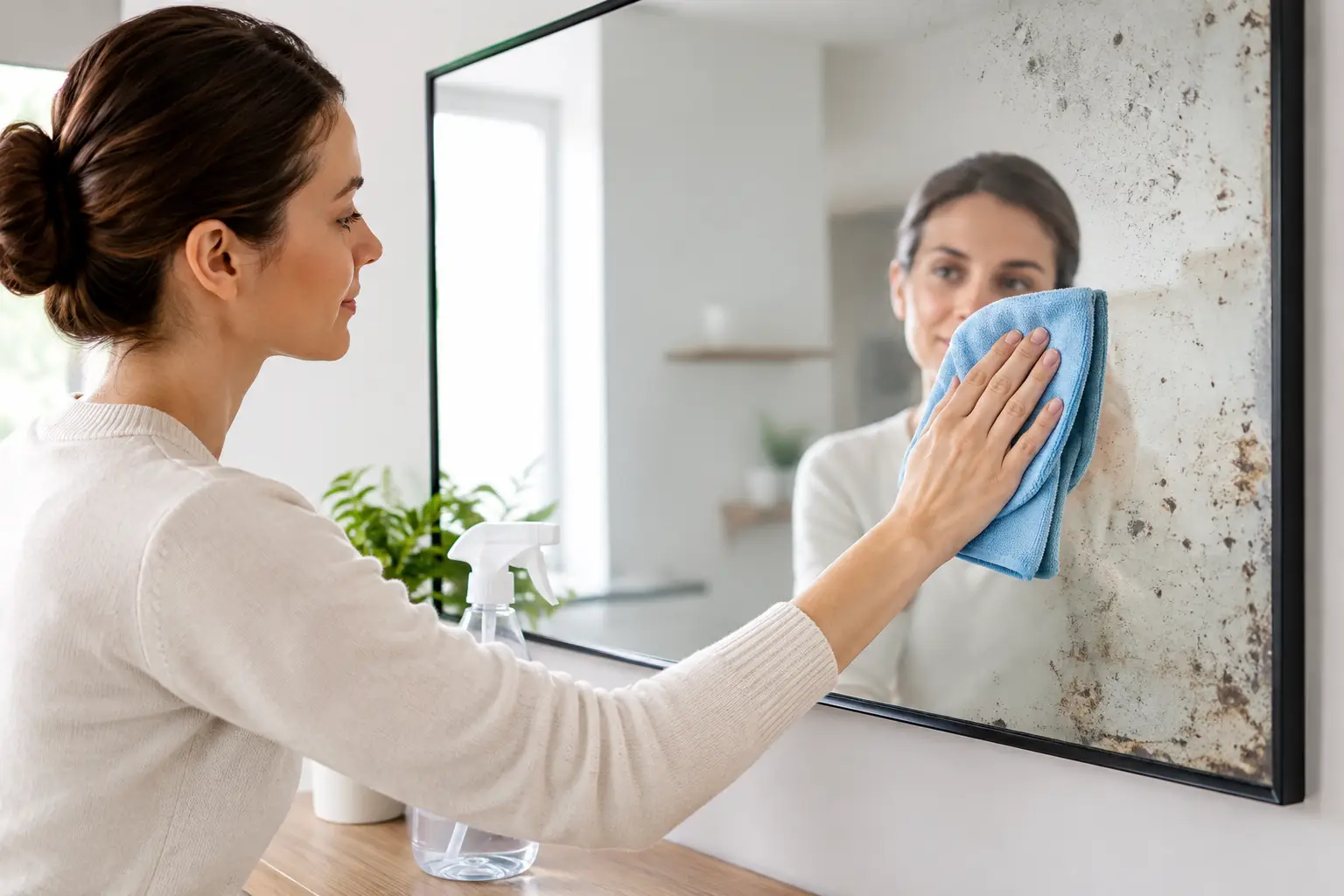
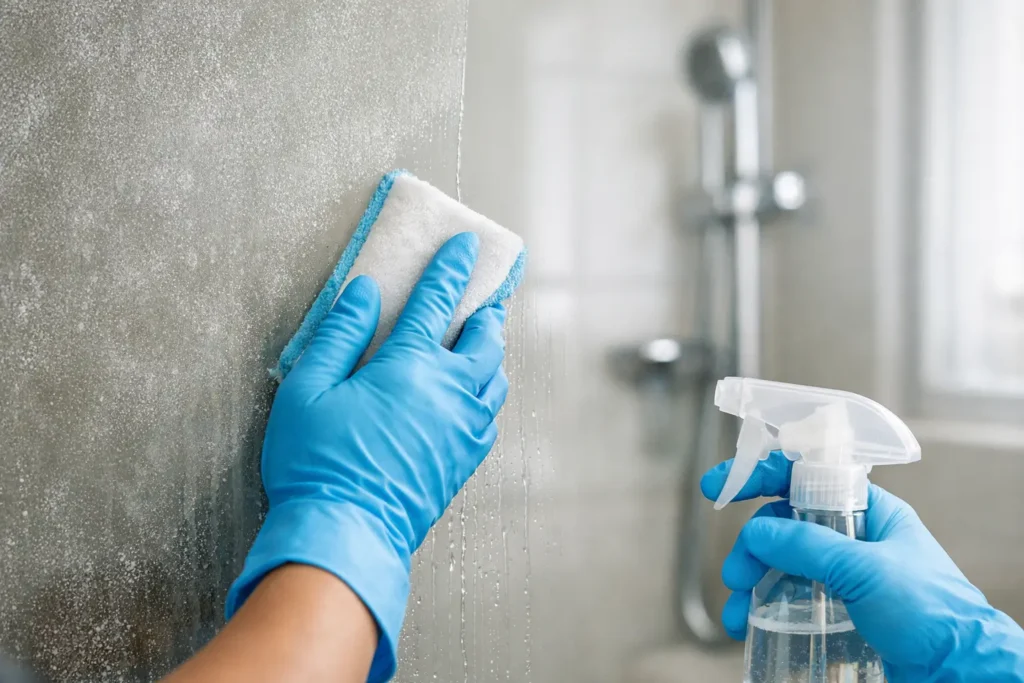
A frameless shower enclosure can be impeccably designed, fitted with premium hardware, and still lose its clarity at the points where water dries on the glass. White spotting is often blamed on soap scum, but the more difficult problem is mineral damage. Knowing how to remove hard water etching from glass begins with recognizing whether the marks are sitting on the surface or have already altered it.
That distinction matters. Deposits can often be cleaned. True etching requires a more deliberate restoration process, and in advanced cases, replacement may be the only way to return the glass to the standard the space deserves.
What Hard Water Does to Architectural Glass
Hard water contains dissolved minerals, most commonly calcium and magnesium. When droplets evaporate on a shower door, pool fence, skylight, or exterior window, those minerals remain behind. At first, the result is a chalky film or distinct white rings that can usually be felt on the surface.
Left in place, especially in coastal Southern California environments where sun, heat, salt air, and frequent irrigation can compound exposure, mineral deposits can bond to the glass. The deposits may create a rough, cloudy appearance. Over time, they can contribute to microscopic surface damage commonly described as hard water etching.
Glass is not perfectly flat at a microscopic level. Its surface contains tiny peaks and valleys that collect water and contaminants. Once minerals and corrosion have affected that surface, ordinary glass cleaner will not restore optical clarity. This is why aggressive cleaning often produces disappointing results – and why a product that removes spots from one shower door may have no effect on another.
Is It Mineral Buildup or Actual Etching?
The practical test is simple: clean a small, inconspicuous area with a nonabrasive mineral-deposit remover formulated for glass, following the manufacturer’s directions. If the clarity returns, the issue was largely surface buildup. If the area remains hazy, gray, or visibly spotted after deposits have been removed, the glass may be etched or chemically corroded.
A second clue is texture. Mineral buildup can feel raised, gritty, or crusty. Etching generally feels smoother because the damage is within the surface itself, even though it may look like a layer sitting on top of the glass.
The distinction is not always obvious on premium low-iron glass, large shower panels, or exterior glazing viewed in strong daylight. Reflections can conceal damage, while backlighting can make it appear more severe. A professional assessment is worthwhile before deciding that an expensive custom panel needs replacement.
Start With the Least Aggressive Cleaning Method
For new or moderate mineral deposits, begin conservatively. Remove loose debris with clean water, then use a pH-appropriate, nonabrasive cleaner intended specifically for mineral deposits on glass. Apply it to a cool surface, allow only the recommended dwell time, and work in a small area with a soft microfiber towel or a non-scratch white nylon pad.
Rinse thoroughly and dry the glass completely with a clean microfiber towel or squeegee. Drying is not cosmetic. It prevents the dissolved minerals from settling back onto the surface as the water evaporates.
White vinegar is frequently suggested as a household remedy because its acidity can loosen light mineral film. It can be reasonable for a small test area on standard uncoated glass, but it is not a universal solution. It may not address established etching, and its performance varies with the mineral content of the water. Avoid allowing acidic products to sit on metal hardware, natural stone, grout, or adjacent finished surfaces, where they can cause their own damage.
Do not mix cleaners. Combining acids, bleach, ammonia, or other household chemicals can create hazardous fumes and can damage surrounding materials. In a finely finished bathroom, the glass is only one part of the assembly that needs protection.
What Not to Use on Etched Glass
The temptation to scrub harder is understandable, particularly when a shower enclosure is otherwise in excellent condition. It is also where many restoration attempts go wrong. Avoid steel wool, razor blades used dry, scouring powders, green abrasive pads, and unverified polishing compounds. These methods can leave fine scratches, distortion, or uneven sheen that is more visible than the original spotting.
Be cautious with internet advice recommending pumice, toothpaste, or automotive compounds. A material that appears harmless on one type of glass can alter another, especially low-iron, coated, tempered, laminated, curved, or decorative glass. Tempered shower glass and architectural panels deserve methods appropriate to their fabrication and installation.
How to Remove Hard Water Etching From Glass Professionally
Once deposits have progressed into etching, cleaning alone is not a restoration strategy. Professional glass restoration typically involves evaluating the glass type, extent of corrosion, surrounding finishes, panel size, and viewing conditions before any work begins.
The restoration process may use specialized surface-treatment and polishing methods to reduce mineral damage and improve clarity. The objective is not simply to make the panel look better while wet. It is to restore a more even surface and a consistent appearance under normal daylight, interior lighting, and reflected views.
Results depend on depth of damage. Light to moderate etching can often be substantially improved, allowing owners to preserve a custom enclosure, glass railing, skylight, or exterior panel without the disruption and cost of replacement. Severe corrosion may be too deep to correct without creating optical distortion or removing excessive material. In that circumstance, replacement is the more exacting choice.
For high-value architectural glass, restoration should also account for the system around the panel. Hardware alignment, gaskets, silicone joints, drainage paths, edge conditions, and adjacent stone or tile all affect the work. A qualified specialty glazing contractor approaches the glass as part of a finished architectural assembly, not as an isolated cleaning task.
Protect the Glass After It Has Been Restored
Restored glass remains vulnerable if water continues to dry on it. That is why a protective treatment is often the most valuable part of the process. Professionally applied protective coatings can make glass more water-repellent, reduce the adhesion of minerals and soap residue, and simplify routine maintenance.
Capistrano Valley Glass & Mirror provides specialized restoration using certified Diamon-Fusion field-application technology, pairing surface restoration with a protective coating designed to help defend against future staining and corrosion. For a shower enclosure, pool fence, solar panel, skylight, or exterior glazing, that approach can be a practical alternative to replacing glass that remains structurally sound.
A coating is not permission to ignore maintenance. Its benefit is that water and residue release more readily from the surface. The glass will still perform best when it is rinsed and dried consistently, particularly in areas exposed to hard water or coastal conditions.
Prevent New Etching in Showers, Pool Areas, and Exterior Glass
The maintenance routine should fit the installation. A frequently used shower benefits from a daily squeegee and a soft towel for the lower portion of the panel, where water pools and mineral spotting begins. Use a mild cleaner regularly rather than waiting until deposits become visible.
For pool fencing, exterior windows, and railings, irrigation is often the hidden cause. Sprinklers that strike glass leave repeated mineral deposits in the same area. Redirecting the spray, checking for overspray, and scheduling periodic professional washing can protect the clarity of expansive panels and ocean-view glazing.
Four habits make the largest difference over time:
- Remove standing water from shower glass after use.
- Keep irrigation spray and runoff away from exterior glass.
- Use soft microfiber towels and glass-safe cleaning products.
- Address new spotting promptly, before it becomes bonded mineral buildup.
Water softening can reduce mineral content at the source, but it is not always practical or necessary for every property. In homes with particularly hard water, a protective coating and disciplined maintenance may offer the better balance of performance and cost.
When Replacement Is the Better Investment
Replacement should be considered when the panel has deep corrosion, visible haze that cannot be restored without distortion, scratches from prior cleaning, failed insulating seals, broken hardware interfaces, or safety concerns. It may also make sense when an older enclosure is due for a broader renovation and the owner wants improved glass thickness, upgraded hardware, or a more refined frameless configuration.
For custom shower doors, curved glass, specialty mirrors, and large exterior panels, replacement is not a commodity decision. Accurate field measurement, proper glass specification, fabrication tolerances, and careful installation determine whether the finished result feels truly architectural. A professional evaluation can clarify whether restoration will meet the visual expectation or whether new glass will provide the more enduring result.
Clear glass is not merely a clean finish. In a well-composed bathroom, terrace, or view-facing room, it is part of the architecture. Treat early mineral spotting with care, and seek restoration advice before routine buildup becomes a permanent distraction from the work the glass was designed to frame.