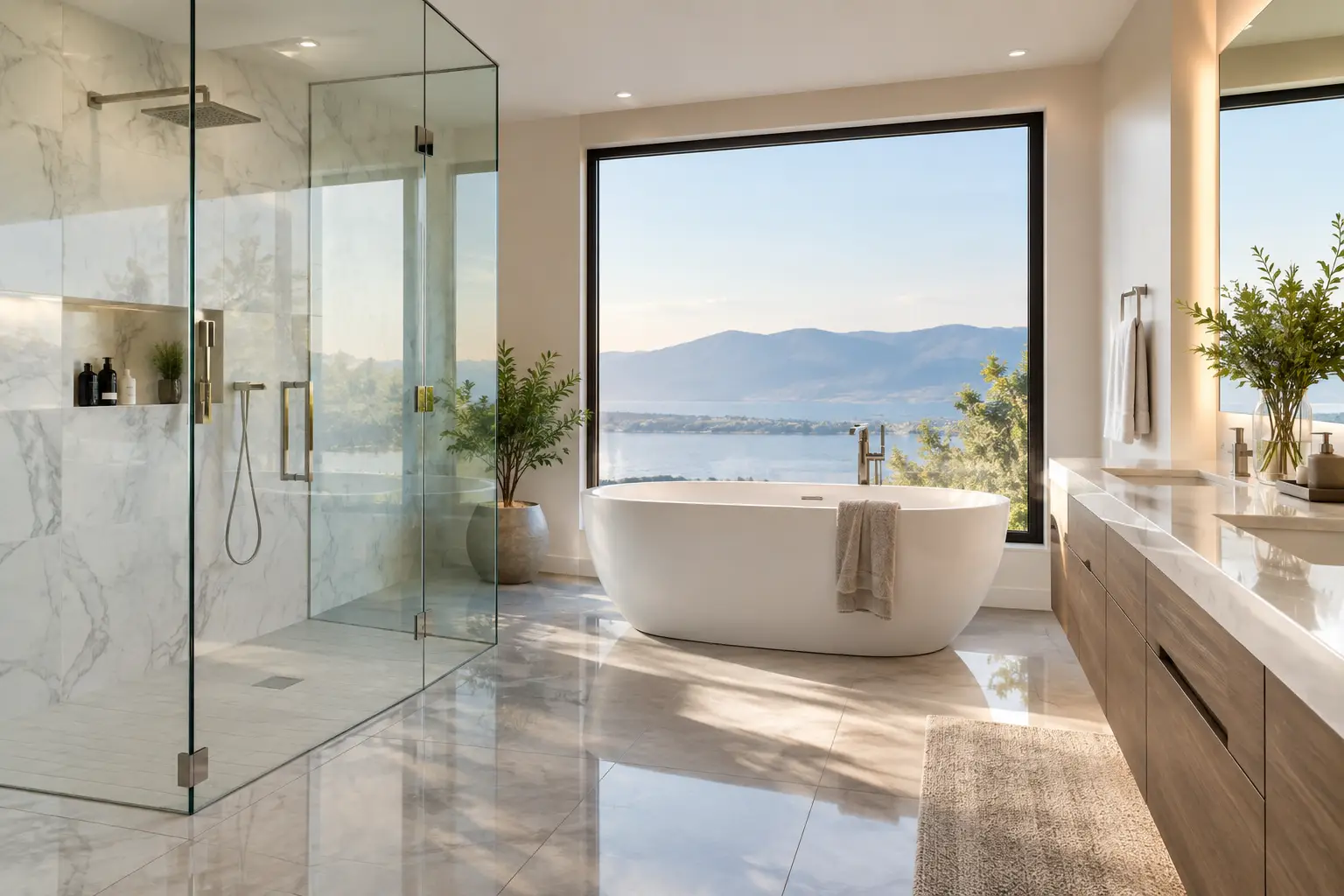
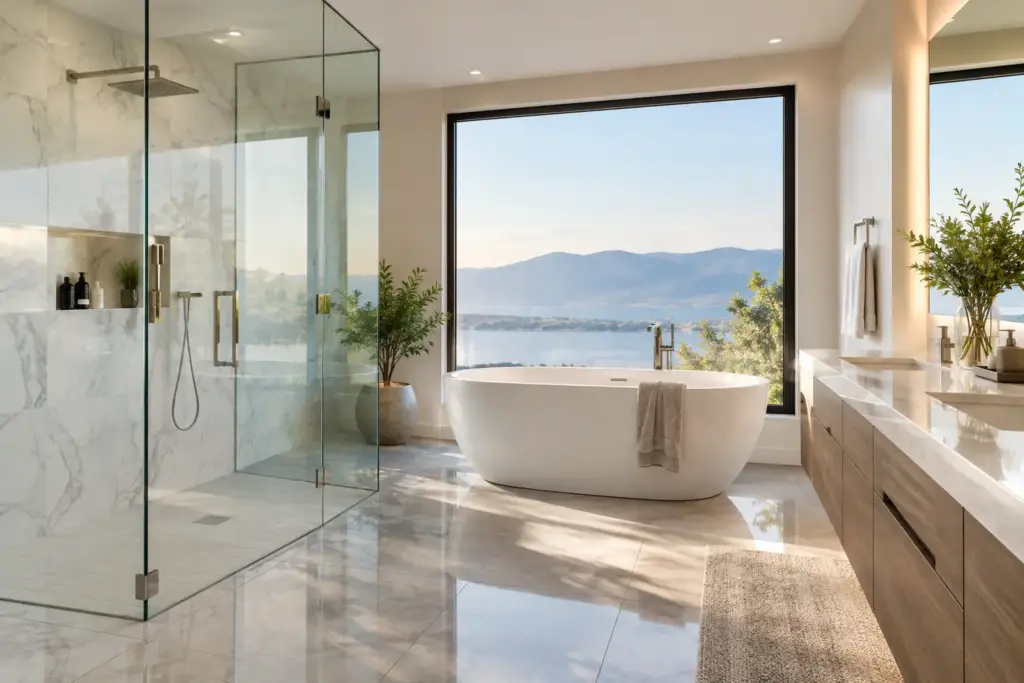
A primary bath can have beautifully selected stone, custom cabinetry, and exceptional plumbing fixtures, then lose its composure at the shower enclosure. Misaligned doors, undersized hardware, visible clips, or glass that clouds after one season of hard-water exposure will draw the eye immediately. This luxury bathroom glazing guide addresses the decisions that make glass feel integral to the architecture rather than added at the end of construction.
For custom homes across coastal Southern California, bathroom glass must do more than look minimal. It has to accommodate movement, water management, daily use, cleaning realities, and exacting sightlines. The most successful installations begin with a complete view of the room: finished floor elevations, stone thickness, ceiling conditions, lighting, ventilation, and who will use the bath.
Start With the Shower as an Architectural Opening
A frameless shower enclosure is often described as simple. In practice, its apparent simplicity is the result of precise measurement, proper glass selection, and carefully resolved attachment points. The enclosure should clarify the room’s proportions, preserve a material view, and contain water without introducing unnecessary framing.
The first decision is whether the shower calls for a door, a fixed panel, or a combination of both. A generous walk-in opening with a fixed panel can be striking and easy to maintain, but it depends on the showerhead location, spray pattern, ceiling height, and room temperature. In an open coastal home, a drafty room or aggressive rain shower may require more enclosure than a rendering suggests.
A hinged door gives better water control and can be tailored to an alcove, corner, or neo-angle condition. It also requires enough clear floor area for the swing, solid backing where hinges will be anchored, and close coordination with a bench, vanity, or freestanding tub. Sliding systems can be appropriate where space is limited, although their tracks and overlapping panels create a different visual language than a true frameless hinged enclosure.
The goal is not always the largest possible expanse of glass. A well-proportioned panel, properly aligned with a stone joint or a ceiling reveal, often feels more luxurious than an oversized enclosure that introduces awkward gaps and difficult cleaning access.
Luxury Bathroom Glazing Guide: Specify the Glass, Not Just the Look
Clear tempered safety glass is the starting point for many premium shower installations, but it is not the only choice. Glass thickness, edgework, low-iron composition, privacy treatment, and decorative detail should be specified according to the design intent and the enclosure’s engineering requirements.
Low-iron glass is especially valuable when the bath uses white marble, pale quartzite, light plaster, or crisp porcelain slabs. Standard clear glass contains iron that can read subtly green at exposed edges and through overlapping layers. The effect may be minor in a small opening, yet it becomes more visible in larger panels or beside cool-toned stone. Low-iron glass delivers a cleaner, more neutral presentation, though it carries a higher material cost.
Thickness is not simply a matter of visual heft. It affects panel weight, hinge capacity, deflection, handle selection, and how an enclosure performs over time. Heavy glass can create a commanding architectural presence, but it also places greater demands on wall backing, floor conditions, and installation tolerances. A qualified glazing contractor should determine the proper glass configuration rather than treating a thicker panel as an automatic upgrade.
For privacy, designers may consider acid-etched glass, patterned glass, or a carefully located obscured band. These choices need to be viewed in person. A pattern that feels refined in a small sample can become visually busy across a full-height panel. Conversely, lightly obscured glass can soften direct views while retaining daylight and the sense of volume that makes a luxury bath feel expansive.
Hardware Is a Structural Detail
In a high-end enclosure, hardware should not be chosen from a finish board alone. Hinges, clamps, channels, headers, and handles carry loads, define the visual rhythm of the glass, and establish the points where precision is most visible.
Wall-mounted hinges can produce a clean, open composition when the wall structure is suitable. Glass-to-glass hinges can reduce the appearance of metal in certain layouts, but they require exact geometry and appropriate adjacent panels. Minimal U-channel creates a restrained, contemporary edge, while exposed clips can make sense when their placement reinforces the design’s linear logic.
Finish selection should be made against the actual plumbing and millwork materials whenever possible. Polished chrome, brushed nickel, satin brass, matte black, and custom finishes each respond differently to natural light, water spotting, and nearby metals. A finish that appears nearly identical under showroom lighting may reveal a noticeable contrast beside a faucet in morning sun.
Hardware also needs a service plan. Door adjustments, gasket replacement, and the occasional alignment correction are normal aspects of a moving glass system. Quality hardware supports that serviceability. The smallest, least visible component is not always the most economical choice if it complicates future maintenance or limits adjustment.
Plan for Stone, Tile, and Waterproofing Before Field Measure
Bathroom glazing is one of the last visible trades on a project, but its requirements begin much earlier. The glass fabricator needs stable, completed surfaces before final measurement. The builder and tile contractor need to know, well before then, where hinges, channels, and clamps will be located.
Hinge locations require proper blocking behind finished walls. Curbs must be level and pitched correctly toward the drain. Large-format slabs should be evaluated for attachment locations before drilling is assumed. A beautiful bookmatched stone wall can be damaged by a poorly coordinated hinge layout, while a shower curb that is even slightly out of level can create uneven glass gaps that no amount of field adjustment can fully disguise.
Waterproofing deserves the same attention. Penetrations through tile and stone must be made deliberately and sealed according to the shower system requirements. In some applications, a channel or clamp arrangement can reduce penetrations. The right approach depends on the waterproofing assembly, substrate, panel size, and visual priorities.
This is where early collaboration matters. Architects, interior designers, tile installers, and glaziers should resolve the shower’s practical details while changes are still inexpensive. Capistrano Valley Glass & Mirror has worked on specialty glazing since 1979, and this level of coordination is what separates a carefully engineered enclosure from a merely installed one.
Mirrors Should Do More Than Reflect
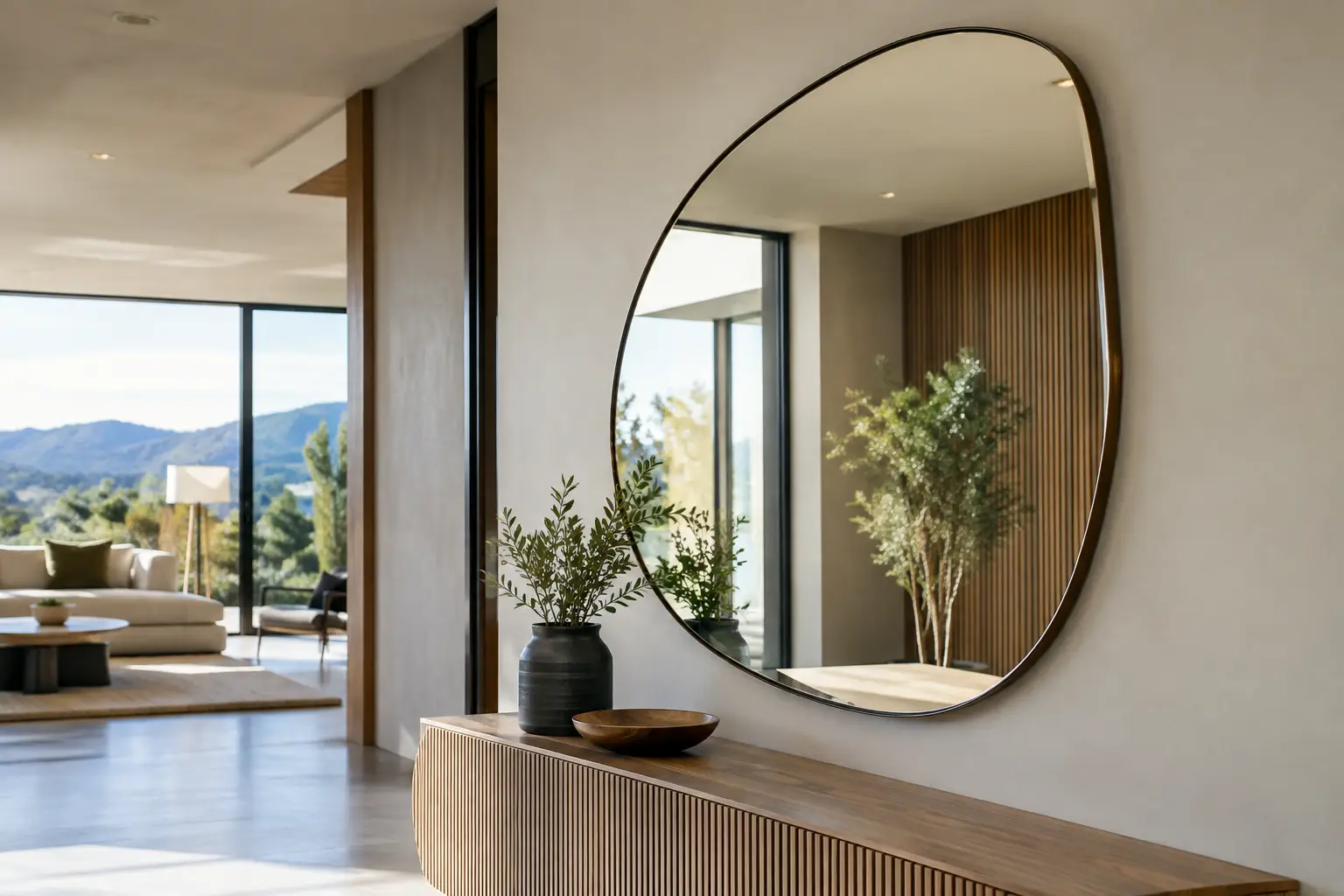
Precision mirror work can materially change how a bathroom reads. A full-height vanity mirror can extend a view to a garden or ocean horizon. A wall-to-wall mirror can add depth to a compact bath. A custom-shaped mirror can provide a softer counterpoint to rectilinear stone and cabinetry.
The specification should account for edge treatment, thickness, mounting method, and surrounding humidity. Polished edges offer a crisp contemporary look. Beveled edges introduce more traditional dimension. Antique or decorative mirror can provide character, though its intentional variation may not suit a room designed around clean, uninterrupted reflection.
Backlit mirrors require coordination with electrical placement and wall depth. The light should be sufficient for grooming without producing a visible hotspot or a harsh perimeter glow. Recessed mirror details can be exceptional, but only when framing, drywall, tile thickness, and ventilation have been planned around the assembly.
In a coastal environment, mirror protection and edge conditions merit close attention. Moisture can compromise mirror backing over time, particularly where an edge is exposed near a wet zone. Proper fabrication and installation help preserve the clarity of the finished surface.
Protect Glass From Day One
Luxury shower glass is still exposed to mineral deposits, soap residue, and airborne salts. The more transparent and minimal the enclosure, the more readily surface damage will be seen. A protective coating should be considered during the specification stage, not only after staining appears.
Diamon-Fusion® treatment creates a protective barrier that helps water sheet away and reduces the adhesion of minerals and grime. It does not eliminate cleaning, and no coating can compensate for poor ventilation or neglect. It can, however, make routine care more manageable and reduce the likelihood that hard-water deposits become permanent etching.
For existing showers, restoration may be a practical alternative to replacement when glass is clouded by mineral buildup or surface damage. The deciding factor is the condition of the glass and the source of the problem. Surface staining can often be addressed; deeper damage, failed seals, or compromised hardware may call for a more comprehensive solution.
Daily care should remain simple: a quick squeegee after use, appropriate nonabrasive cleaners, and adequate ventilation. Avoid harsh pads, aggressive acids, and products that leave heavy residues. The objective is not a demanding maintenance ritual. It is preserving the clarity that justified choosing architectural glass in the first place.
Choose a Glazing Partner Who Can Resolve the Details
A luxury bath is not a place for approximate measurements or generic enclosure packages. Ask whether the contractor fabricates for custom conditions, coordinates with stone and tile trades, understands safety-glass requirements, and can service the installation after completion. Review full-scale hardware and glass samples whenever possible, especially when selecting low-iron glass, decorative finishes, or unusual configurations.
The strongest glazing decisions are usually quiet ones. A door closes cleanly, the shower stays dry, the mirror reflects without distortion, and every glass edge belongs to the room. When those details are resolved with care, the bathroom remains composed long after the project photographs are taken.