A white marble shower, pale oak cabinetry, or an uninterrupted Pacific view can lose some of its intended clarity behind ordinary glass. The difference between low iron versus clear glass is often most apparent after installation, when the green cast of standard glass becomes visible at every exposed edge and across bright, light-colored finishes. For architectural glass specified as a defining material rather than a simple barrier, that distinction deserves careful attention.
Low Iron Versus Clear Glass: The Material Difference
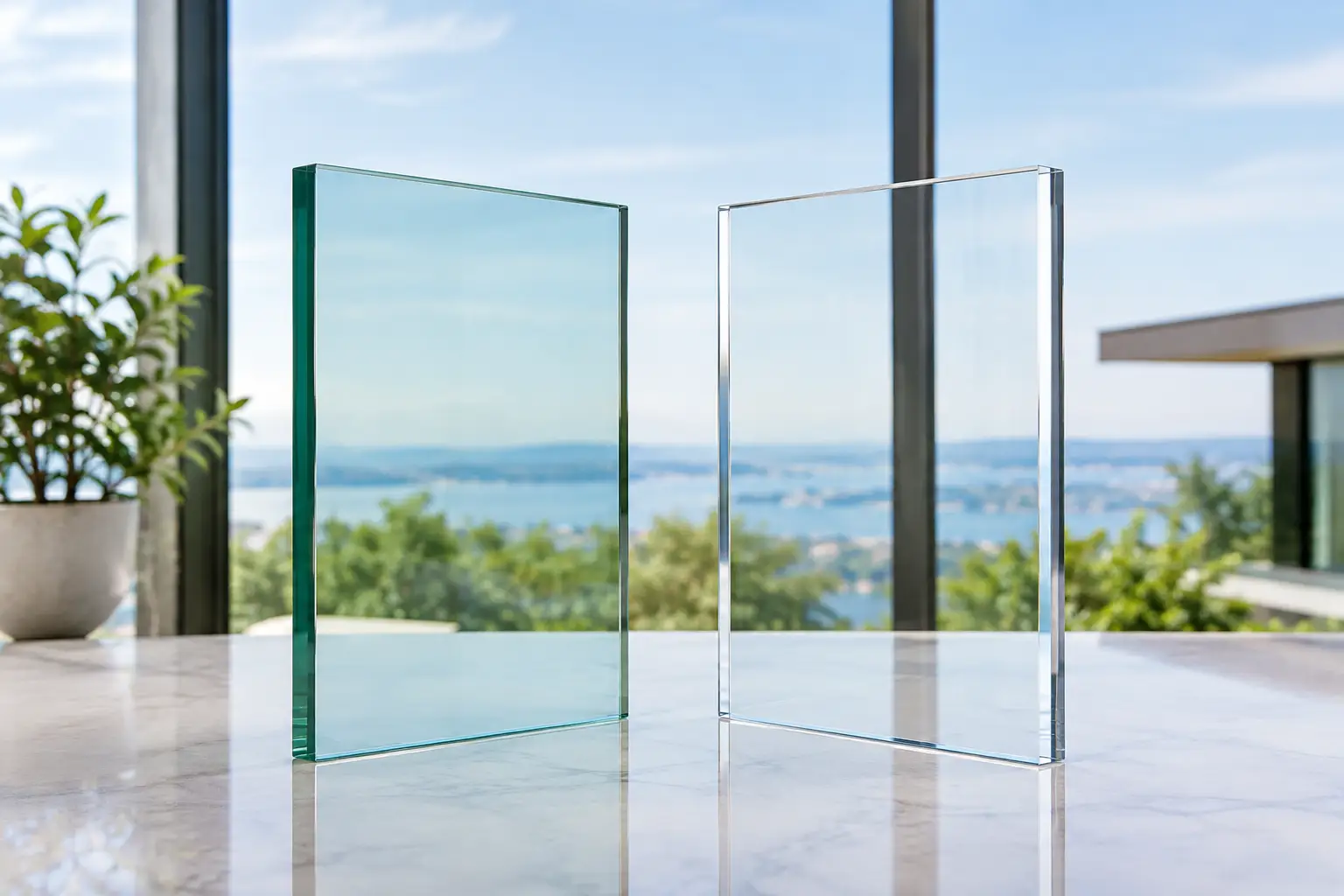
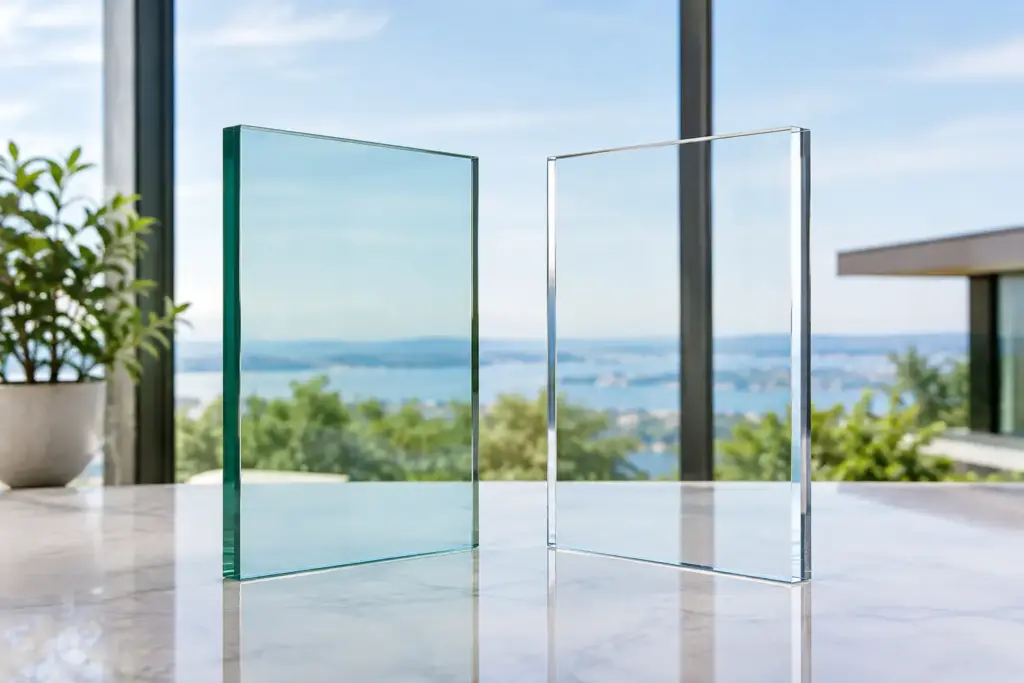
Standard clear glass is not entirely colorless. It contains iron oxide, a naturally occurring component of the raw materials used to make float glass. Iron absorbs portions of the visible light spectrum, creating the subtle green tint familiar at the edge of a standard glass tabletop, shower panel, or railing.
Low-iron glass is manufactured with substantially less iron content. The result is greater visible light transmission and a more neutral appearance. Whites read whiter, pale stone retains its intended tone, and views remain more faithful to their natural color. Looking straight through a single thin pane, the distinction can be restrained. At thicker edges, through multiple layers, or against white and light neutral materials, it becomes unmistakable.
This is not a matter of one product being universally better. Clear glass remains an excellent, widely used architectural material. Low-iron glass is a deliberate specification for projects where color fidelity, edge quality, and visual restraint are central to the design.
Why Glass Thickness Changes What You See
Thickness is one of the most practical factors in the low iron versus clear glass decision. As glass becomes thicker, the green coloration of standard clear glass becomes more pronounced. This matters because many premium residential applications require thicker safety glass for both structural and aesthetic reasons.
A frameless shower enclosure may use 3/8-inch or 1/2-inch tempered glass. A substantial glass railing can require 1/2-inch, 9/16-inch, or thicker glass depending on the system, engineering, exposure, and applicable code requirements. At these dimensions, standard clear glass often shows a distinctly green edge, particularly when polished.
Low-iron glass gives fabricators and designers a cleaner visual line at exposed polished edges. That advantage is especially valuable in minimal hardware installations, where the glass itself is meant to appear nearly absent. It also complements the quiet precision of book-matched stone, plaster walls, light terrazzo, and custom millwork.
The effect is not limited to edges. In a large shower enclosure with multiple panels, standard clear glass can introduce a light green veil over white tile or Calacatta marble. Low-iron glass reduces that shift, allowing the finish selections behind it to remain the focus.
Where Low-Iron Glass Makes the Strongest Case
Frameless shower enclosures
For a high-end shower, low-iron glass is often the most visible upgrade available. Shower glass is viewed at close range, usually against carefully selected finishes, and often includes polished edges at the door, return panel, and fixed panel. A clean, neutral glass appearance supports the open, tailored look that homeowners expect from a frameless enclosure.
It is particularly appropriate with white marble, warm white porcelain, light concrete finishes, and decorative tile with subtle color variation. In a darker shower with black stone, smoked glass, or a strongly contrasted palette, standard clear glass may be entirely appropriate because the green cast is far less noticeable.
Glass railings and view-facing terraces
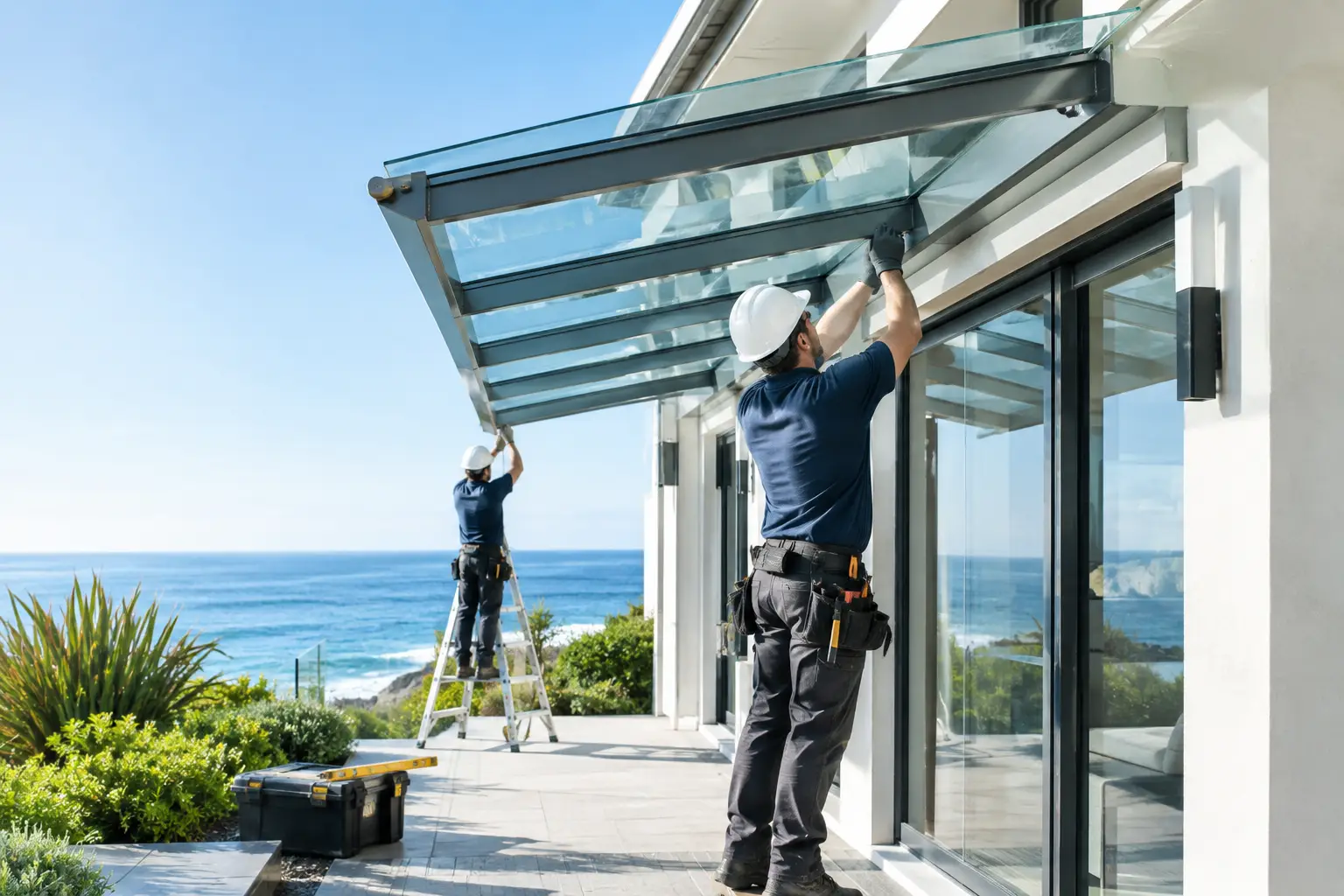
Ocean-view and hillside homes are where low-iron glass can justify its premium quickly. Standard glass may soften the blue of water, shift the color of a distant horizon, or show green at the top rail line and panel edges. Low-iron railing panels preserve a cleaner view, especially when the design uses minimal posts or a base-shoe system with broad, uninterrupted spans of glass.
The specification still begins with safety and engineering. Tempering, lamination, interlayers, wind loads, guard height, anchorage, and local code compliance determine the proper railing assembly. Low iron improves visual clarity; it does not replace the structural requirements of an engineered guard system.
Mirrors, partitions, and decorative architectural glass
Low-iron mirror is a refined choice for precision mirror work in bathrooms, dressing rooms, fitness spaces, and hospitality interiors. Conventional mirror glass can show a slightly green cast around the perimeter or when several mirrored planes meet. Low-iron mirror produces a more neutral reflection, which can matter in rooms with carefully calibrated lighting and soft paint colors.
For glass partitions, wine rooms, display glazing, and custom door lites, the decision depends on what the glass frames. Low iron is compelling where the contents, finishes, or artwork behind the panel are intended to read accurately. For a more industrial, tinted, or intentionally layered aesthetic, standard clear glass may better suit the concept and the budget.
What Low-Iron Glass Does Not Do
Low iron describes clarity and color transmission. It is not a performance coating, a safety rating, or a maintenance treatment.
It does not provide the solar heat control associated with insulated glass units using low-emissivity coatings. It does not make a panel impact-resistant or automatically suitable for a railing, skylight, or exterior opening. It does not prevent hard-water spotting, mineral etching, or corrosion around shower hardware.
These qualities must be addressed separately. Exterior windows and doors may require insulated units, specialized coatings, tempered or laminated safety glass, and project-specific engineering. Shower enclosures benefit from correct slope, ventilation, hardware selection, and disciplined care. A permanent protective treatment such as Diamon-Fusion can be specified where easier cleaning and long-term surface protection are priorities.
That distinction matters because the most successful glass specifications combine several decisions: glass type, thickness, safety processing, fabrication, edgework, coatings, hardware, and installation method. A visually clear panel can still be the wrong choice if it is not designed for the physical demands of its location.
The Cost Question: When Is the Upgrade Worth It?
Low-iron glass costs more than standard clear glass, and the premium can increase with thickness, panel size, specialty fabrication, and availability. The exact difference varies by project and market conditions, so it should be evaluated as part of the complete glazing scope rather than as an isolated material line item.
For a small, fully framed shower with limited exposed glass, the added investment may have a modest visual return. For a large frameless enclosure, an all-glass corner, or a view railing extending across a terrace, the same upgrade can change the entire finished impression. The material cost is also easier to justify when it protects a substantial investment in stone, tile, custom cabinetry, or a view-oriented architectural plan.
Design intent should lead the decision. If the goal is crystal-clear transparency, bright neutral finishes, and finely finished exposed edges, specify low iron from the outset. If the glass is framed, lightly tinted, set against dark materials, or used in a less prominent utility area, standard clear glass can deliver excellent performance without paying for clarity that the architecture will not fully reveal.
Review Samples Under Real Project Conditions
The best way to choose is not by product photography. Review actual samples in the project environment or in a showroom, preferably at the thickness being considered. Place standard clear and low-iron samples over the selected tile, stone, paint, or wood finish. Look through them toward daylight, then examine them under the room’s artificial lighting.
Pay close attention to the polished edge. This is where the difference becomes immediate. Also consider the number of glass layers a person will see through. A single shower panel reads differently from an enclosure with a fixed panel, door, and return panel aligned in the same sightline.
For railing systems, evaluate a full-scale section whenever possible. The glass type should be considered alongside the base shoe, cap rail, handrail, posts, clamps, and adjacent metal finishes. Architectural glazing is experienced as an assembled system, not as a material sample alone.
For projects throughout South Orange County and coastal Southern California, Capistrano Valley Glass & Mirror approaches this decision at the level it requires: by studying the architecture, finish palette, exposure, code demands, and intended sightlines before fabrication begins. The right panel is the one that preserves the design without compromising the engineering behind it.
When a project relies on light, views, and exacting finish work, glass should not introduce an unintended color of its own. Hold both materials against the surfaces that will surround them, inspect the edges, and let the architecture make the decision.