
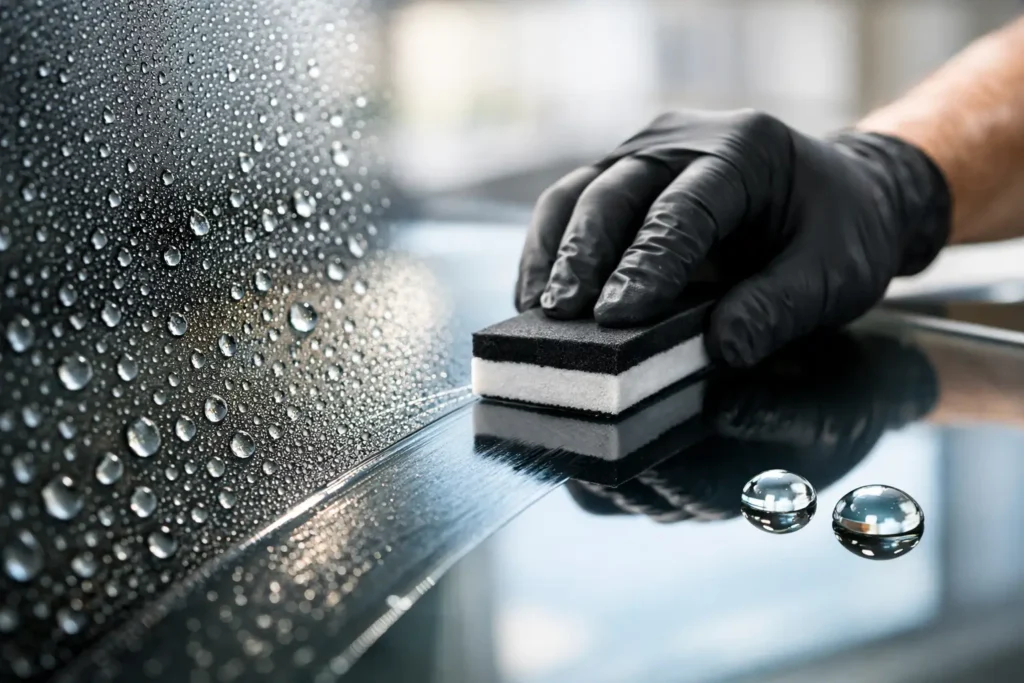
A frameless shower enclosure can be fabricated with exceptional glass and hardware, then lose its clarity to hard-water spotting within a few years. The same problem appears on coastal railings, pool fencing, skylights, and exterior glazing, where mineral deposits, salt air, irrigation overspray, and cleaning residue gradually alter the surface. A permanent protective coating for glass addresses the cause rather than simply polishing away the visible evidence.
For homeowners and project teams who have invested in architectural glazing, this is not a minor maintenance question. Glass is often the material that carries the view, daylight, and visual calm of a space. Once it becomes etched or permanently hazy, replacement can be expensive, disruptive, and unnecessary when restoration remains a viable option.
What a Permanent Protective Coating for Glass Actually Does
A high-quality protective coating is not a wax, topical sealant, or short-term water repellent. Those products may initially make water bead, but they wear away with routine cleaning and exposure. A professionally applied permanent coating is engineered to bond at the molecular level with the glass surface, creating a clear protective barrier that helps resist staining, corrosion, and mineral buildup.
Although glass appears perfectly smooth, its surface contains microscopic peaks and valleys. Water, dissolved minerals, soap residue, and airborne contaminants settle into those irregularities. Over time, especially in Southern California’s hard-water environments, those deposits can react with the glass itself. What begins as removable spotting may progress to etching that will not respond to ordinary cleaning.
A permanent coating helps create a denser, smoother surface that sheds water and contaminants more effectively. This does not make glass maintenance-free. It does, however, reduce the opportunity for damaging deposits to bond to the substrate. The practical result is glass that stays clearer with less aggressive cleaning and is better protected against the conditions that cause irreversible damage.
Why “Permanent” Does Not Mean Maintenance-Free
The word permanent deserves a precise explanation. In professional glazing applications, it refers to the coating’s chemical bond with the glass rather than a film that simply sits on top of it. Properly applied coatings are designed for long-term performance and do not require periodic reapplication in the way conventional aftermarket treatments do.
That said, no surface treatment can prevent every form of damage. Abrasive pads, harsh acids, metal scrapers, construction debris, and neglected mineral buildup can still compromise glass. Coastal exposure is also demanding. Salt, windblown particulates, and irrigation overspray can collect on balcony railings and exterior windows, particularly near the ocean.
The coating is a protective system, not permission to abandon proper care. A soft cloth or squeegee, mild nonabrasive cleaner, and regular rinsing remain the right maintenance practices. For a luxury shower enclosure or ocean-view glass railing, that modest routine is far easier than trying to reverse years of surface deterioration.
Restoration Must Come Before Protection
A coating protects the condition of the glass at the time of application. It cannot conceal deep scratches, chips, fabrication defects, or severe clouding already embedded in the surface. For glass affected by hard-water etching or corrosion, the correct sequence is assessment, restoration where possible, then coating.
Professional restoration uses specialized equipment and controlled techniques to remove mineral deposits and improve surface clarity without introducing distortion. The objective is not to promise that every damaged panel will look new. The objective is to determine whether the glass can be restored to an acceptable architectural standard and, if so, protect that restored surface from repeat damage.
This distinction matters most on large or difficult-to-replace installations. A custom shower enclosure may involve carefully matched hardware and notched panels. A glass railing may be integrated into a finished deck waterproofing system. Replacing skylight glass or elevated exterior glazing can require access equipment, scheduling coordination, and additional risk. In many suitable cases, restoration followed by coating offers a more economical and less disruptive path than replacement.
Capistrano Valley Glass & Mirror provides certified Diamon-Fusion® field application technology for qualifying restoration projects. The value is especially clear when the glass is part of a larger finished environment where replacement would affect tile, stone, waterproofing, framing, or occupancy.
Where Protective Coatings Deliver the Greatest Value
Shower glass is the most familiar application because it faces daily exposure to water, body-care products, and soap residue. On a frameless enclosure, there is no frame to hide the condition of the glass. A protective coating helps preserve the clean, open appearance that justified choosing frameless glass in the first place.
Exterior applications can be equally compelling. Glass railings and pool fencing are exposed to sprinklers, pool water, dust, salt air, and fingerprints. A coating helps reduce the adhesion of contaminants, making regular cleaning more manageable without compromising the transparency that makes these systems desirable.
Skylights, solar panels, windows, and decorative exterior glass can also benefit, though each installation should be evaluated for access, condition, and manufacturer considerations. A hotel operator may prioritize reduced maintenance demands across guest-facing glazing. A homeowner may be focused on restoring one shower enclosure. The technology is similar, but the scope, logistics, and performance priorities are different.
New Glass Versus Existing Glass
For new installations, coating the glass before it enters daily service is the most preventive approach. It begins protecting the surface before hard-water residue or construction contaminants have an opportunity to take hold. This is particularly sensible for premium shower glass, pool enclosures, and exterior railings installed in exposed locations.
Existing glass requires a more careful assessment. If spotting is only superficial, cleaning and coating may be appropriate. If mineral staining has progressed to etching, restoration may be required first. If the panel is deeply scratched, damaged at the edges, structurally compromised, or beyond visual recovery, replacement may be the honest recommendation.
That evaluation should be based on the glass itself, not a generic promise. Lighting conditions, viewing distance, panel size, surrounding finishes, and the client’s tolerance for residual marks all influence what constitutes an acceptable result.
The Installation Details That Protect the Result
The performance of a permanent coating depends on preparation as much as the product. The glass must be thoroughly cleaned, free of residues, and dry before application. Silicone overspray, soap film, oils, tape adhesive, and mineral deposits can interfere with bonding or leave visual irregularities beneath the treatment.
On restoration work, the technician must also protect adjacent finishes. Natural stone, polished metal, painted surfaces, tile, and specialty hardware require appropriate masking and controlled procedures. This is one reason architectural glass restoration should not be treated like a quick janitorial service. The glass may be straightforward; the finished environment around it often is not.
For builders and designers, the best time to specify protective treatment is before closeout. Construction dust, grout haze, overspray, and standing water can affect new glass before the homeowner ever moves in. Coordinating the coating after final cleaning, and before regular use, provides a cleaner starting point and establishes clear care expectations for the owner.
Choosing a Coating Service With the Right Standards
The lowest bid is rarely the useful comparison for a glass-protection project. The relevant questions are whether the provider can distinguish removable deposits from true etching, whether the proposed treatment is appropriate for the glass type and location, and whether the crew understands the surrounding architectural finishes.
Ask how the glass will be evaluated, what preparation is included, and what realistic outcome should be expected. If the work involves railings, shower enclosures, skylights, or elevated panels, confirm that the provider has glazing experience rather than only surface-cleaning experience. The people responsible for the treatment should understand how glass is fabricated, installed, supported, and safely serviced.
It is also worth asking about care after application. A credible professional will explain which cleaners to avoid and will not represent a protective coating as an indestructible cure for damage caused by neglect or abrasion. Clear expectations are part of a quality result.
A well-designed glass system deserves the same disciplined care as stone, millwork, or architectural metal. When clarity matters, protect the surface before damage becomes the most visible feature of the view.

