A frameless pool fence succeeds or fails at its smallest connection points. Pool fence clamps may occupy only a few inches of visual space, yet they control panel alignment, manage glass-to-glass transitions, and contribute directly to the composed, nearly weightless appearance homeowners expect from architectural glazing. On an ocean-view terrace or around a carefully designed pool, ordinary hardware is immediately visible. The clamps must perform structurally while remaining appropriately quiet.
For premium residential and hospitality work, selecting clamps is not simply a matter of choosing a finish from a catalog. Glass thickness, panel dimensions, gate configuration, exposure conditions, substrate, local requirements, and the desired sightline all influence the correct system. The result should feel inevitable: clear glass, precise joints, clean edges, and hardware that looks considered from every approach.
What Pool Fence Clamps Actually Do
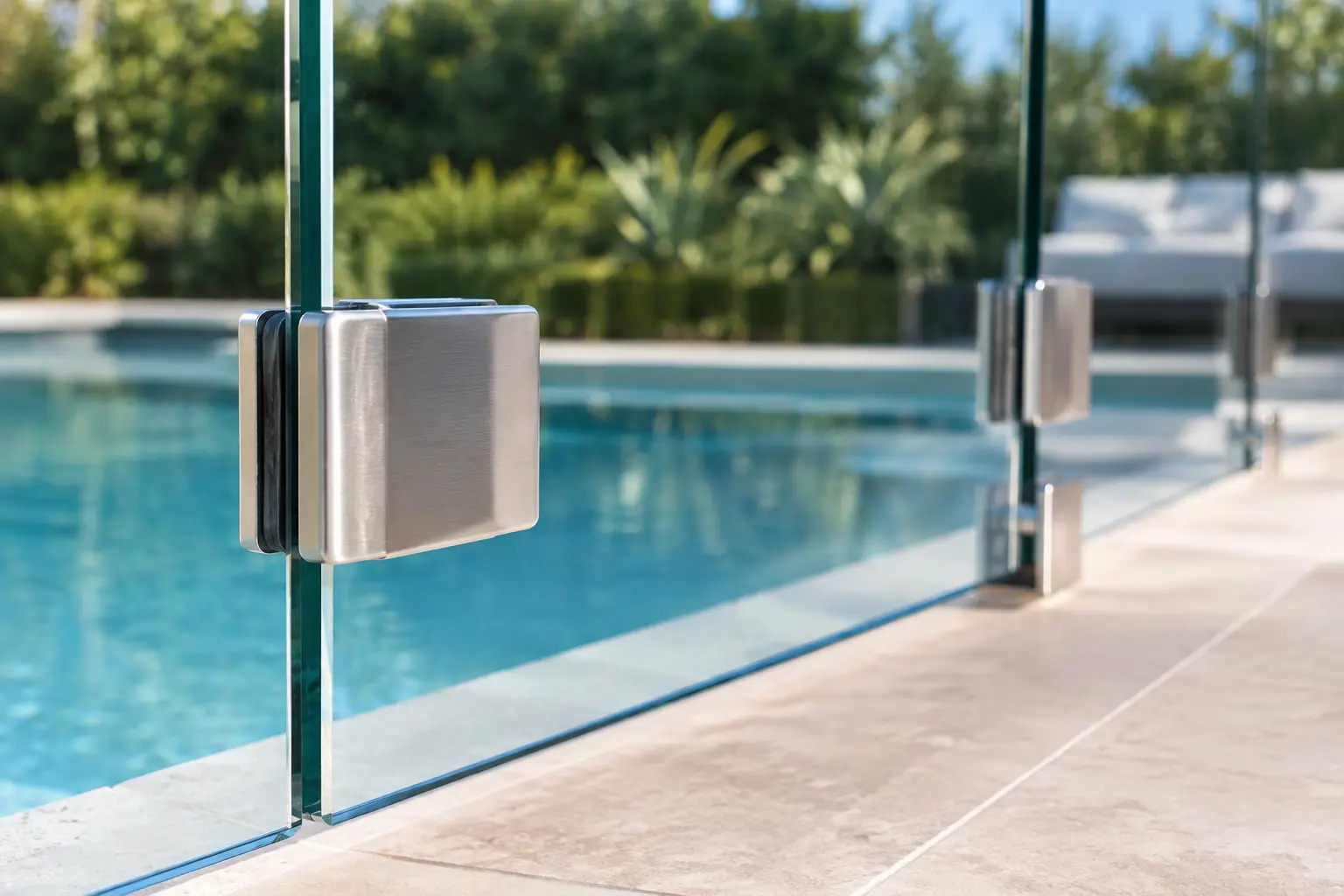
Pool fence clamps are mechanical fittings that secure tempered safety-glass panels to posts, walls, or adjoining glass panels. Depending on the system, they may be square, round, beveled, or low-profile, with configurations designed for glass-to-glass, glass-to-wall, or glass-to-post connections. Some are fixed at 90 degrees; others accommodate corners or variable angles.
Their role extends beyond holding glass in place. Properly specified clamps establish consistent panel spacing, preserve the intended fence line, and help control the relationship between the glass and its supporting structure. In a frameless or semi-frameless installation, that precision is especially apparent because there is no heavy frame to conceal a poor layout.
Clamps are often used with stainless-steel posts, while other designs rely more heavily on base-mounted spigots or shoe systems. None is universally superior. A clamp-supported system can provide an elegant, defined rhythm along a fence line, particularly where posts are already part of the architectural language. A more minimal system may better suit an uninterrupted view, but it places equally serious demands on engineering, substrate preparation, and installation accuracy.
Material and Finish Matter Near Water
The visual distinction between hardware grades can be subtle in a showroom and consequential after years outside. Pool environments expose metal components to chlorinated water, cleaning chemicals, moisture, heat, and, in coastal Southern California, salt-laden air. Hardware selected only for its initial appearance can pit, discolor, or corrode well before the glass itself shows age.
For many exterior glass fence applications, 316 stainless steel is the preferred specification because of its enhanced corrosion resistance in marine and poolside conditions. This does not make it maintenance-free. It does provide a stronger starting point than lesser stainless grades when the property is near the coast or receives regular exposure to pool chemistry.
Finish deserves the same scrutiny. Brushed stainless coordinates naturally with contemporary architecture and tends to soften the appearance of fingerprints and minor surface marks. Polished hardware offers a more reflective, formal character, but it can demand more frequent cleaning. Powder-coated or specialty finishes can be appropriate when the fence must align with bronze, black, or custom metalwork elsewhere on the property. The finish must be rated for exterior exposure and applied to hardware manufactured for the intended structural use, not merely chosen to match a color sample.
Glass Thickness, Gaskets, and Clamp Capacity
A clamp is not a generic accessory. Each fitting is designed around a specified range of glass thicknesses, panel weights, and installation conditions. A typical pool fence may use tempered safety glass in thicknesses selected to suit panel size, wind exposure, support spacing, and applicable code requirements. Larger panels and more exposed sites require greater attention to how loads are transferred through the system.
Within the clamp, properly sized gaskets isolate the glass from direct metal contact. These small inserts are essential. They distribute pressure, reduce the risk of point loading at the glass edge, and help secure the panel without damaging it. Improvised shimming, overtightening, or using gaskets that do not match the glass thickness introduces unacceptable uncertainty into a safety barrier.
The installer must also respect the limits of tempered glass. Once tempered, glass cannot be cut, drilled, or modified in the field. Hole locations, edge clearances, notches, and panel dimensions must be resolved before fabrication. This is why field measurement, coordinated shop drawings, and an experienced glazing team matter. A beautiful fence line cannot compensate for a panel that was fabricated with incorrect hardware locations.
The Hidden Importance of Tolerances
High-end glass fencing is often judged by what it does not show: uneven gaps, drifting panel lines, clamps that sit at inconsistent heights, or gate margins that change from top to bottom. Achieving clean tolerances requires more than careful hardware selection. It requires accurate site conditions.
Deck surfaces may slope for drainage. Existing walls may be out of plumb. Stone coping can vary in thickness, and finished surfaces may conceal structural conditions that affect anchoring. A professional installer identifies these conditions before glass fabrication whenever possible, then adjusts the layout with the full system in mind rather than forcing panels into a flawed line.
Pool Fence Clamp Placement Is a Design Decision
The number and location of clamps should be determined by the engineered system, not by visual preference alone. More clamps are not automatically better, and fewer are not automatically more refined. Placement must provide the required support while retaining balanced proportions across the elevation.
On a short run near a spa or courtyard, hardware can become a deliberate architectural detail. On a broad pool perimeter facing the Pacific, the same hardware may need to recede as much as possible to preserve the view. Corner conditions, changes in grade, stair transitions, and return panels all require their own solution. The best layouts make these functional moments look intentional rather than added after the fact.
Gate areas deserve particular care. A self-closing, self-latching gate is a life-safety component, and its hinges, latch, clearances, swing direction, and adjacent clamps must work as a coordinated assembly. Gate hardware carries repeated dynamic loads that fixed panels do not. A gate that closes confidently on installation day but begins to drag or misalign after use is not a successful installation.
Code Compliance Cannot Be Treated as an Afterthought
Pool barriers are governed by requirements intended to reduce unauthorized access, particularly by children. The applicable standards can involve fence height, gate operation, opening limitations, latch placement, climbability, clearances at the finished surface, and the relationship of nearby landscape or architectural elements to the barrier.
Requirements vary by jurisdiction and project conditions. A glass fence design should therefore be reviewed against the applicable local building requirements before fabrication, not after panels and hardware have arrived. Architects, builders, and homeowners should also understand that a visually open glass barrier is not exempt from the same safety obligations as other pool enclosures.
This is where specialty glazing experience changes the process. The work is not simply fastening glass around a pool. It is coordinating a code-conscious barrier system with waterproofing, coping, structural backing, drainage, landscape elements, and the design intent of the property.
Installation Details That Protect the Investment
Even premium clamps cannot overcome weak anchors or an unsuitable substrate. Hardware may attach to stainless posts, structural walls, engineered blocking, concrete, or other designed support conditions. The connection must be appropriate for the load path, and penetrations through stone, tile, or waterproofed assemblies must be planned carefully.
After installation, clamps should be checked for correct alignment and specified tightening. Glass edges should remain clean and free of damage, and gasket compression should be even. The completed fence should read as a disciplined series of deliberate details, not a collection of individual panels.
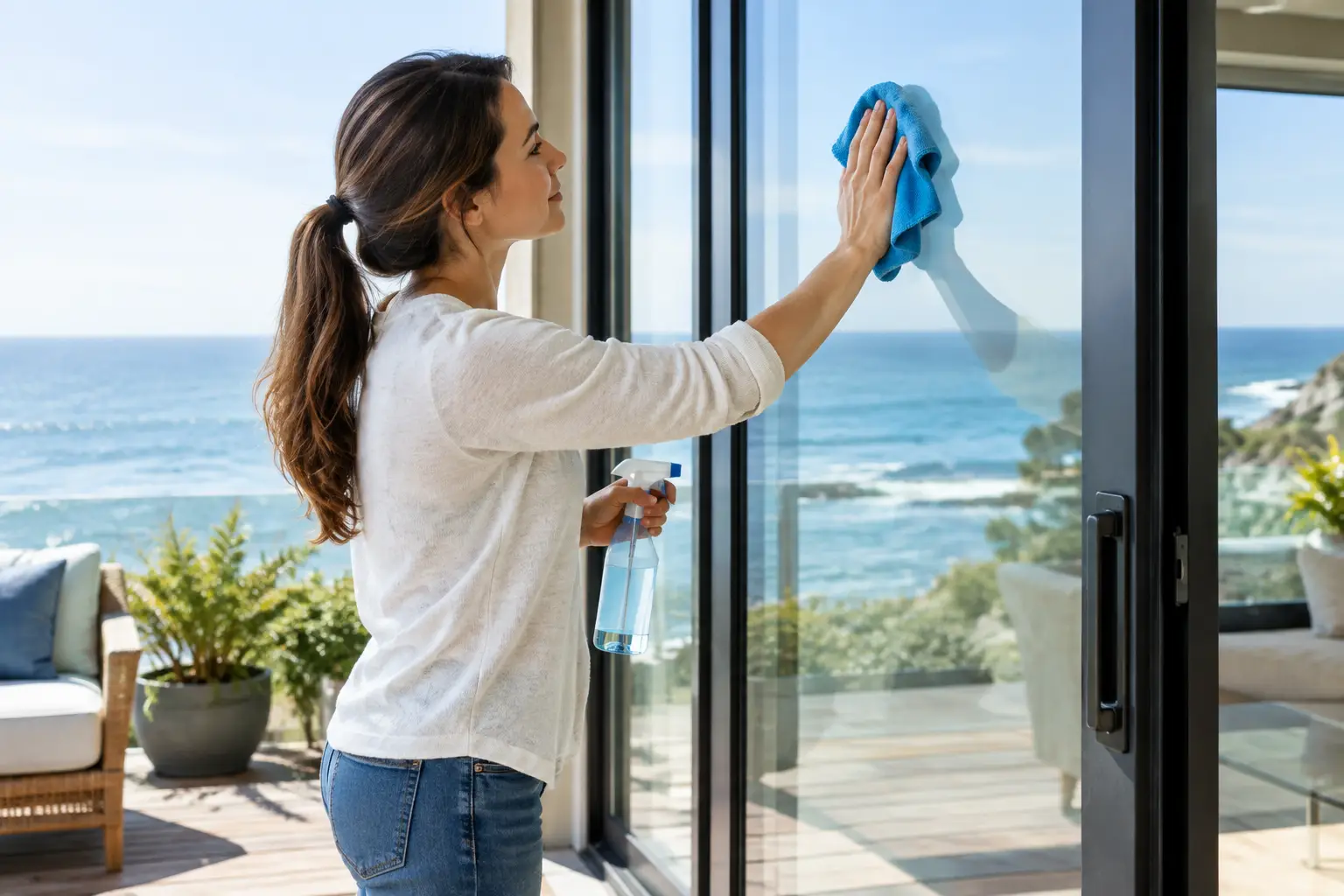
Routine care is straightforward but worthwhile. Rinse hardware periodically to remove salt, pool residue, and airborne contaminants, then clean it with materials suitable for stainless steel and glass. Avoid abrasive pads and harsh products that can damage finishes or leave residue. If staining, corrosion, or mineral buildup appears, address it early. In many cases, professional glass restoration and protective treatment can extend the service life of affected glass rather than requiring full replacement.
Choosing a System Worth Looking Through
When pool fence clamps are specified correctly, they disappear into the experience of the space. The pool remains visible, the view stays open, and the barrier feels secure without feeling heavy. That outcome depends on disciplined choices made well before installation day: the grade of stainless, the geometry of the panels, the clamp capacity, the gate hardware, and the quality of field verification.
At Capistrano Valley Glass & Mirror, that level of coordination is part of the craft. For a pool environment that must perform beautifully for years, begin with a complete glass-fence design conversation, not a hardware finish alone.