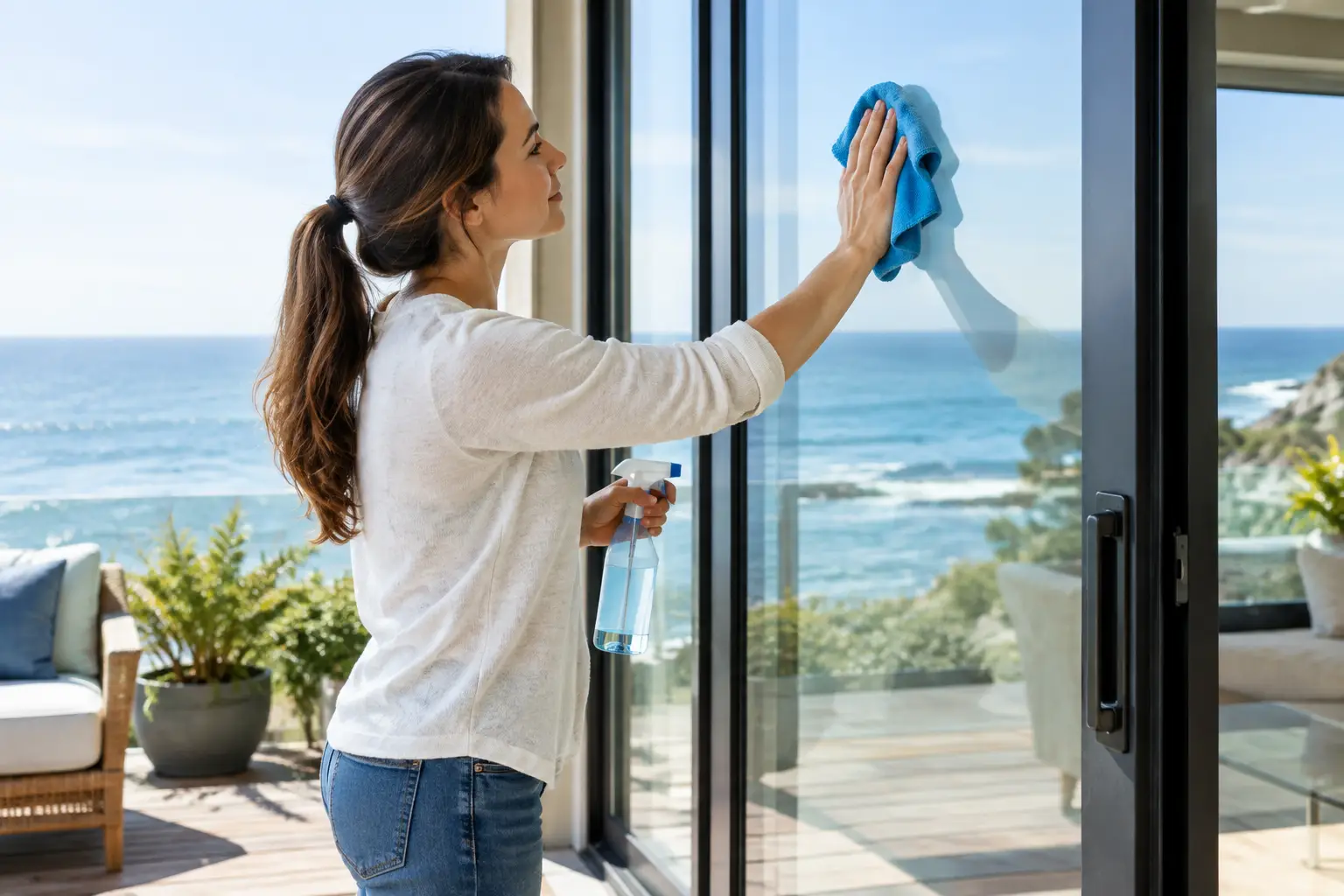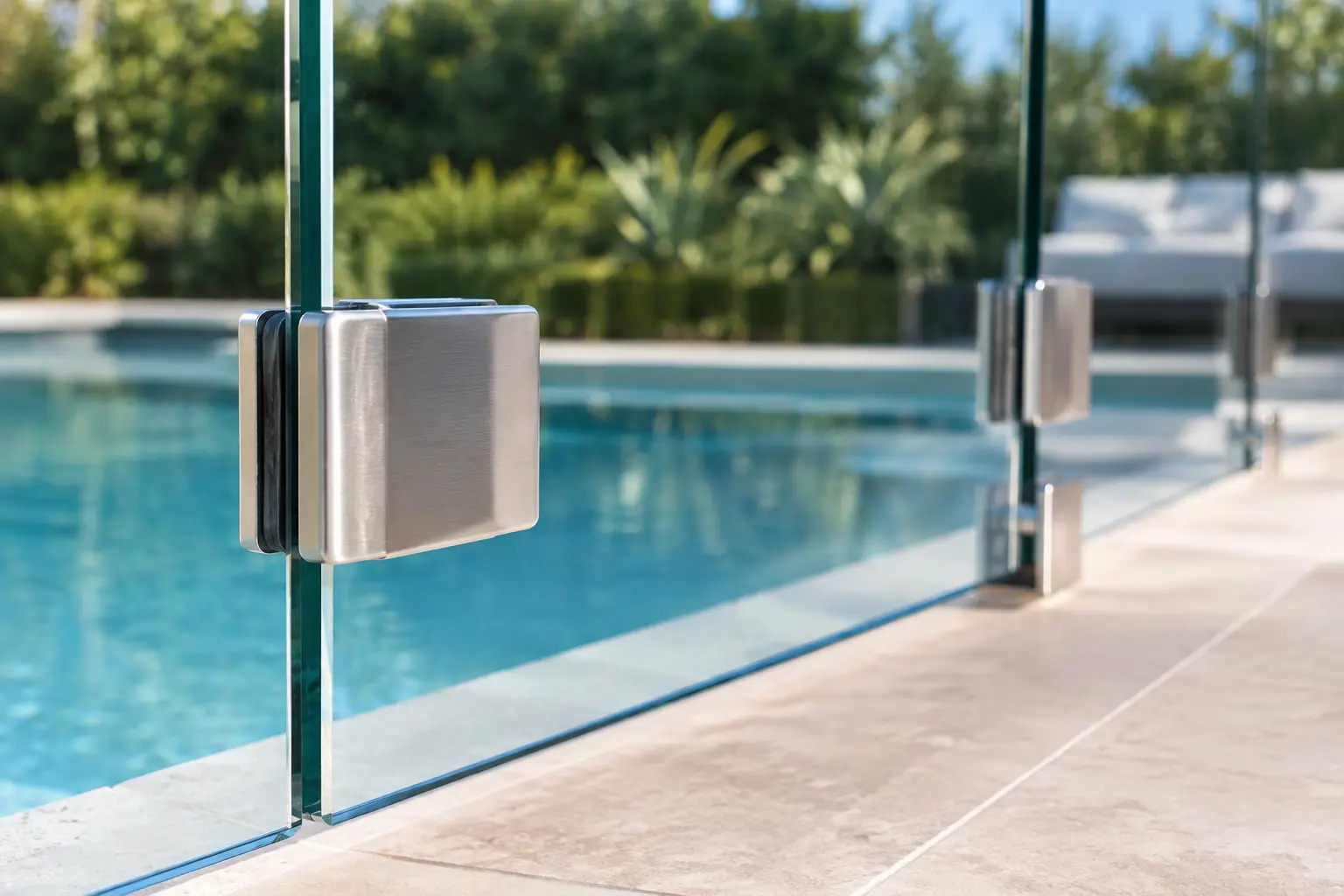
A clear wall of glass can turn a Laguna Beach terrace or Dana Point great room into an extension of the view. It can also collect a nearly invisible film of salt, airborne grit, and mineral residue faster than an inland installation. To maintain coastal glass doors properly, treat routine care as preservation work, not ordinary housecleaning. The goal is to protect the glass surface, the precision hardware, the weather seals, and the effortless operation that made the door system worth specifying.
Why Coastal Glass Doors Need a Different Care Plan
Coastal exposure is not limited to homes directly on the water. Salt aerosols travel inland on marine air, then settle on exterior glazing, aluminum frames, stainless hardware, tracks, and drainage channels. Morning fog and evening moisture can reactivate that residue, creating a cycle of deposits and corrosion that is easy to overlook until the glass loses clarity or a sliding panel begins to feel rough.
Sand is equally abrasive. A dry wipe across a dusty door can put fine scratches into glass coatings, polished metal, and dark architectural finishes. Hard water adds another concern, particularly around pool terraces and exterior shower areas. When sprinkler overspray or hose water dries on glass, dissolved minerals can form spots that eventually bond to the surface.
The appropriate schedule depends on exposure. A protected courtyard door in Coto de Caza may need attention every few weeks. An oceanfront multi-panel system in Newport Beach, Laguna Niguel, or San Clemente may warrant a gentle rinse and wipe-down weekly, especially after wind events. More cleaning is not necessarily better – correct methods matter more than aggressive chemicals.
The Right Way to Clean Coastal Glass Doors
Begin by removing loose salt and sand with clean water. A low-pressure rinse is generally sufficient. Avoid forcing water directly into track drains, panel joints, lock cylinders, or weep holes. The purpose of the rinse is to lift particles away before a cloth touches the glass.
Use a soft microfiber towel or a clean, nonabrasive sponge with a mild, pH-neutral glass cleaner approved for the particular door system. Work in manageable sections and dry the glass with a second microfiber towel before the solution evaporates. On large lift-and-slide, folding, or pivot doors, a professional-grade squeegee can produce a more even finish, provided its blade is clean and free of grit.
Avoid scouring pads, powdered cleaners, abrasive sponges, and steel wool. They may appear to solve a stubborn spot, but they can dull the surface or damage a factory-applied protective treatment. Razor blades should also be avoided for routine cleaning. A trained glazing technician may use specialized methods to remove construction debris, paint, or adhesive under controlled conditions, but that is not a homeowner maintenance task.
Household vinegar is often recommended for water spots, yet it is not universally appropriate. Acids can affect adjacent stone, metal finishes, sealants, and certain hardware coatings. If mineral spotting persists after mild cleaning, identify the source first. A misdirected irrigation head or recurring pool splash will continue to mark the glass regardless of how carefully it is cleaned.
Clean the Hardware and Frame Separately
Glass may be the visual centerpiece, but the hardware determines whether the door still moves with authority years later. Wipe handles, rollers, hinges, locks, and exposed fasteners with a soft damp cloth, then dry them thoroughly. Pay close attention to corners and underside surfaces where salt residue accumulates.
Do not assume that stainless steel is immune to coastal corrosion. High-quality stainless hardware is highly resistant, but salt deposits can still create surface staining if they remain in place. Similarly, anodized aluminum and powder-coated frames benefit from a regular fresh-water rinse and gentle drying. Never apply an unapproved lubricant, polish, or protectant to hardware simply because it is marketed for metal. Some products attract grit, soften gasket materials, or interfere with the manufacturer’s finish warranty.
Tracks, Drains, and Weather Seals Deserve Attention
A door that drags or holds water is often a maintenance issue before it becomes a mechanical one. Sliding and folding systems are engineered with track profiles, sill pans, and weep paths that move water out of the assembly. Sand, leaves, pet hair, and soil can obstruct those paths.
Vacuum dry debris from tracks using a soft brush attachment. Then wipe the track with a damp cloth and inspect the visible drain openings. If the system requires a deeper clean, use only the procedure specified by the door manufacturer. Pushing wire, picks, or high-pressure water into weep holes can dislodge internal components or drive debris farther into the drainage path.
Weather seals should remain clean, flexible, and fully seated. During cleaning, look for torn gaskets, compressed brush seals, loose glazing beads, cracked caulking, or areas where a panel no longer meets the frame evenly. Do not coat seals with petroleum products. Their short-term shine can come at the expense of long-term elasticity.
A Simple Seasonal Inspection
Four times each year, take a few minutes to operate every panel through its full range. Listen for grinding, clicking, or a sudden change in resistance. Check that locks engage cleanly, handles do not loosen, and panels align consistently when closed. Examine the sill after rain or washing to confirm that water is draining rather than standing.
This inspection is especially valuable after a coastal storm, a nearby landscaping project, exterior painting, or construction work. Fine dust and overspray can find their way into door systems quickly. Addressing them early is less costly and less disruptive than waiting for roller damage, drainage failure, or finish deterioration.
Protect the Glass From Hard Water and Etching
Hard-water spots are not just a cosmetic inconvenience. When mineral-rich water repeatedly dries on glass, the deposits can etch into the surface. At that point, ordinary cleaning may improve the appearance without restoring true optical clarity.
Prevention begins with water management. Redirect sprinklers away from glazing, keep pool water and saltwater mist from drying on doors where practical, and rinse exterior glass after a period of heavy spray. For homes with outdoor kitchens, fire features, or dense planting near the glass wall, account for grease, soot, pollen, and irrigation runoff as part of the maintenance plan.
Protective glass treatments can reduce how firmly contaminants bond to the surface, making regular cleaning faster and lowering the risk of permanent staining. They are not a substitute for maintenance, and the correct option depends on whether the glass already has a factory coating, a low-E surface, decorative treatment, or specialty fabrication. A qualified glass professional should evaluate the existing assembly before applying any product.
When etching, haze, or mineral buildup has progressed beyond surface cleaning, restoration may be preferable to replacement. Capistrano Valley Glass & Mirror provides certified Diamon-Fusion® field application technology for eligible glass, restoring clarity where possible and applying a permanent protective coating designed to make ongoing care easier. The value is not merely cosmetic: preserving specialty glazing can avoid the expense, lead time, and construction disruption associated with replacing custom panels.
When to Call a Glazing Professional
Some conditions should not be treated as cleaning problems. Persistent fogging between insulated glass panes may indicate a failed seal. Water intrusion at the interior sill, cracked tempered glass, loose door panels, recurring roller failure, or corroded structural connections require professional assessment. For large moving walls and custom pivot doors, adjustment should be performed by technicians familiar with the specific system and its load requirements.
This is particularly true for architecturally significant doors with oversized panels, narrow sightlines, concealed hardware, or coastal-rated performance requirements. A seemingly minor alignment adjustment can affect locking, weather performance, glass edge clearance, and safe operation. There are glass installers, and there are glass craftsmen; complex architectural glazing calls for the latter.
A well-maintained coastal door should never feel like a fragile feature that demands constant attention. With gentle cleaning, clear tracks, controlled water exposure, and prompt professional service when operation changes, the glass can remain as composed and transparent as the view it was designed to frame.