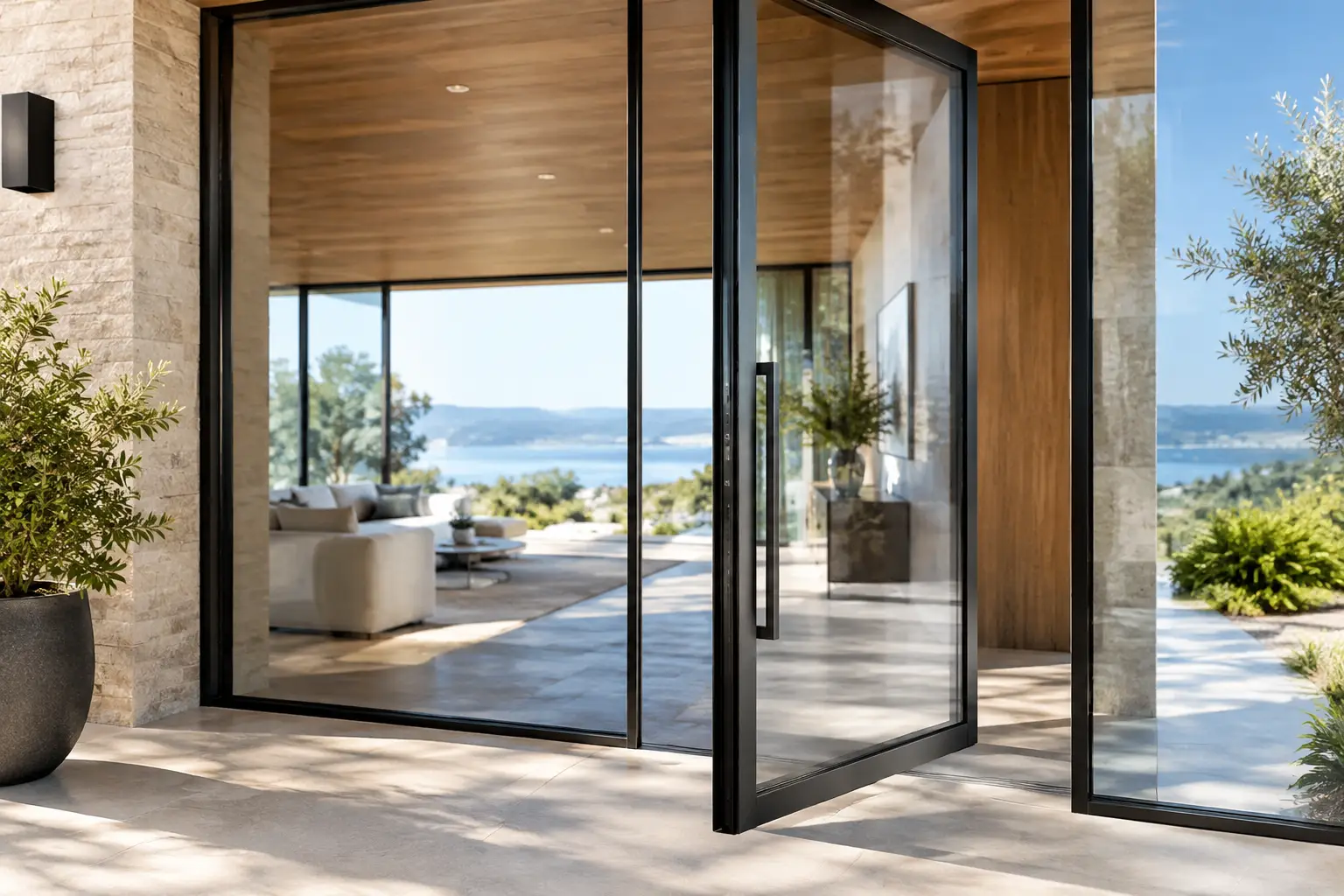
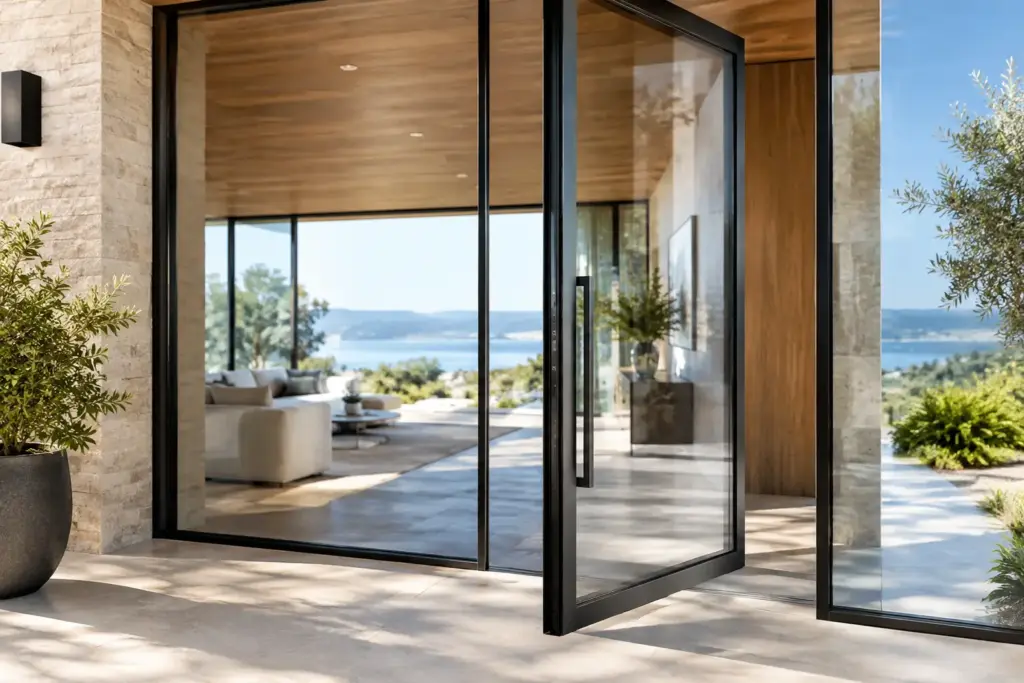
A doorway can either interrupt an interior or become part of its composition. Custom glass doors for homes are specified when a standard swinging panel, off-the-shelf slider, or generic framed door cannot carry the visual weight of the architecture. In a coastal residence, a view property, or a carefully renovated estate, the right glass door preserves light, creates definition, and performs with the same discipline as the surrounding stone, millwork, and metal.
The distinction is not simply clear glass versus frosted glass. It is the relationship between the opening, the glass thickness, the hardware, the finished floor, the wall construction, and the way the door will be used every day. A door that appears effortless usually reflects careful decisions made long before installation.
Start With the Purpose of the Opening
The first question is not what style of glass looks best. It is what the door must accomplish. A glass door between a primary bedroom and bath may need privacy without sacrificing daylight. A pivot door at an entry may need to create a dramatic first impression while meeting demanding structural and weather-performance requirements. A multi-panel system opening to a terrace must frame the view, manage wind exposure, and provide a comfortable transition between interior and exterior living.
For interior applications, glass is often selected to preserve the sense of volume in spaces that would otherwise feel enclosed. A wine room, office, stair hall, dressing room, or spa-style bath can gain separation without losing visual continuity. For exterior openings, the work becomes more technical. Southern California homes may face direct sun, salt air, canyon winds, or wide temperature swings at exposed elevations. The glazing system, seals, drainage details, and hardware must be appropriate for those conditions.
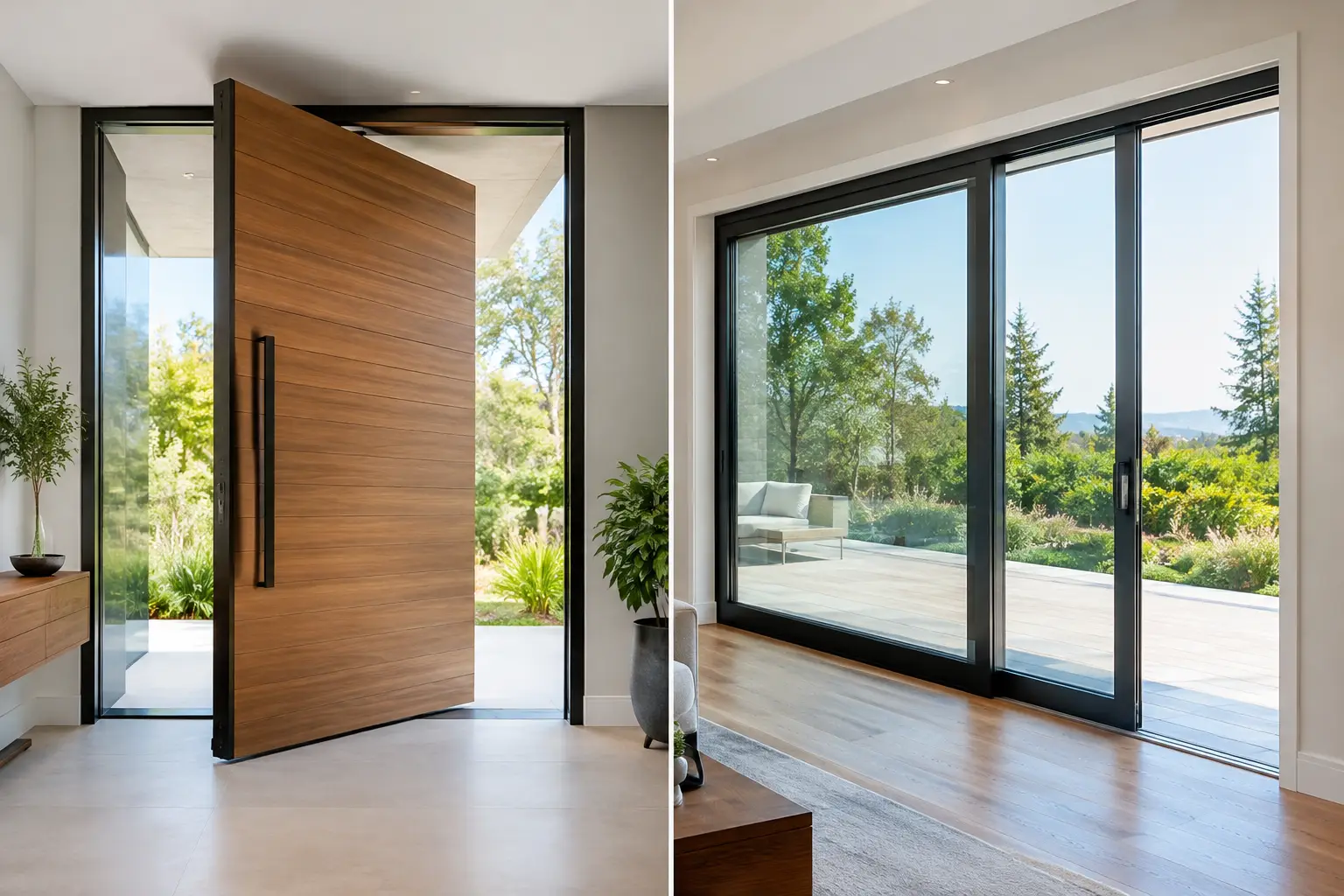
There is no single best configuration. A hinged door offers a clean, familiar operation but requires clear floor space. A pivot door can support a larger, more sculptural panel, although its pivot placement and surrounding framing need early coordination. Sliding systems conserve space and can accommodate broad openings, but panel stacking, track concealment, and threshold design should be resolved before finishes are complete.
Custom Glass Doors for Homes Need the Right Glass
Glass selection affects appearance, safety, acoustics, privacy, and maintenance. Clear tempered glass remains a refined choice for interior doors where sightlines matter most. Low-iron glass is worth considering when color neutrality is essential, particularly next to white stone, pale oak, or crisp architectural finishes. Conventional clear glass can show a subtle green edge, which may be noticeable in thicker panels or highly detailed interiors.
Privacy does not require a heavy-handed solution. Acid-etched glass softens views while allowing daylight to pass through. Patterned or reeded glass can introduce texture and concealment with a more decorative effect. Laminated glass can combine interlayers, colors, or specialty fabrics while improving sound control and holding glass in place if broken. The correct choice depends on the intended level of privacy and whether the door should disappear visually or serve as an architectural feature.
For exterior doors, safety glazing is only one part of the specification. Insulating glass units, low-emissivity coatings, and laminated assemblies may be necessary to manage solar heat gain, ultraviolet exposure, sound, and code requirements. Ocean-facing properties often need particular attention to corrosion-resistant hardware and finishes. A handsome handle is not enough if its finish is not suited to the environment it will inhabit.
Hardware Is Structural, Not Decorative
In premium glass work, hardware carries both the visual language and the physical load. Hinges, pivots, pull handles, locks, patch fittings, and sliding door rollers must be selected as a system. Their proportions should suit the panel size, while their finish should relate to the home’s other metal details rather than compete with them.
Minimal hardware can be compelling, but minimal does not mean underspecified. A large frameless pivot door requires engineered support, precise alignment, and a substrate capable of receiving the required loading. A narrow reveal between glass and wall may look exacting in a rendering, yet it can only remain so when framing tolerances, flooring transitions, and finished-wall dimensions are understood in advance.
Hardware choices also influence how the door feels in use. A well-balanced pivot door should move with controlled weight, not swing loosely or require force. A sliding system should track quietly and close positively. In a primary suite or executive office, acoustic seals and latching details can matter as much as the clarity of the glass.
Coordinate Early With the Architecture
Glass doors are frequently brought into a project after the major design decisions have been made. That approach can work for a straightforward interior opening, but it creates limitations on more ambitious installations. The best time to involve a specialty glazing contractor is during design development, when the team can confirm opening sizes, structural support, floor conditions, wall build-ups, hardware clearances, and code implications.
This is especially important for doors with oversized panels, curved glass, concealed channels, recessed floor tracks, or custom metalwork. The glazing contractor should coordinate with the architect, interior designer, millworker, metal fabricator, and general contractor. A fraction of an inch can affect a reveal, a sweep, a latch alignment, or the ability to remove and service a panel later.
For projects in coastal Orange County and other Southern California environments, the details surrounding the glass deserve equal attention. Water management at exterior thresholds, transitions between interior and exterior finish elevations, and the protection of exposed hardware all shape long-term performance. These concerns are not glamorous, but they are where enduring work separates itself from a door that merely photographs well.
Consider Privacy, Maintenance, and Daily Living
A custom door should support the way a home is actually lived in. A fully transparent bath entry may suit a vacation property or an open-plan primary suite, but it may be less practical in a family home. A decorative interlayer, reeded glass, or strategically placed opaque band can preserve the architectural intent while giving occupants more discretion.
Maintenance is another honest consideration. Clear glass reveals fingerprints, water spotting, and airborne residue more readily than textured or etched surfaces. Exterior glazing near the coast can collect salt deposits, while shower-adjacent doors encounter minerals and hard-water spotting. Protective treatments and professional restoration options can reduce long-term maintenance burdens, but they do not eliminate the need for proper cleaning and care.
The same principle applies to black, bronze, brass, and specialty hardware finishes. They should be selected for their suitability as well as their appearance. A finish that is beautiful in a sheltered interior may require more care in a salt-air exposure or high-touch family setting.
What Precision Installation Looks Like
The final installation is where fabrication drawings become a physical part of the home. Glass must be measured after critical conditions are complete, not merely estimated from early plans. Finished floors, tile thicknesses, stone returns, wall plumb, and ceiling conditions all influence the final dimensions.
Experienced installers inspect the opening before setting the glass, protect adjacent finishes, and make adjustments deliberately rather than forcing a panel into imperfect conditions. They verify clearances, operation, latch engagement, seals, and visual alignment from the positions where the door will actually be viewed. On a luxury project, the expectation is not simply that the door functions. It should feel composed.
Capistrano Valley Glass & Mirror has approached specialty glazing this way since 1979: as architectural work requiring skilled fabrication, disciplined field measurement, and installation judgment. That standard matters most when the design appears simple, because simplicity leaves nowhere for imprecision to hide.
A Door Should Earn Its Place
The strongest custom glass doors do more than divide rooms. They clarify circulation, extend light into the plan, frame a landscape, or add a quiet layer of privacy. They also respect the realities of the site, the family using the home, and the materials around them.
Before selecting a panel style or hardware finish, stand in the opening and consider what the door should reveal, what it should conceal, and how it should feel when it moves. Those answers lead to a better specification than any catalog image can provide.