A pool barrier should never feel like an afterthought in a carefully designed exterior. For homeowners weighing a glass pool fence versus cable, the decision reaches beyond appearance: it affects sightlines, safety, wind exposure, cleaning requirements, and the architectural character of the entire property. In coastal Southern California, where a pool terrace may frame an ocean horizon, canyon view, or precisely composed garden, the right system preserves the setting rather than interrupting it.
Both options can be beautifully executed. They simply make different visual and practical promises. Frameless glass creates a near-invisible boundary with a substantial, refined presence. Cable railing introduces a lighter linear rhythm and a more openly constructed feel. The best choice depends on the role the barrier must play, the governing pool-safety requirements, and the level of precision expected from the finished work.
Glass Pool Fence Versus Cable: The Essential Difference
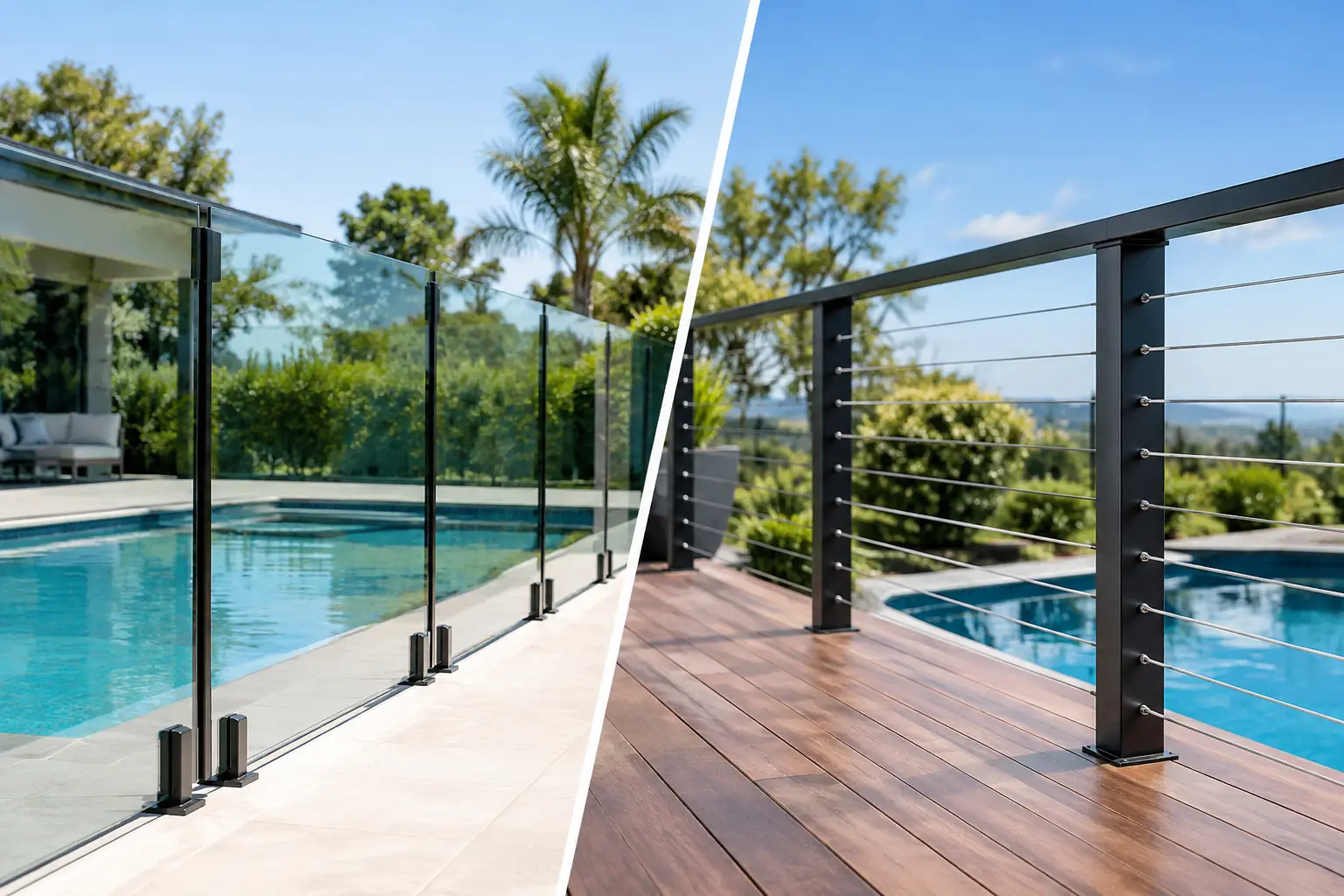
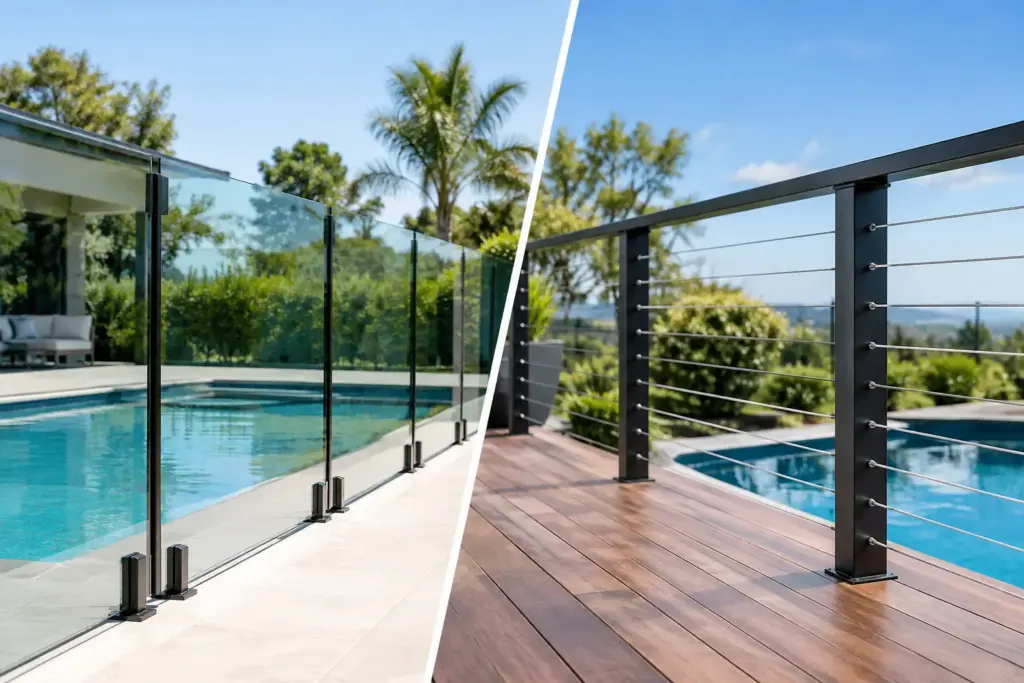
A frameless glass pool fence is built from tempered safety glass panels held by purpose-designed stainless steel spigots, channels, or side-mounted hardware. The panels create a continuous transparent plane around the pool, with minimal visual interruption. On a view property, this can make the pool edge and the landscape beyond feel connected.
Cable systems use horizontal runs of tensioned stainless steel cable between posts or frames. They are commonly associated with decks, terraces, and contemporary guardrails. Their appeal is understandable: the system is visually lighter than a conventional picket railing and offers a crisp, architectural line.
For a pool enclosure, however, the distinction is more consequential. Glass is inherently difficult to climb and creates a complete visual barrier. Horizontal cable runs may present climbability concerns and can be restricted or unsuitable for a code-compliant pool barrier depending on the local jurisdiction, configuration, opening dimensions, and surrounding conditions. A cable system that works elegantly along an elevated terrace is not automatically appropriate around a swimming pool.
That is why the comparison should begin with compliance and intended use, not with a photograph of a finished project.
Why Glass Often Defines the Luxury Pool Environment
Glass fencing is especially compelling when the pool is a central architectural feature. It allows water, stone, planting, and distant views to remain visible from the home, while giving the pool area a disciplined perimeter. The result is not simply less obstruction. It is a stronger sense of spatial continuity.
This matters on coastal lots and hillside properties, where a solid or heavily framed fence can divide the landscape into disconnected zones. A carefully detailed glass enclosure lets a terrace retain its breadth. From inside the residence, the pool can remain part of the view even when the barrier is required for safety.
Glass also has a visual weight that cable does not. Clear panels read as clean, quiet surfaces, particularly when paired with architectural-grade stainless hardware and precise panel alignment. They complement contemporary stucco, limestone, porcelain pavers, natural wood, and steel-framed doors without competing for attention. For Mediterranean or transitional homes, the hardware finish and mounting approach can be selected to relate to the larger material palette rather than appearing added on.
There is also a practical advantage: glass makes supervision easier. Parents, guests, and property staff can see the pool area clearly from adjacent spaces. That visibility does not replace responsible supervision, but it is an asset in homes where pool activity is part of daily life.
The importance of low-iron glass
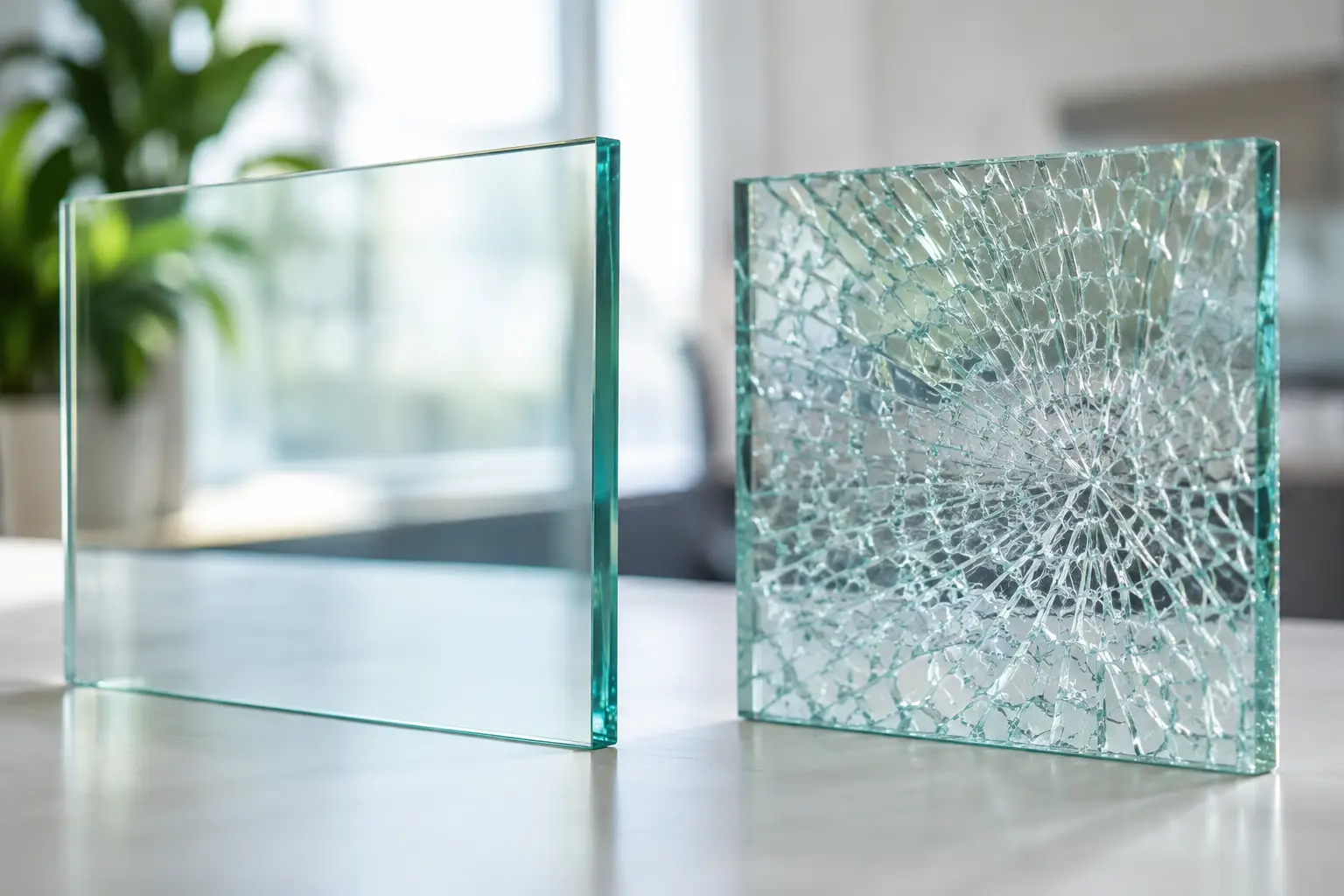
Standard clear glass has a subtle green cast, most noticeable at exposed edges and against pale stone or white finishes. For a premium pool installation, low-iron glass is often worth considering. It provides greater clarity and a more neutral appearance, helping the fence recede visually in high-light conditions.
The difference can be modest in a small, shaded enclosure. On a broad, sunlit terrace overlooking the coast, it can be substantial. Material samples viewed outdoors are more informative than showroom samples considered only under interior lighting.
Where Cable Has a Stronger Architectural Role
Cable is not an inferior material. It is simply best suited to different conditions. On a deck edge, balcony, overlook, or stair run where the goal is to maintain airflow and preserve a casual contemporary aesthetic, cable can be an excellent guardrail solution. Its horizontal lines can reinforce the geometry of a long terrace or connect naturally with steel, timber, and modern coastal architecture.
Cable also introduces more texture than glass. Some homeowners prefer that visible construction, especially in residences with a relaxed indoor-outdoor vocabulary. It can feel less formal and may suit a secondary entertaining area better than a highly polished pool court.
The trade-off is that cable requires tensioning and ongoing inspection. Cables can loosen over time, particularly in active exterior environments subject to thermal movement, wind, and regular use. Posts, terminals, and fittings need to be specified for corrosion resistance and installed with exacting attention to alignment. In a salt-air setting near the coast, material quality is not a place to economize.
Most importantly, cable must be evaluated as a complete system. Horizontal elements, spacing, post layout, gates, and attachment details all affect whether it can serve as a pool barrier. A qualified glazing and railing contractor should coordinate the design with applicable requirements before fabrication begins.
Safety, Code, and Gate Details Are Not Secondary Decisions
Pool barriers are life-safety systems. California requirements, local amendments, and site-specific conditions may govern barrier height, clearances, gate operation, latching height, self-closing hardware, and access from the residence. The applicable rules can vary by jurisdiction and project type, particularly for extensive remodels, new construction, and hospitality properties.
A refined installation resolves these requirements without making the enclosure look institutional. With glass, that may mean carefully locating self-closing hinges, selecting a discreet latch, and establishing panel dimensions that avoid awkward slivers at corners or grade changes. With cable, it may require a more fundamental reconsideration of whether the system is suitable at all for the pool perimeter.
Grade deserves particular attention. Sloped sites, raised planters, curved pool decks, drainage transitions, and irregular stone paving can all complicate a barrier layout. The glass should not appear to step or wander arbitrarily. Panels, hardware, and gate locations should be planned around the architecture, with field verification before fabrication.
Maintenance in a Coastal Southern California Setting
Glass is straightforward to maintain, but it is not maintenance-free. Sprinklers, airborne salt, hard water, sunscreen, and landscape debris can leave deposits on the surface. Regular rinsing and appropriate nonabrasive cleaning protect clarity and reduce the likelihood of stubborn mineral buildup.
For properties affected by hard-water spotting or coastal exposure, protective glass treatment can be a worthwhile part of the specification. Diamon-Fusion® protective coating helps make glass easier to clean and can reduce the adhesion of mineral deposits and contaminants. It is particularly relevant for pool fencing, shower enclosures, skylights, and exterior glazing where replacement should not be the first answer to surface deterioration.
Cable maintenance is different rather than simpler. The cables themselves need periodic cleaning, and fittings should be examined for corrosion, staining, or changes in tension. Salt air, chlorinated splash zones, and incompatible cleaners can all shorten the life or diminish the appearance of lower-grade components. The most expensive-looking cable railing is one that has begun to stain around its fittings after only a few seasons.
Cost Should Be Considered Over the Life of the System
A frameless glass pool fence generally carries a higher initial investment than a basic cable rail because it relies on heavy safety glass, specialized hardware, accurate templating, and careful installation. Complex layouts, custom gates, low-iron glass, core-drilled mounts, and challenging site conditions can increase that investment.
Yet the right comparison is not only the initial price. Glass can become a defining feature of the property, preserving views and elevating the perceived quality of the pool environment. It also avoids the periodic tension adjustments associated with cable systems. For a high-value home, the visual return may outweigh the additional upfront cost.
Cable may be more economical in certain railing applications, particularly where long straight runs and conventional posts are appropriate. But if it requires redesign, supplemental barriers, or later replacement because it does not satisfy pool-barrier requirements, the apparent savings disappear quickly.
The Better Choice Depends on What the Barrier Must Accomplish
Choose frameless glass when the pool enclosure needs to protect an unobstructed view, establish a polished architectural finish, and function as a clear, code-conscious safety boundary. It is often the natural selection for infinity-edge pools, ocean-view terraces, resort-caliber outdoor spaces, and custom homes where every material is expected to carry its share of the design.
Consider cable for deck guards, balcony edges, and secondary outdoor boundaries where its linear character belongs to the architecture and its use is appropriate for the required safety function. It can be an exceptional detail in the right location, but it should not be treated as a default substitute for glass around a pool.
At Capistrano Valley Glass & Mirror, projects are approached as architectural glazing work, not commodity installation. The most successful pool barriers begin with a site review, an understanding of the governing requirements, and full-scale consideration of the glass, hardware, paving, gates, and view. When the enclosure is resolved with that level of care, it does more than contain the pool. It allows the entire outdoor environment to read as one composed space.