
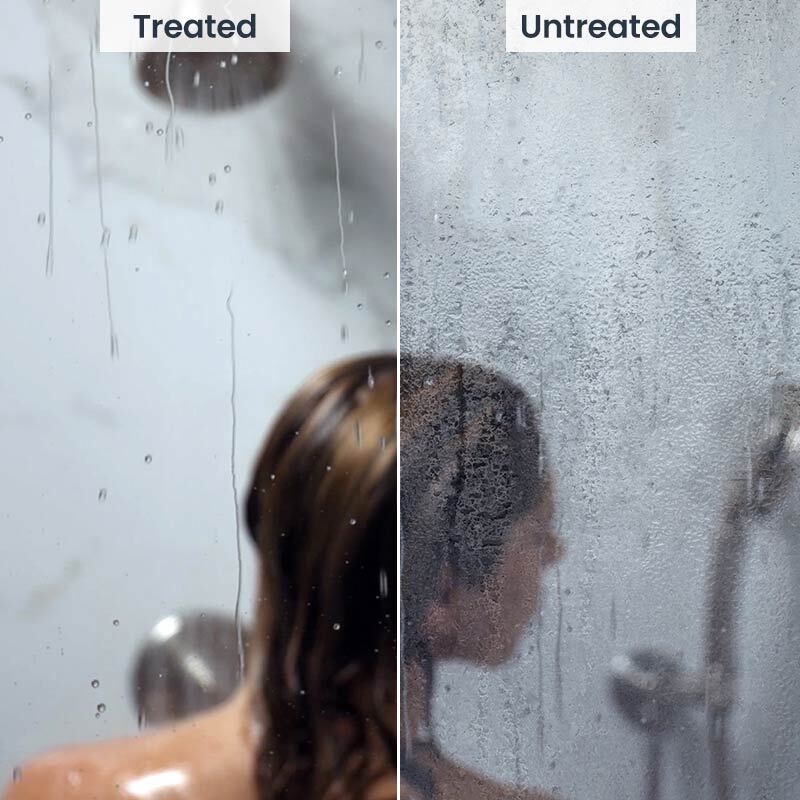
Southern California is hard water country. The water coming through your pipes carries dissolved calcium, magnesium, and silica picked up from the ground and the treatment process. When that water lands on your shower glass — or your windows, or your pool fencing — and then evaporates, those minerals don’t evaporate with it. They stay behind, bonding to the glass surface in a process that starts almost immediately and gets progressively harder to reverse over time.
The Three Stages of Hard Water Damage on Glass
Stage 1: Surface Deposits (Months 1–6)
In the early stages, mineral deposits sit on top of the glass surface. At this point they’re still relatively easy to remove with the right cleaning products and technique. The glass underneath is unaffected. Many homeowners mistake this stage for soap scum — and reach for bathroom cleaners that have no effect on mineral deposits and sometimes make them worse.
Stage 2: Etching (Months 6–24)
If surface deposits aren’t removed and the glass isn’t protected, the minerals begin to chemically etch the glass surface itself. At this stage, the damage is in the glass, not on it. You can clean all day and the haze won’t fully go away because you’re looking at surface pitting and micro-abrasion, not removable buildup. Professional restoration is now required.
Stage 3: Deep Corrosion (2+ Years)
In severe cases — particularly in coastal areas where salt air compounds the problem — prolonged hard water exposure can cause significant surface corrosion that affects the structural integrity of the glass surface. At this stage, restoration may not be possible and replacement becomes the most practical option.ta, anecdotes, or expert opinions to reinforce your claims. Keep your language concise but descriptive enough to keep readers engaged. This is where the substance of your article begins to take shape.
What You Can Do About It
The Most Important Habit
Squeegee your shower glass after every use. It takes 30 seconds and is the single most effective thing a homeowner can do to prevent mineral deposit buildup. Water that isn’t on the glass can’t evaporate and leave minerals behind.
Beyond the daily squeegee, here’s what we recommend based on four decades of seeing this problem in South Orange County homes:
- Use a pH-neutral cleaner specifically formulated for glass — not multipurpose bathroom cleaners, which are often too acidic or too alkaline for regular glass use.
- Avoid abrasive scrubbers of any kind on glass surfaces. Micro-scratches from abrasion create surfaces where minerals bond even more easily.
- If you have a water softener, ensure it’s properly maintained. Softened water dramatically reduces the rate of mineral deposit formation.
- Clean your glass at least weekly — don’t let deposits sit long enough to begin the etching process.
Hard Water on Glass Permanent Solution: Diamon-Fusion® Protection
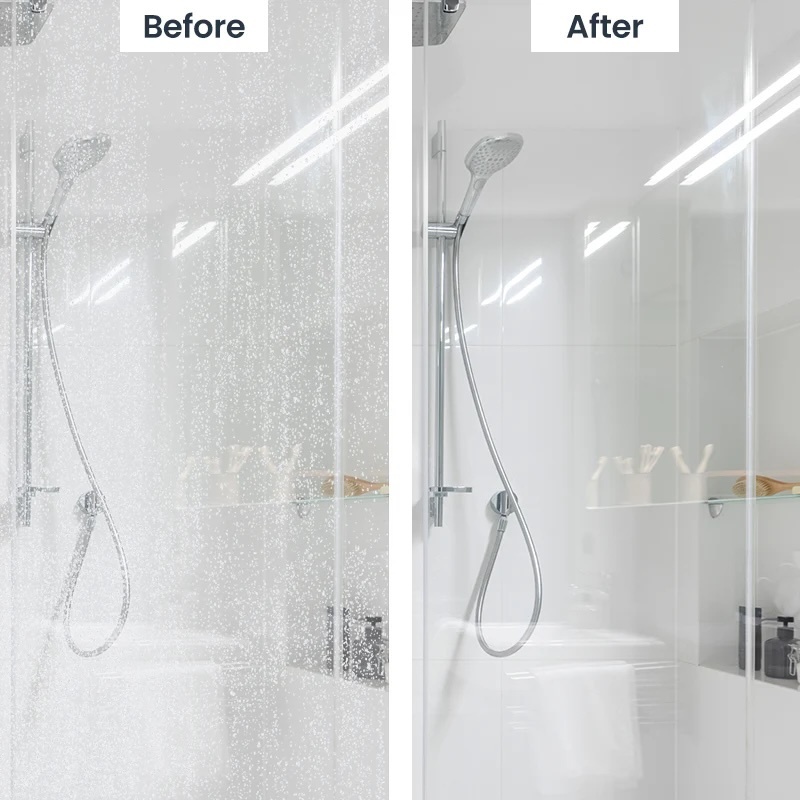
The most effective long-term defense against hard water damage isn’t cleaning — it’s prevention. Diamon-Fusion® is a patented molecular-bond coating that permanently changes the surface energy of glass. Water beads and sheets off rather than spreading and sitting to evaporate. Minerals that can’t stay on the surface can’t etch it.
Every shower enclosure we install at Capistrano Valley Glass & Mirror comes treated with Diamon-Fusion® as standard — not as an upsell. For existing glass that’s already showing Stage 1 or Stage 2 damage, our field restoration team can clean and restore the surface and then apply the protection coating, typically for a fraction of what glass replacement would cost.
The Cost Comparison
A typical shower enclosure replacement in South Orange County runs $3,000–$8,000 depending on configuration. Our Diamon-Fusion® field restoration service — which includes surface restoration and permanent protective coating — typically runs $300–$700 for a standard shower enclosure. The math isn’t complicated.
If you’re seeing white haze or etching on your shower glass, pool glass, windows, or solar panels, call us for an assessment. We’ll tell you honestly what stage the damage is at, whether restoration is the right call, and what it would cost.