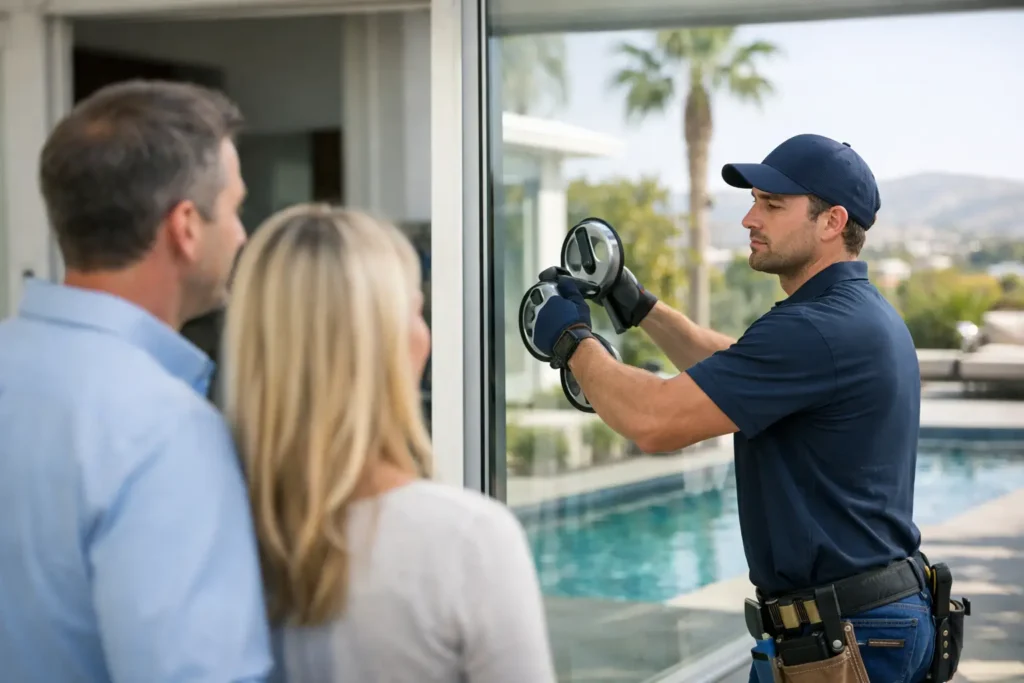
A glass installer in South Orange County is often brought into a project after the big visual decisions have already been made: the ocean-facing opening is framed, the stone is selected, and the bathroom layout is set. That is precisely when the details become consequential. A shower enclosure that is a fraction out of plumb, a railing that interrupts a view with bulky hardware, or exterior glass specified without regard for coastal exposure can compromise an otherwise exceptional result.
For custom homes, renovations, hospitality properties, and commercial spaces, glass is not a finishing commodity. It is an architectural material that must satisfy appearance, structure, movement, safety requirements, and the realities of its setting. Choosing the right glazing partner begins with understanding where ordinary installation ends and specialty craftsmanship begins.
What a Glass Installer in South Orange County Should Solve
South Orange County projects bring together conditions that demand more than a standard measurement-and-installation approach. Coastal light exposes every imperfection. Salt air and hard water can shorten the life of untreated surfaces and hardware. Hillside homes, expansive openings, and indoor-outdoor plans often require unusually large panels, carefully engineered attachment points, or custom fabrication that must align with finished stone, tile, steel, and woodwork.
The right contractor should be able to discuss the work in those terms before a proposal is written. That includes panel size and thickness, tempered versus laminated safety glass, hardware loading, drainage, wind considerations, edge finishes, tolerances, and access for future service. The conversation should be specific to the architecture, not limited to a catalog selection.
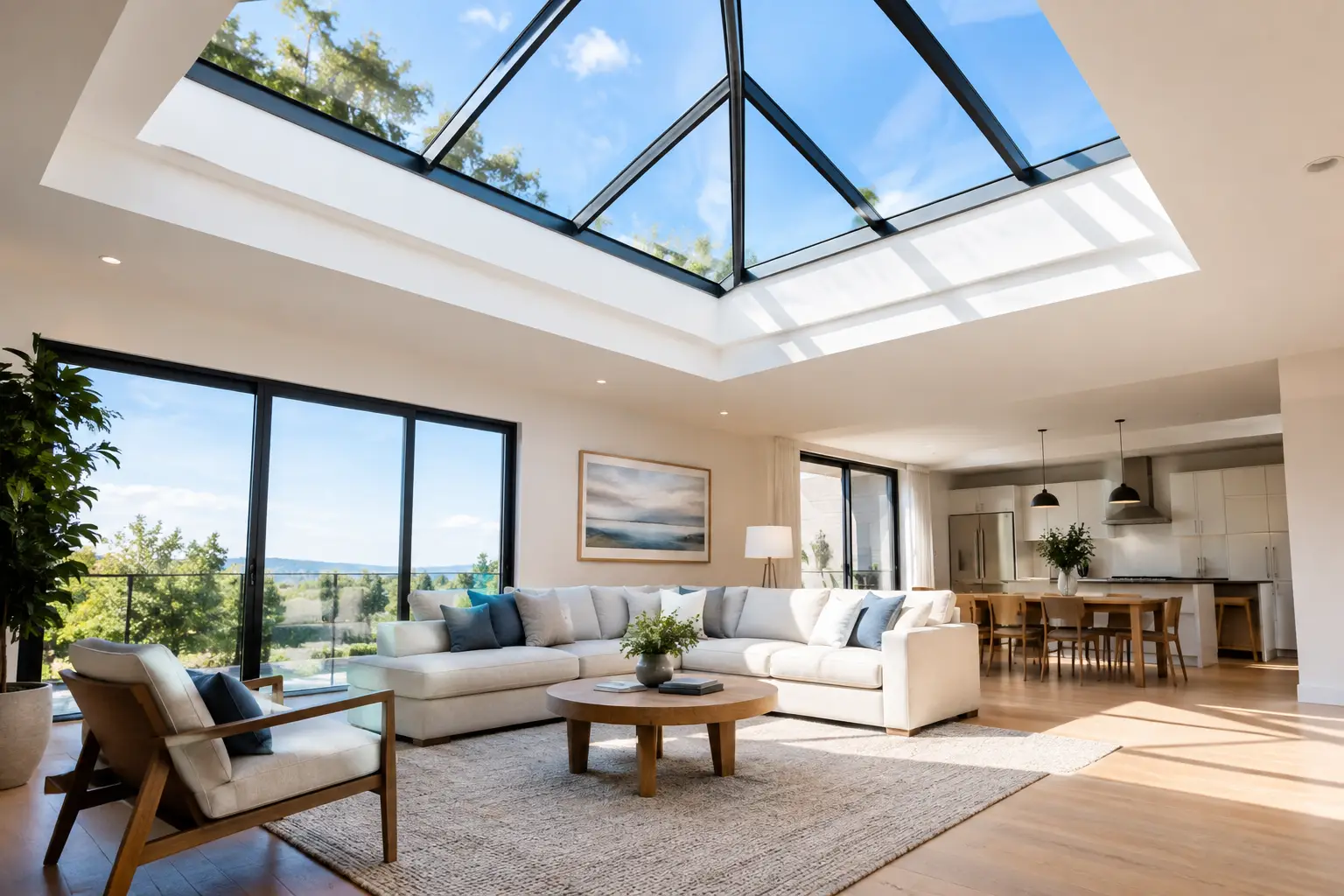
This matters especially for projects with frameless shower glass, glass railings, pool fencing, skylights, custom mirrors, storefront systems, and oversized windows or doors. Each has a different technical profile. A shower enclosure needs precise measurements after finished surfaces are complete. A railing must balance clean sightlines with engineered safety performance. A large mirror may require field verification, wall preparation, and exact coordination with lighting and millwork.
Experience With Complex Conditions Is a Practical Advantage
A capable installer can make straightforward work look effortless. The greater value appears when the work is not straightforward: a curved glass wall, a stair guard that follows a changing elevation, a multi-panel enclosure tucked beneath an irregular ceiling, or a restoration project where replacing the glass would disrupt a finished property.
Ask whether the company fabricates and installs custom work regularly, whether it has completed similar assemblies, and how it handles field changes. Luxury residential and hospitality construction rarely proceeds in perfectly predictable lines. A glazing contractor should be able to identify conflicts early, communicate clearly with builders and designers, and revise details without losing control of quality.
Look Beyond the Glass Itself
The panel may be the visual focus, but the assembly is only as refined as its hardware, preparation, and installation. Poorly selected hinges, clamps, channels, seals, and fasteners can create premature maintenance issues or distract from an intentionally minimal design. Hardware finish also deserves careful attention. Brushed nickel, polished chrome, matte black, bronze, and specialty finishes can each interact differently with water, sunlight, and adjacent materials.
For frameless shower enclosures, the glass must be measured after tile and stone are in place, with allowance for out-of-square walls and natural variation in finished surfaces. A skilled team does not treat those variations as an inconvenience. It builds them into the fabrication process so door gaps, reveals, and panel alignment look intentional.
For railings, the visual preference for minimal posts or exposed hardware must be reconciled with applicable code requirements and the underlying structure. There is no single best system for every terrace, balcony, stair, or pool environment. A base-shoe system can preserve views beautifully, but its suitability depends on the substrate, waterproofing, loading requirements, and access for installation. Surface-mounted posts may be appropriate in another setting. The best choice is the one that serves the architecture without asking the installation to ignore structural realities.
Coastal Exposure Changes the Conversation
In Laguna Beach, Dana Point, Newport Beach, and other coastal communities, exterior glazing is exposed to salt, moisture, wind-driven debris, and intense ultraviolet light. These conditions should influence glass selection, hardware specification, cleaning guidance, and maintenance planning.
Even premium glass can develop mineral spotting or etching when water dries repeatedly on the surface. Pool fencing, shower enclosures, skylights, and exterior glass near irrigation are frequent problem areas. Routine cleaning helps, but once minerals have chemically affected the glass, aggressive household cleaners may do more harm than good.
In some cases, restoration is a better decision than replacement. Certified Diamon-Fusion® field application technology can restore eligible glass surfaces and apply a protective coating designed to make future cleaning easier and reduce the attachment of mineral deposits and contaminants. The condition of the glass, the depth of damage, and the location of the installation all determine whether restoration is viable. A knowledgeable contractor should assess that honestly rather than recommending replacement by default.
Use the Showroom and Portfolio as Working Tools
Photographs are useful, but they rarely communicate the weight of a glass door, the operation of a hinge, the clarity of low-iron glass, or the difference between hardware finishes in natural light. For homeowners and design teams making substantial material decisions, a showroom with full-scale displays provides a more reliable basis for selection.
It allows the project team to compare enclosure configurations, study the proportions of handles and clamps, operate doors, and discuss practical concerns before fabrication begins. This is particularly valuable when a homeowner wants a nearly invisible enclosure but still needs a comfortable entry, effective water containment, and hardware that suits the room.
A portfolio should be reviewed the same way. Look for work that resembles the level of complexity in your project, not merely attractive finished photographs. Projects completed for established luxury builders, resorts, and architects can indicate that a glazing company understands submittals, jobsite coordination, high-finish expectations, and demanding schedules. Capistrano Valley Glass & Mirror has applied that discipline since 1979 across specialty residential, hospitality, and architectural glazing work, including projects for properties such as Waldorf Astoria Monarch Beach and Ritz-Carlton Laguna Niguel.
Questions Worth Asking Before You Commit
A proposal should make the scope understandable, not obscure it. Before selecting a glass contractor, clarify whether field measurements are included, what glass type and thickness are specified, which hardware manufacturer and finish will be used, and whether permits or engineering are required. Ask how the team protects finished surfaces during installation and who will address adjustments after completion.
For a custom project, it is also reasonable to ask about lead times and sequencing. Glass fabrication generally begins only after final field measurements are confirmed. Rushing that step to meet an arbitrary date can create expensive problems. The contractor should explain what must be complete before measuring and what schedule risks could affect fabrication or installation.
Licensing, insurance, and service capability should be part of the discussion as well. Glass assemblies may look delicate, but they often involve heavy materials, safety glazing requirements, elevated work, and significant liability. An established licensed contractor with a long local record offers more than reassurance. It provides continuity if the property needs service, reconfiguration, or restoration years later.
The Best Result Is Usually Decided Early
Exceptional glazing does not depend on choosing the most expensive panel or the least visible hardware. It depends on aligning design intent with the physical demands of the installation before the work reaches the field. When glass is considered early enough to coordinate structure, waterproofing, finished surfaces, access, and maintenance, it can remain remarkably quiet in the finished architecture.
That is the standard worth pursuing: glass that holds a view, defines a space, and performs reliably without asking to be noticed for the wrong reasons.