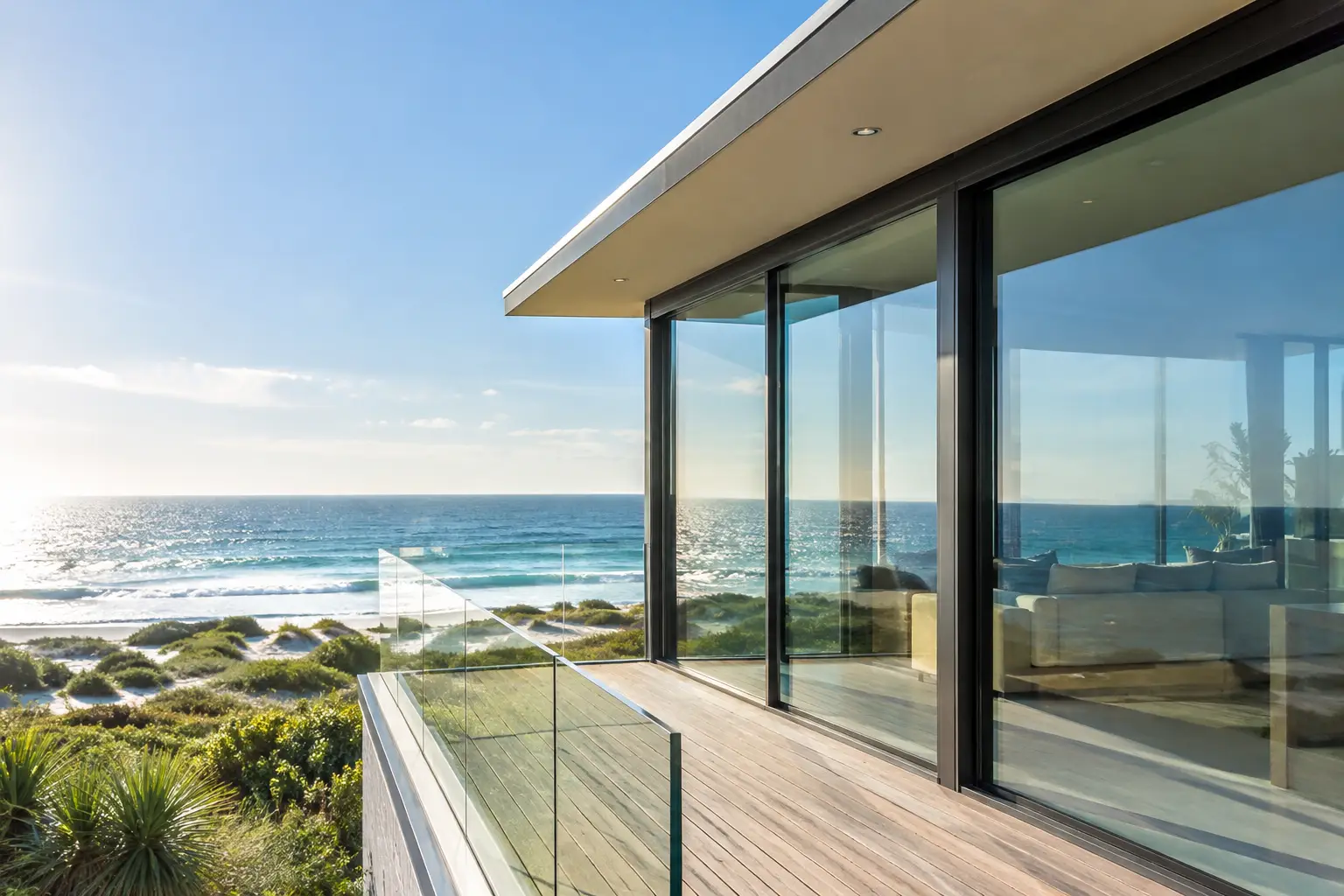
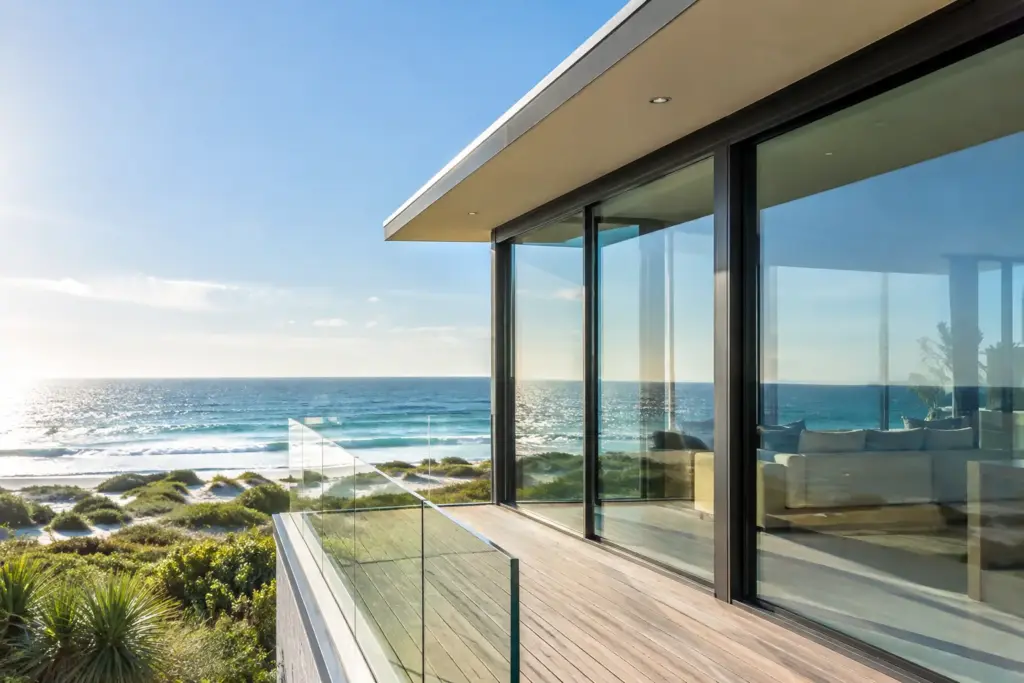
Floor-to-ceiling glass can make a Dana Point living room feel as though it opens directly to the Pacific. It can also turn that same room into a bright, heat-loaded space by midafternoon if the glazing is specified without regard for orientation, elevation, and exposure. The most consequential solar control glass trends are not about making glass darker. They are about preserving the view, daylight, and architectural clarity that make expansive glazing desirable while managing heat, glare, UV exposure, and occupant comfort.
For Southern California homes, hotels, and commercial properties, this is a design issue as much as an energy issue. A beautiful glass wall that performs poorly changes how a room is used. Shades remain closed, furnishings fade, rooms nearest the glass run warmer than the rest of the home, and a carefully considered view becomes difficult to enjoy.
Solar Control Glass Trends Moving Beyond Dark Tint
Earlier solar-control solutions often required an obvious visual compromise: darker glass, a pronounced reflective appearance, or a noticeable color cast. Those options still have a place in certain facades, particularly where privacy or intense western sun is the dominant concern. But premium residential work increasingly favors high-performance coatings that deliver meaningful solar rejection with a clearer, more neutral appearance.
Spectrally selective low-emissivity, or low-E, coatings are central to this shift. These microscopic coatings are engineered to admit a substantial portion of visible daylight while limiting selected infrared energy. The result can be a brighter interior with lower solar heat gain than clear glass alone would allow.
The distinction matters on coastal properties, where homeowners may want broad ocean views and abundant natural light without the bronze, gray, blue, or green cast that can alter the character of the water, sky, stone, and interior finishes. The best specification is rarely the one with the lowest possible heat-gain figure. It is the one that creates an appropriate balance for the home and its setting.
Read the Numbers Together, Not in Isolation
Solar heat gain coefficient, or SHGC, indicates how much solar heat passes through a glazing system. A lower SHGC generally means less solar heat enters the building. Visible transmittance, or VT, describes how much visible light comes through. Higher VT can support daylight and preserve a more open visual connection to the exterior.
Neither number is sufficient on its own. A very low-SHGC glass may be useful on an exposed west-facing wall, yet it can feel overly shaded on a protected north elevation. High visible transmittance is attractive, but without adequate solar control it may contribute to glare and discomfort. Architects and owners should review sample glass under real daylight, alongside performance data for the complete glazing assembly rather than the glass lite alone.
The Glass Is Becoming More Orientation-Specific
Uniform glass packages across every elevation are becoming less common in custom architecture. A home in Newport Beach or Laguna Beach may face different conditions on each side: intense late-afternoon sun on the west, controlled morning light on the east, strong overhead exposure at skylights, and reflected glare from water, paving, or a neighboring light-colored structure.
Using one glazing specification everywhere can simplify procurement, but it may not be the best solution for comfort or visual consistency. A sophisticated approach may use different coatings or glass constructions by elevation while maintaining a closely matched exterior appearance. This takes early coordination. It also requires a glazing contractor who understands how performance, fabrication limitations, framing systems, and sightlines affect the finished work.
Skylights deserve particular attention. Because they receive direct solar exposure for much of the day, they can introduce significant heat and glare even when vertical glazing performs well. Solar-control insulating glass, laminated interlayers, fritted patterns, internal shading strategies, and carefully placed overhangs can each play a role. The appropriate solution depends on roof orientation, ceiling height, shading geometry, and how the space will actually be occupied.
Neutral Aesthetics Are a Premium Requirement
The market is moving toward glass that performs quietly. Owners are asking for minimal color shift, reduced interior and exterior reflectivity, and consistent appearance across large elevations. This is especially important when architectural glazing meets clear glass railings, pivot doors, mirrors, shower enclosures, and other highly visible glass elements.
A coating can look neutral when viewed straight on and noticeably different at an angle. It can appear one way against a blue coastal sky and another against trees or a shaded courtyard. Thickness, heat treatment, laminated construction, and insulating glass configuration also influence color. In a large custom residence, a subtle mismatch can become apparent once multiple elevations are installed.
Mockups and full-size samples are worth the time on major projects. They allow the owner, architect, and builder to evaluate daytime reflectivity, nighttime transparency, edge appearance, and compatibility with adjacent materials such as bronze, steel, limestone, and wood. A small sample is useful, but a larger installed mockup reveals how the glass will behave at architectural scale.
Laminated Glass Is Taking on More Than a Safety Role
Laminated glass has long been selected for safety, security, and sound control. It is now increasingly considered within solar-control strategies as well. Specialized interlayers can help reduce UV transmission, improve acoustics near busy roads or resort activity, and support custom visual effects without sacrificing the clean lines of a glass-forward design.
For coastal residences, laminated construction may also be required or advisable in certain locations because of safety glazing requirements, wind exposure, or the design of the opening system. It can be combined with insulating glass and high-performance coatings, but these assemblies need to be engineered and fabricated correctly. More layers do not automatically mean better performance. They can affect weight, edge details, fabrication tolerances, and the capacity of the framing or door hardware.
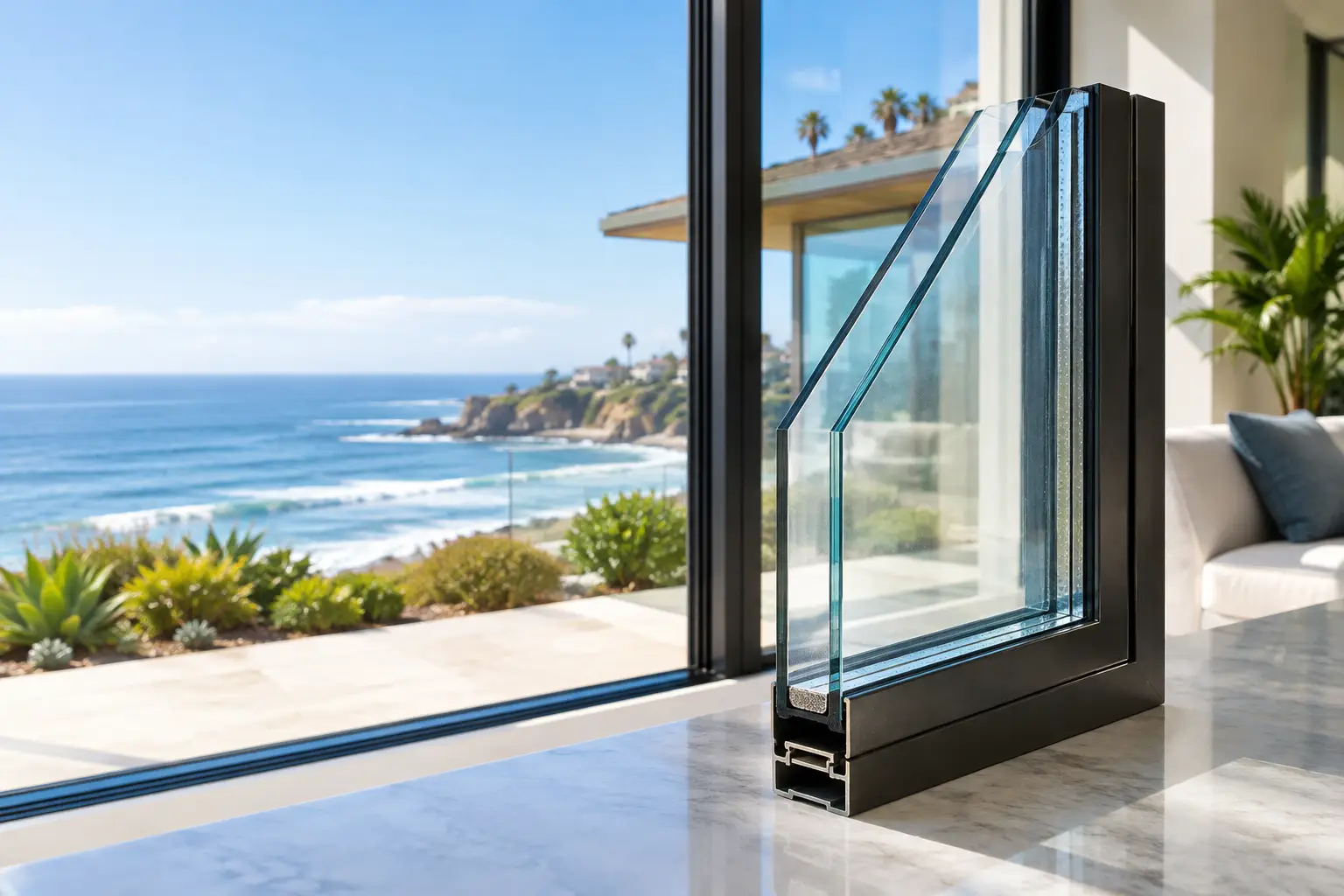
This is where commodity thinking falls short. Architectural glass is a system. The glass makeup, spacer, sealants, framing, setting blocks, drainage, hardware, and installation conditions all contribute to long-term performance.
Smart Glass Is Becoming More Practical, Selectively
Electrochromic glass, often called dynamic or smart glass, can change tint in response to controls, schedules, or sunlight conditions. It remains a premium investment, but it is gaining traction in spaces where conventional shades would interrupt architecture or views: double-height great rooms, view corridors, hospitality lobbies, and highly exposed conference areas.
Its strongest case is not every window in every project. Dynamic glass can be compelling where glare changes throughout the day and occupants want the facade to adapt without a visible shading system. It may be less appropriate where a fixed, high-performance coating and well-designed exterior shading can achieve the needed result at a more practical cost.
Controls also require careful planning. Owners should understand how the system responds during power interruptions, whether zones can be adjusted independently, and how the glass will look in intermediate tint states. A dramatic technology should still serve the architecture, not become the architecture’s most noticeable feature.
Exterior Shading Is Returning to the Conversation
High-performance glass cannot solve every solar problem by itself. Deep overhangs, recessed openings, vertical fins, louvers, pergolas, and landscape shade can reduce solar load before sunlight reaches the glass. In many cases, exterior shading offers a more effective response to direct sun than interior shades, which manage glare but allow much of the solar heat to enter first.
The strongest projects use both approaches. Glass is specified for the baseline performance required by the elevation, while architectural shading addresses predictable seasonal and directional exposure. This combination can preserve higher visible transmittance and a more natural glass appearance than relying on a heavily tinted glazing package alone.
Durability and Maintenance Are Part of Solar Performance
Southern California’s coastal air, hard water, irrigation overspray, and mineral deposits can affect the appearance of exterior glass over time. A high-performance coating is not a substitute for proper cleaning practices, drainage detailing, or protection during construction. Abrasive methods and inappropriate chemicals can damage surfaces, while neglected mineral buildup can permanently etch glass.
Protective treatments and restoration services have become more relevant as owners seek to preserve large, expensive glass installations rather than replace them prematurely. Certified Diamon-Fusion® field application technology, for example, can restore suitable damaged glass and apply a protective coating that helps reduce future staining and cleaning effort. The condition of the glass must be assessed first, since not every surface can be restored to the same result.
Capistrano Valley Glass & Mirror approaches these decisions as specialty glazing work, not simply a choice from a tint chart. The right glass begins with the architecture, the exposure, and the expectations of the people who will live with it.
For a new residence, renovation, or hospitality project, bring glazing decisions into the conversation before openings, framing, and finishes are finalized. The most satisfying result is glass that lets the light in, keeps the heat in check, and allows the view to remain exactly where it belongs: in clear sight.