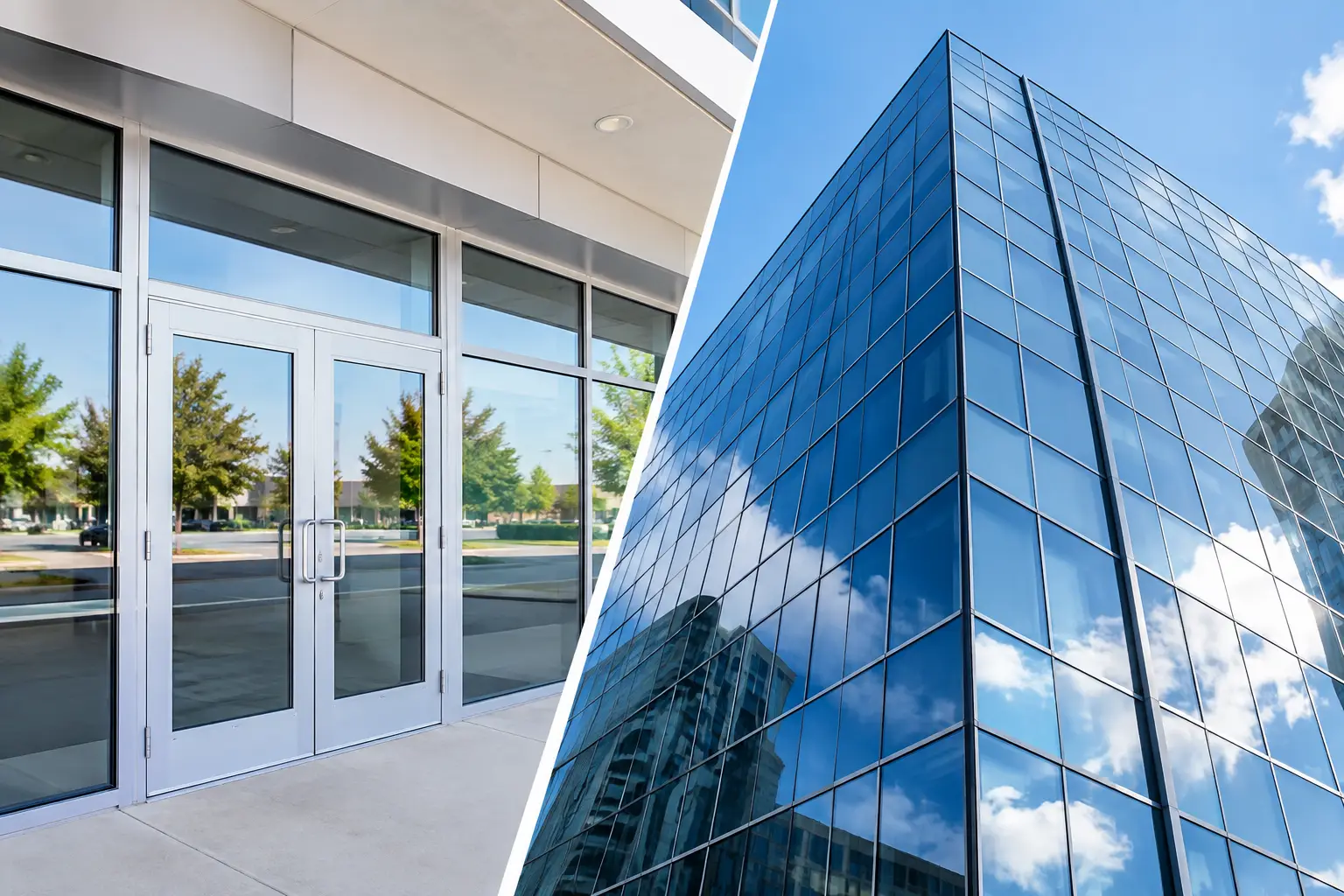

A wine room should reveal a collection without exposing it to the conditions that diminish it. That tension is why choosing the best glass for wine rooms is not simply a design decision. The glazing must contribute to temperature stability, limit damaging light, meet safety requirements, and preserve the quiet, precise appearance expected in a custom residence.
For a modest under-stair display, a carefully selected tempered glass door may be sufficient. For a walk-in cellar with a full-height glass wall, coastal exposure, or a climate-controlled collection of serious value, the specification becomes more exacting. Glass type, frame system, seal details, hardware, and the opening itself must work as one architectural assembly.
Start With the Wine Room Environment
Wine performs best in a stable environment. While individual storage programs vary, frequent temperature swings, uncontrolled heat gain, and ultraviolet exposure are all concerns. Glass is often the most visually prominent part of the enclosure, but its performance must support the cooling equipment rather than force it to work harder.
A wine room located within conditioned interior space has different needs than one placed against an exterior wall, facing afternoon sun, or opening onto a bright great room. In South Orange County homes, expansive glazing and ocean-view architecture are common. They bring welcome daylight to living spaces, yet that same daylight can create unwanted solar load at a wine enclosure.
Before selecting the glass, establish the room’s cooling design, target temperature range, wall construction, ceiling condition, and location relative to sunlight. The glazing contractor, wine-cooling specialist, architect, and builder should address these decisions early. A beautiful glass wall that is specified after the mechanical system is sized can become an expensive constraint.
The Best Glass for Wine Rooms Is Usually Insulated
For a full-height wine room enclosure, insulated glass units are often the appropriate starting point. An insulated unit uses two or more panes separated by a sealed spacer system, creating an airspace that improves thermal performance over a single pane of glass.
This is particularly valuable where the wine room is substantially cooler than the surrounding living area. A single panel may look minimal, but it transfers heat more readily and is more prone to condensation when conditions differ sharply on either side. Insulated glazing helps moderate that exchange and can reduce the demand on the cellar cooling system.
The exact makeup matters. Glass thickness, airspace dimension, spacer construction, coatings, and the size of each panel affect performance. Large-format panels may also require heavier glass and more deliberate engineering to control deflection. What appears to be a simple frameless elevation can involve significant technical coordination behind the finished surface.
Low-E Coatings and Solar Control
Low-emissivity, or Low-E, coatings can improve the insulating performance of a glass unit by reducing radiant heat transfer. In rooms exposed to strong daylight, solar-control coatings may also help manage heat gain. The correct coating depends on orientation, surrounding finishes, desired color neutrality, and how much visible light the design calls for.
Not every wine room needs a highly reflective or heavily tinted product. A deep tint can alter the presentation of bottle labels, stone, metalwork, and wood cabinetry. In many luxury interiors, the goal is clear, neutral glass with carefully selected performance characteristics rather than a visibly dark facade-like appearance.
A glazing professional should review glass samples under the actual lighting conditions. This is especially important when the wine room is adjacent to a kitchen, dining room, or entertaining space where the enclosure will be viewed daily.
UV Protection Requires More Than a Clear Pane
Ultraviolet light can affect wine over time, especially when bottles are stored in clear or lightly colored glass. Standard clear glass filters some UV energy but should not be treated as complete protection for a collection displayed in bright conditions.
Laminated glass is often worth considering where enhanced UV filtering is a priority. It incorporates an interlayer between panes, and certain interlayers can help reduce UV transmission while also providing safety and acoustic benefits. When combined within an insulated glass unit, laminated glass can be a strong choice for wine rooms facing exterior light or rooms with substantial daylight exposure.
However, UV control is only one part of the equation. Lighting inside the cellar matters as well. Low-heat LED fixtures, controlled run times, and thoughtful fixture placement protect the collection while allowing the room’s materials to read clearly. A wine room should feel illuminated, not overlit.
Safety Glass Is Not Optional
Wine room doors, sidelites, and floor-to-ceiling panels are subject to safety-glazing requirements based on their size, location, and proximity to doors or walking surfaces. Tempered glass and laminated glass are the two primary safety-glass options, but they behave differently.
Tempered glass is heat-treated for increased strength. If it breaks, it fragments into small pieces. It is widely used for glass doors and interior partitions. Laminated glass holds together when broken because the interlayer retains the fragments, an advantage in certain applications and in homes where security, UV reduction, or acoustic control is also desired.
The choice should not be made on appearance alone. Panel dimensions, door operation, adjacent conditions, local code requirements, and the desired level of retention all influence the appropriate safety-glass assembly. Custom wine rooms deserve the same code-conscious planning as a shower enclosure, glass railing, or exterior door system.
Frameless Glass Has Limits, and That Is a Good Thing
Minimal framing is a defining look for contemporary wine rooms. A nearly uninterrupted glass wall can make a collection feel like part of the architecture rather than a separate utility room. Yet “frameless” should not be confused with unsupported.
Large glass panels need proper perimeter channels, structural silicone, engineered fittings, or discreet framing systems designed for the application. Doors require hinges, pivots, pulls, closers, and seals capable of handling the panel weight while maintaining reliable operation. In a climate-controlled wine room, the door perimeter is especially important. Gaps that appear minor can create condensation, air leakage, and unnecessary cooling loss.
The cleanest result often comes from planning the recesses, header conditions, flooring transitions, and cabinetry returns before finishes are installed. When framing or support is treated as an afterthought, the solution may require wider channels, exposed fasteners, or compromises to the intended sightlines.
Door Systems Need a Real Seal Strategy
A pivot door can be visually dramatic, but it may not deliver the same air seal as a purpose-built swing door with compression gaskets. Sliding glass doors offer convenience in some layouts, though they can be more challenging to seal for a tightly controlled cellar environment.
For a wine room that depends on precise climate separation, the best door is often the one that balances the architectural concept with a dependable perimeter seal. This may mean a narrow framed system rather than a purely frameless opening. It may also mean specifying an insulated glass door panel instead of treating the door as a decorative interior partition.
The right answer depends on how demanding the room’s climate conditions are and how often the door will be used. There is no benefit in achieving a nearly invisible edge detail if the cooling system is left compensating for it every day.
Consider Condensation Before It Appears
Condensation is among the most common disappointments in glass wine room design. It occurs when a glass surface falls below the dew point of the warmer, more humid air around it. In practice, that can leave visible moisture on the room-facing side of a glass wall, potentially affecting adjacent millwork, flooring, and finishes.
Insulated glass, appropriate coatings, thermally improved framing, and properly sealed door assemblies all reduce the risk. So does realistic coordination of wine-room temperature and household humidity. A colder cellar setting increases the likelihood of condensation if the surrounding home is warm or humid.
Coastal Southern California conditions can be relatively moderate, but open doors, seasonal humidity shifts, and homes that blend indoor and outdoor living can change the equation. This is why an experienced installer asks about mechanical design and room location instead of selecting glass strictly from a finish board.
Make the Glass Serve the Interior, Not Compete With It
Clear low-iron glass is often specified for premium wine rooms because it minimizes the green cast visible along glass edges and preserves the color of backlit bottle displays, natural oak, walnut, stone, and metal shelving. It is particularly effective in thick panels and bright interiors where standard clear glass can show a stronger edge tint.
That said, low-iron glass is not mandatory for every project. Standard clear glass may be appropriate where the design intentionally uses darker materials, smoked glass, bronze hardware, or a moody cellar atmosphere. Decorative interlayers, fluted glass, and acid-etched details can also add privacy or soften views, although each introduces a trade-off in transparency and cleanability.
Hardware deserves equal attention. Finishes should relate to the wine racking, cabinet pulls, nearby doors, and lighting, but performance comes first. Premium hinges and handles must be rated for the actual glass thickness and panel weight, with mounting conditions designed to resist long-term movement.
Specify the Assembly, Not Just the Glass
The strongest wine room projects begin with a complete glazing conversation: panel sizes, glass makeup, coating location, safety requirements, seal details, door swing, hardware, adjacent finishes, and installation tolerances. A line item labeled “clear tempered glass” does not provide enough information for a high-performance enclosure.
At Capistrano Valley Glass & Mirror, specialty glass work is approached as an architectural system, with the same attention given to demanding residential and hospitality glazing projects since 1979. For a wine room, that level of coordination protects both the visual intent and the conditions the collection requires.
The most successful glass wine rooms do not call attention to the compromises behind them. They hold their temperature, operate with confidence, frame the collection precisely, and let the craftsmanship of the room remain in view.