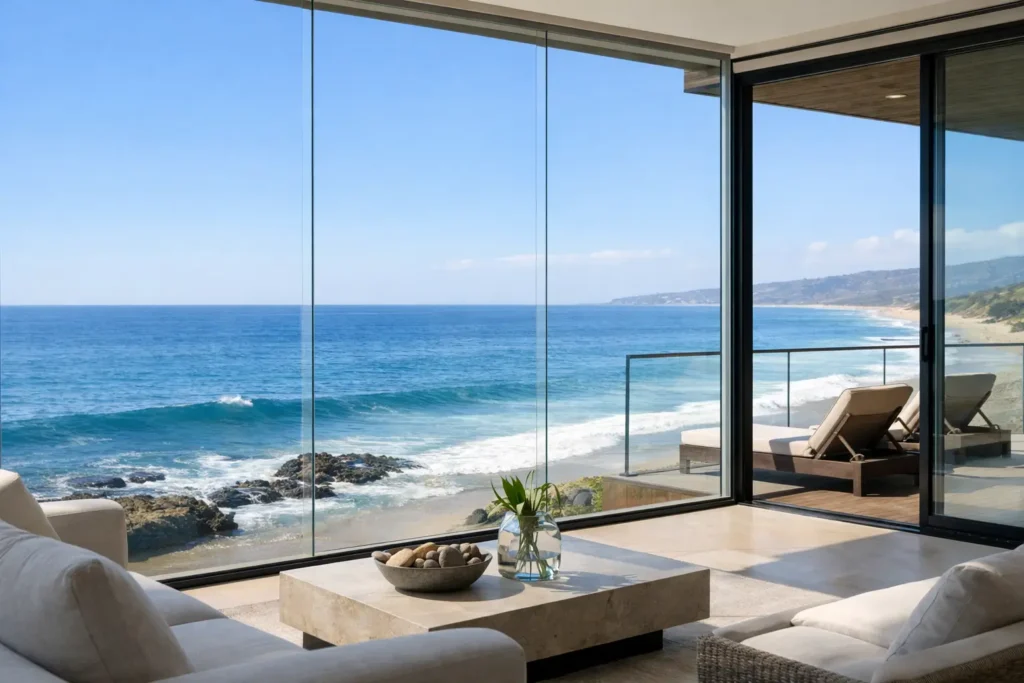
An ocean view should be framed by glass that stays clear, secure, and composed under conditions that punish ordinary window and railing systems. The best glass for oceanfront homes is not one product or a single coating. It is a coordinated glazing specification built around wind exposure, salt air, solar heat, safety requirements, and the architecture of the home itself.
Along the Southern California coast, the difference is visible within a few seasons. Inferior insulated units can lose their seal. Unprotected hardware can stain or corrode. Standard glass may meet a basic requirement yet feel inadequate when it is installed in a wide sliding wall facing persistent coastal wind. For a home in Laguna Beach, Dana Point, Newport Beach, or San Clemente, glass should be selected as an architectural system, not as a finish item.
Start With the Exposure, Not the View
Two homes a mile apart can require very different glazing. A protected hillside residence may contend mainly with strong afternoon sun and occasional weather. A bluff-top or beachfront home can face direct wind, airborne salt, driving rain, intense UV exposure, and sand carried across exterior surfaces. The elevation of the opening, the distance to the water, and the orientation of the facade all matter.
This is why the glass schedule should begin with site conditions and code-required design pressures. Large fixed panels, multi-panel doors, skylights, guardrails, and shower enclosures each carry different loads and risks. A dramatic wall of glass may require heavier lites, laminated construction, deeper framing pockets, and engineered attachment details that would be unnecessary in a sheltered location.
The goal is not simply to specify the thickest glass available. Excess thickness can add weight, complicate operation, and change how a system performs. The right assembly balances structural demands, optical quality, energy performance, and the practical realities of fabrication and installation.
Best Glass for Oceanfront Homes: Laminated Glass
For many exposed coastal applications, laminated glass is the strongest starting point. It consists of two or more panes bonded with a clear interlayer. If the glass breaks, the interlayer helps hold the fragments in place rather than allowing the panel to fall apart. That retention is valuable for large windows, doors, overhead glazing, glass railings, and other areas where impact or windborne debris is a concern.
Laminated glass also improves sound control, a meaningful advantage for homes near surf, traffic, active terraces, or resort activity. More subtly, it provides another layer of security for ground-level openings and expansive operable door systems.
Not all interlayers perform the same way. Polyvinyl butyral, commonly called PVB, is widely used and can be appropriate for many applications. For demanding exterior guardrails and highly exposed panels, a stiffer structural interlayer such as SentryGlas may be preferred because it offers greater rigidity and better edge stability under challenging conditions. The correct choice depends on the engineering, the panel size, the exposed edges, and the exact installation.
Laminated construction does not automatically eliminate maintenance concerns. Exposed edges must be detailed carefully, particularly near salt spray or areas where water can remain trapped. Precision fabrication, proper setting blocks, drainage, and compatible sealants protect both the glass and the framing system over time.
Tempered Glass Has a Different Role
Tempered glass is heat-treated to be stronger than standard annealed glass. When it breaks, it is designed to fracture into small pieces rather than sharp shards. It remains an essential safety-glazing material for shower enclosures, doors, sidelites, and many code-governed locations.
For an oceanfront home, however, tempered glass is not always the full answer. A monolithic tempered panel can be suitable for a frameless shower enclosure or certain interior applications, but it does not provide the post-breakage retention of laminated glass. On an exterior guardrail, a large opening near a pool deck, or a high-wind elevation, laminated tempered glass may deliver a more appropriate combination of strength, safety, and retained integrity.
The distinction is worth discussing early with the architect, builder, and glazing contractor. Glass type should follow the application, not a one-size-fits-all rule.
Insulated Glass Units Need Coastal-Grade Details
Most ocean-view window walls and exterior doors benefit from insulated glass units, often called IGUs. These units use two panes separated by a sealed airspace, improving thermal comfort and reducing heat transfer through the glazing. In a residence with broad west-facing exposures, a well-specified IGU can make rooms near the glass markedly more comfortable during late afternoon sun.
A low-emissivity, or Low-E, coating is usually part of that equation. The coating can reduce solar heat gain and help manage UV exposure while preserving a clear, refined view. Yet coating selection is not merely a question of choosing the lowest possible solar heat gain coefficient. Glass that blocks too much solar energy can appear noticeably tinted or reduce beneficial winter warmth. A coastal home with shaded elevations may need a different coating than a fully exposed contemporary residence in Newport Coast.
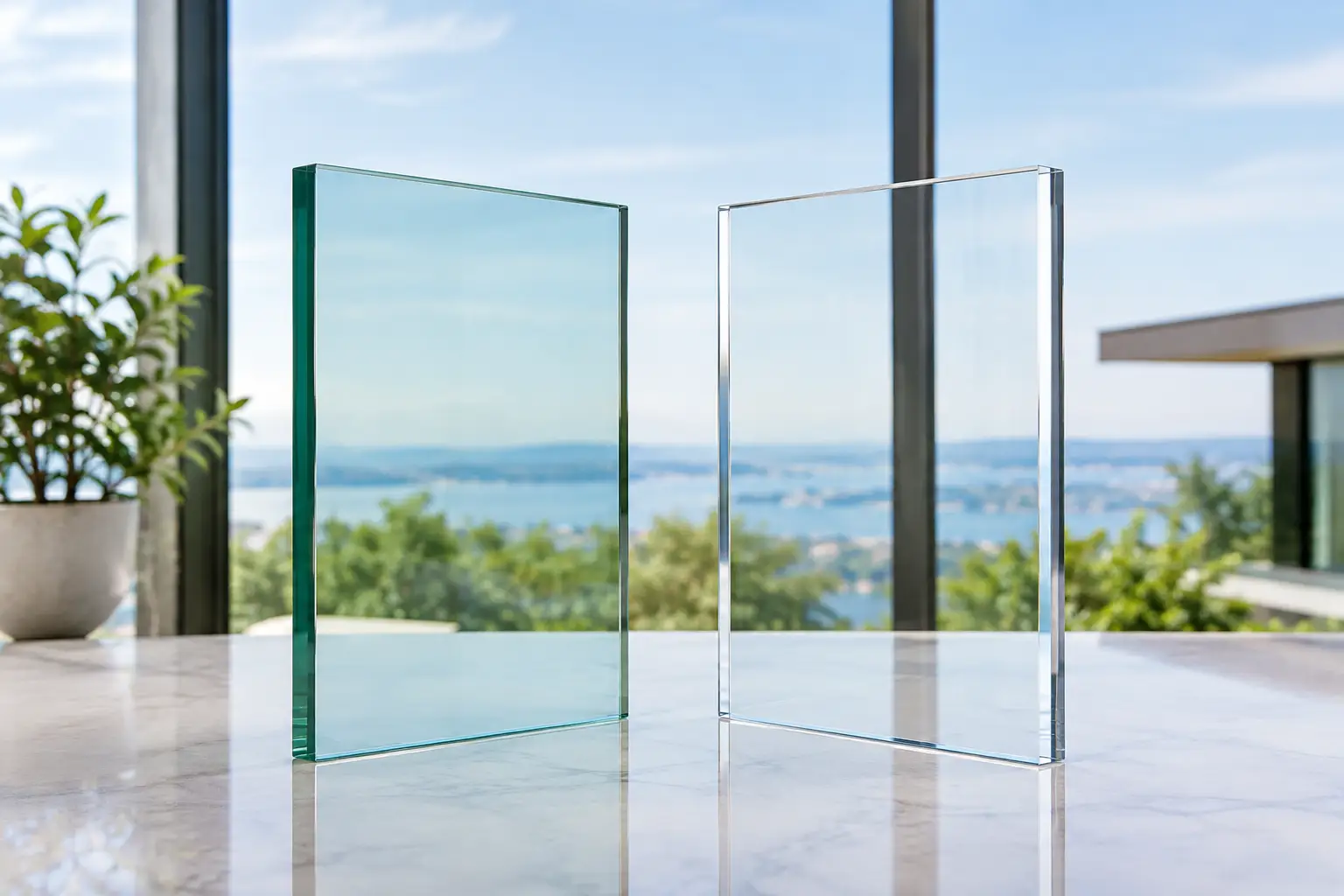
Clarity matters in luxury architecture. Homeowners often want minimal color shift, especially where the glass faces blue water, pale stone, or carefully selected interior finishes. High-performance low-iron glass can reduce the green cast seen in standard clear glass, particularly at thicker edges and in frameless details. It is often worth considering for railings, wine rooms, shower enclosures, and view-critical fixed panels.
The seal and spacer system inside an IGU also deserve attention. Salt air does not directly enter a properly sealed unit, but coastal temperature cycles, moisture, and installation conditions make quality fabrication and correct drainage essential. Once an insulated unit fails, fogging or mineral-like haze between panes cannot be cleaned from the exterior. Replacement is typically required.
Glass Railings Require More Than a Beautiful Panel
A frameless glass railing can preserve an ocean horizon in a way that metal pickets cannot. It also concentrates responsibility at the base shoe, posts, fasteners, and waterproofing transition. The glass itself is only part of the assembly.
For coastal decks and balconies, the railing design should address required guard loads, wind pressure, panel dimensions, handrail requirements, and the potential for water to reach concealed anchors. Marine-grade stainless steel hardware may be appropriate, but even quality stainless requires thoughtful specification and routine cleaning in a salt-air environment. Hardware grade, finish, isolation between dissimilar metals, and drainage details are all consequential.
A railing that looks clean on installation day but leaves water sitting in a channel is not a premium solution. The best work anticipates what cannot be seen after completion: anchor placement, substrate condition, membrane coordination, and access for service.
Do Not Treat Hardware and Sealants as Secondary
Glass receives the attention because it is visible. In oceanfront construction, hardware often determines whether the finished system remains elegant. Sliding door rollers, pivots, patch fittings, clamps, fasteners, and channels must be selected for exposure and maintained accordingly.
The same is true of sealants and gaskets. These materials manage water, accommodate movement, and protect edges. A high-quality glass panel paired with the wrong sealant, poor joint preparation, or incompatible metal finish can create a failure point at the perimeter. Coastal detailing demands coordination between the glazier, waterproofing contractor, window supplier, and builder.
For exterior doors and operable window walls, ask direct questions about drainage paths, weep systems, replacement of weather seals, adjustment access, and the manufacturer’s documented performance for the project’s wind zone. A broad ocean-facing opening should operate smoothly, but it should also resist water intrusion when conditions turn severe.
Protect the Surface Before Etching Takes Hold
Salt residue, hard water, irrigation overspray, and airborne minerals can dull glass long before the panel reaches the end of its useful life. Shower glass and pool fencing are particularly vulnerable because water repeatedly dries on the surface. Once mineral deposits etch the glass, ordinary cleaning may not restore its original clarity.
A professional protective treatment can help reduce the attachment of contaminants and simplify cleaning when applied to clean, properly prepared glass. Diamon-Fusion surface protection, for example, chemically bonds to the glass to create a more water-repellent and easier-to-maintain surface. It is especially useful for shower enclosures, exterior railings, skylights, and pool barriers where clarity is part of the design intent.
Care still matters. Coastal glass benefits from regular rinsing with fresh water, nonabrasive cleaning methods, and attention to tracks, channels, and hardware. Avoid aggressive powders, harsh acids, and metal tools that can scratch glass or damage adjacent finishes. When staining has progressed beyond surface buildup, specialized restoration may be a sensible alternative to replacing otherwise sound panels.
Specify the System Early
The most successful coastal glass projects are resolved before framing is complete. That gives the design team time to confirm engineered loads, sightlines, glazing pockets, sill conditions, drainage, waterproofing, and the exact relationship between glass and finish materials. It also avoids a common late-stage compromise: forcing a premium glass system into openings that were not built to receive it.
Capistrano Valley Glass & Mirror has worked in the demanding coastal environments of South Orange County since 1979, where the standard is not merely whether a panel can be installed, but whether it will continue to perform with the refinement the architecture requires. Full-scale product displays and early technical coordination are particularly valuable when a project includes oversized doors, frameless railings, custom shower glass, curved panels, or specialty mirror work.
For an oceanfront residence, ask to see the actual glass, coatings, edgework, and hardware before finalizing the selection. Stand in front of the panel, look through it in daylight, and consider the view you are protecting. The right glass should not compete with the ocean or ask for constant attention. It should make the architecture feel quieter, clearer, and ready for the coast.