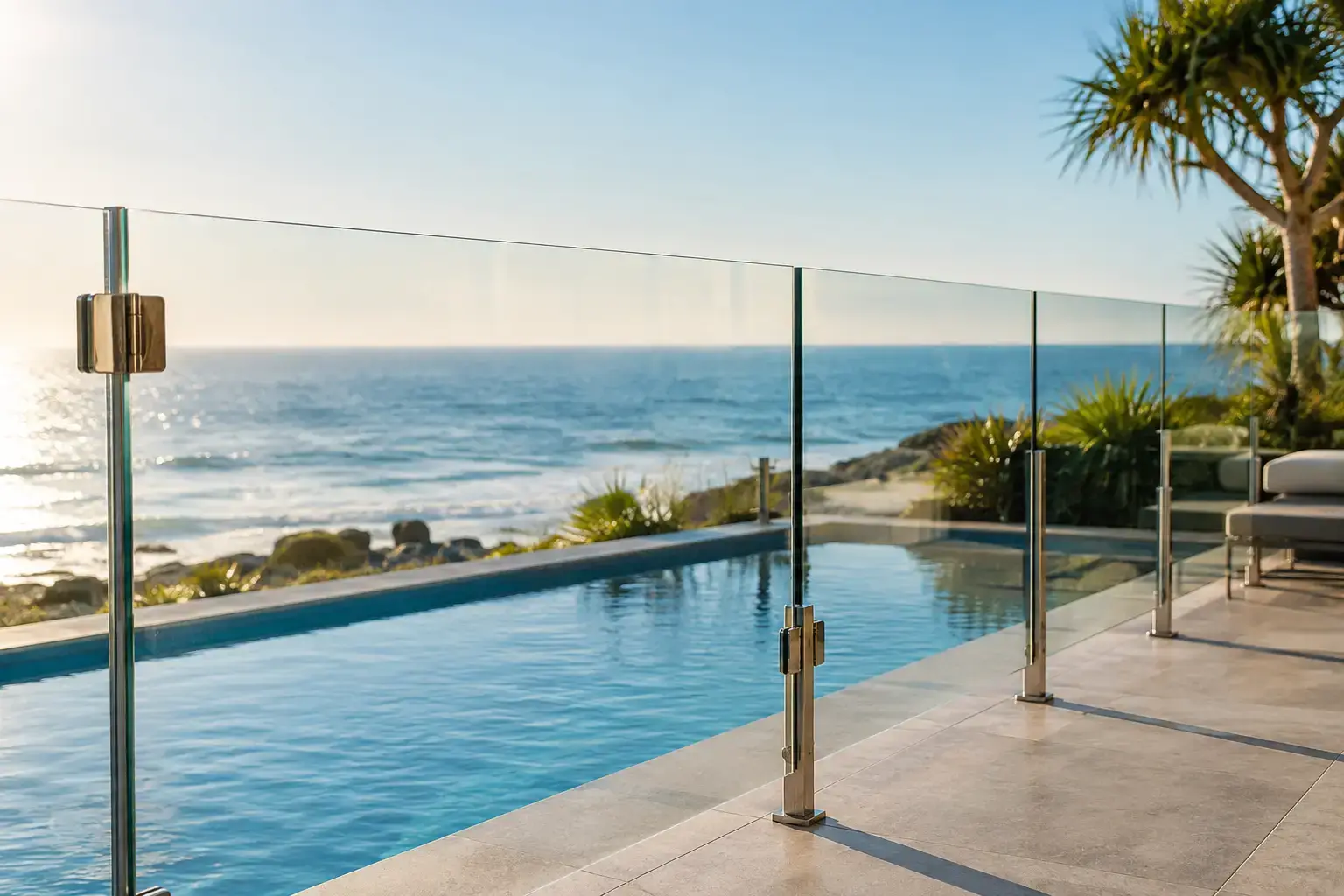
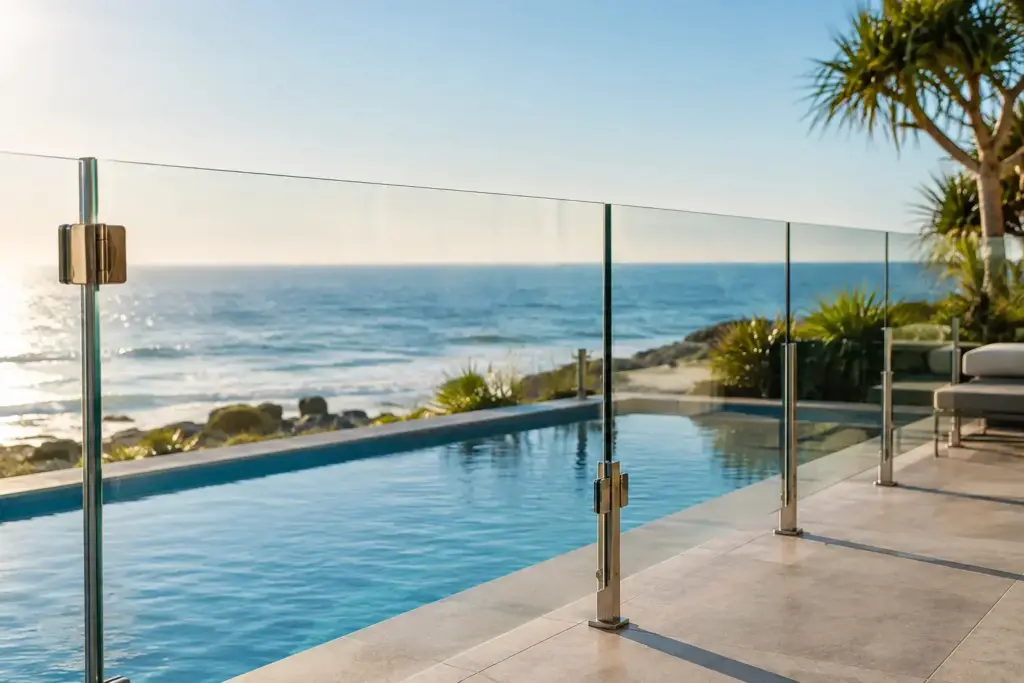
A glass pool fence is designed to disappear into the view. That is precisely why surface damage becomes so noticeable. A haze at the waterline, white mineral spotting, corroded hardware, or fine scratching can diminish an otherwise exceptional pool environment. To protect glass pool fencing, owners need more than occasional cleaning. They need a care strategy that accounts for water chemistry, coastal exposure, hardware selection, and the condition of the glass itself.
For homes in Laguna Beach, Dana Point, Newport Beach, and other coastal Southern California communities, salt air and hard water often create a more demanding maintenance environment than homeowners expect. Frameless pool fencing is an architectural system, not a commodity accessory. Its clarity, safety performance, and long-term appearance depend on disciplined installation and informed service.
What Damages Glass Pool Fencing
Glass is durable, but it is not immune to its surroundings. Most deterioration begins gradually, often before it is apparent across the full panel. Sprinkler overspray, pool splash, morning marine layer, and evaporation leave minerals on the surface. If those deposits are allowed to remain, they can bond to the glass and create etching that ordinary cleaning no longer removes.
Hard-water spotting is particularly common around pools because water repeatedly dries on the same lower areas of a panel. Calcium and magnesium deposits first appear as a faint cloudiness. Over time, they can become opaque white marks that alter the clean, open quality that made frameless fencing the right architectural choice in the first place.
Coastal properties face an additional concern: airborne salt. Salt residue can collect around clamps, spigots, gate hinges, and fasteners, accelerating corrosion where incompatible materials or neglected finishes are present. Even high-grade stainless steel benefits from regular freshwater rinsing and inspection in ocean-adjacent settings.
Fine scratches present a different challenge. Abrasive pads, dry wiping, gritty towels, and poorly chosen cleaning compounds can mark glass or polished hardware. The damage may be nearly invisible in shade, then obvious in direct afternoon sun. Once scratches are established, aggressive cleaning rarely improves the result and may make it worse.
Protect Glass Pool Fencing With Consistent Care
The most effective maintenance program is simple, provided it is consistent. Rinse the glass with clean water to remove salt residue, dust, and pool chemicals before they dry in place. This is especially valuable after high winds, periods of heavy pool use, or nearby landscape work.
For routine cleaning, use a soft microfiber cloth or clean, non-abrasive sponge with a glass-safe cleaner. Avoid scouring pads, powdered cleansers, razor blades, and harsh acidic products unless a qualified glass professional has confirmed they are appropriate for the specific condition. A product that removes mineral deposits from tile may be far too aggressive for architectural glass, adjacent stone, or specialty hardware finishes.
Drying the panels after washing reduces spotting, particularly where irrigation water reaches the fence. It is also worth reviewing sprinkler placement. A landscaping adjustment that keeps overspray off the glass can prevent a recurring restoration issue and preserve the finish of surrounding metalwork.
Pool chemistry deserves attention as well. Excessive splash-out from poorly balanced water can leave more aggressive residue on nearby surfaces. The goal is not to eliminate ordinary pool use, but to avoid allowing chemical and mineral deposits to remain on the fence for extended periods.
Choose Protection That Bonds to the Glass
A protective coating can materially change how a glass fence performs in a wet, exposed setting. Not all coatings are equal, however. Temporary topical repellents may improve water beading for a short period, but they can wear unevenly, attract residue, or create an inconsistent appearance if applied without proper preparation.
For demanding residential and hospitality applications, a professionally applied protective treatment that bonds with the glass surface offers a more durable approach. Diamon-Fusion® technology, for example, creates a protective barrier that helps reduce the adhesion of water spots, soap scum, mineral buildup, and other contaminants. On pool fencing, the practical benefit is less time spent fighting deposits and a better opportunity to clean surfaces before staining becomes permanent.
A coating is not a substitute for maintenance. It changes the cleaning burden; it does not eliminate it. Properties directly exposed to salt spray, heavy irrigation, or very hard water will still require regular care. Yet the difference between cleaning a surface that releases deposits and cleaning one where minerals have bonded can be substantial.
The best time to apply protective treatment is when the glass is new, fully cleaned, and free of fabrication debris or installation residue. Existing fencing can also be a candidate, but the condition must be assessed first. A coating applied over etched glass will not reverse existing surface damage.
Do Not Overlook Hardware and Drainage
The glass panels are only part of the system. Pool fence hardware must be specified for the environment, installed with precision, and maintained accordingly. Hinges, latches, clamps, channels, and fasteners should be appropriate for outdoor exposure and the project’s proximity to the coast. Premium-grade materials still require attention when salt, chlorides, moisture, and heat are part of daily life.
Rinse hardware with fresh water, then wipe it dry rather than allowing saltwater or pool residue to evaporate on the finish. Inspect gate operation periodically. A gate that begins to drag, close unevenly, or lose its self-closing action should be addressed promptly, both for appearance and safety. Glass pool barrier requirements are code-sensitive, and an operable, properly latching gate is central to the system’s purpose.
Drainage also matters. Water should not be allowed to pond at base channels, around spigots, or within concealed mounting conditions. Where fencing meets decking, tile, stone, or concrete, the installation should account for movement, drainage paths, and the potential for residue from adjacent materials. These decisions are easiest to make before installation, but a professional inspection can identify correctable concerns on an existing fence.
When Cleaning Is No Longer Enough
There is a point at which repeated cleaning becomes an expensive cycle with disappointing results. If the glass remains cloudy after proper washing, shows stubborn white or gray deposits, or has visible etching in the primary sightline, the surface may need restoration rather than another off-the-shelf cleaner.
Professional restoration can remove mineral buildup and improve clarity without automatically replacing the glass. The correct process depends on whether the problem is a removable deposit, surface staining, true etching, scratching, or a combination of conditions. This distinction is important. An inexperienced attempt to polish etched glass can create distortion, uneven reflectivity, or further scratching.
Capistrano Valley Glass & Mirror provides certified Diamon-Fusion® field application technology for qualifying restoration projects, offering property owners a practical alternative when replacement is not yet necessary. A knowledgeable evaluation should include the glass, hardware, surrounding finishes, water exposure, and the visual expectations for the project. On a panoramic ocean-view terrace or a carefully detailed pool court, acceptable results should be measured in daylight, at viewing distance, and from the angles that matter most to the homeowner.
Build Protection Into the Original Specification
For a new pool project, the strongest maintenance plan begins before the first panel is installed. Select properly engineered safety glass, specify hardware suited to the exposure level, coordinate drainage and irrigation, and establish a cleaning plan with the property manager or homeowner. If the project includes a protective glass treatment, incorporate it into the construction sequence rather than treating it as an afterthought.
This is where experienced architectural glazing work makes a visible difference. Panel layout affects sightlines and cleaning access. Hardware placement influences drainage and long-term serviceability. Fabrication tolerances, gate alignment, edge quality, and interface details all affect how the system performs years after the final inspection.
A glass pool fence should remain nearly invisible for the right reason: because it has been designed, installed, and maintained with the same care as the view it protects. When mineral deposits, salt exposure, or aging hardware begin to interfere with that clarity, early professional attention is usually the most economical way to preserve both the glass and the setting around it.