
A bath can face the Pacific, a pool terrace can sit above a neighboring property, and an entry can welcome daylight without giving every visitor a view inside. Privacy glass resolves these conditions without defaulting to shades, heavy walls, or dark rooms. When specified well, it becomes part of the architecture: a surface that controls sightlines while retaining light, proportion, and material character.
For custom homes, hospitality properties, and commercial interiors, the right solution is rarely chosen by opacity alone. Glass type, placement, panel size, safety requirements, hardware, maintenance expectations, and the direction of light all affect the result. The most successful installations begin with a precise understanding of what must be concealed, what should remain visible, and how the glass will perform years after installation.
What Privacy Glass Actually Does
Privacy glass is not one product. It is a category of decorative, treated, or laminated glass designed to obscure visual detail while allowing varying degrees of light transmission. Some options create a soft silhouette. Others block views almost entirely. Some provide privacy at all times, while electronically switchable glass can change from clear to opaque on command.
The distinction matters because privacy works differently in daylight than it does after dark. A textured or frosted panel may conceal a bathroom interior in the afternoon, yet become more translucent when the room is brightly lit at night and the exterior is dark. A thoughtful specification considers the full lighting condition, not simply the appearance of a small showroom sample.
For a coastal residence, this can be especially important. Large expanses of glazing are often essential to the design, but the same openness can expose a shower, stair landing, dressing area, or side-yard living space to adjacent homes. The objective is not to eliminate glass. It is to place visual control exactly where the architecture requires it.
Privacy Glass Options for Architectural Settings
Acid-etched and frosted glass
Acid-etched glass has a smooth, satin-like surface that diffuses light with a clean, contemporary appearance. It is a strong choice for fixed shower panels, bath windows, interior doors, sidelites, and office partitions. Its consistent finish works particularly well in restrained interiors where stone, plaster, and metal details carry the design.
True acid-etched glass is generally more refined and durable in appearance than a surface-applied frosted film. Film can be useful for a budget-sensitive retrofit or a temporary privacy condition, but its edges, adhesive performance, and long-term appearance deserve consideration. For a permanent custom installation, fabricated privacy glass is usually the more appropriate architectural choice.
Patterned and textured glass
Reeded, fluted, rain, obscure, and custom patterned glass provide privacy with more movement and visual depth. These materials can introduce a tailored period reference in a traditional home or a crisp vertical rhythm in a modern one. Pattern orientation also matters. Vertical fluting can visually extend a narrow door or shower panel, while a more active texture may become a feature in its own right.
Textured glass is not equally private from every angle. A pattern that effectively conceals a view straight on may reveal more from the side. Full-scale samples and site-specific review are valuable when the opening is near a walkway, balcony, or neighboring window.
Laminated decorative glass
Laminated glass places an interlayer between two lites of glass. That interlayer can be translucent, colored, printed, fabric-based, or otherwise decorative, allowing an exceptional level of visual control. It also offers practical advantages where safety glazing, sound reduction, or enhanced performance is part of the project requirement.
For entry systems, partitions, elevator lobbies, and specialty projects, laminated privacy glass gives architects more freedom to coordinate color, scale, and opacity with the surrounding finishes. It is often the right answer when standard obscure glass feels too ordinary for the architecture.
Switchable glass
Switchable privacy glass uses an electrical interlayer to change between clear and opaque states. In its clear mode, it preserves an open view. When activated, it shifts to a diffused appearance for immediate privacy. This can be compelling for executive offices, primary baths, wellness rooms, and hospitality suites where one opening needs to serve two very different purposes.
The trade-off is complexity. Switchable systems require coordinated electrical planning, compatible controls, properly detailed framing, and an informed discussion about cost and service access. It is a specialty solution, not a substitute for determining whether permanent obscurity would better serve the room.
Where Placement Makes the Difference
A privacy strategy should follow the way a space is used. In a primary bath, a clear shower enclosure may preserve a sense of scale, while an acid-etched fixed panel conceals the area that needs discretion. That composition often feels more intentional than frosting every surface.
At an entry, privacy glass can filter views into the home while maintaining the natural light that solid doors sacrifice. A carefully chosen pattern can echo interior millwork, gate details, or stair railings. For ocean-view properties, it may be used selectively on side elevations and near neighboring lots, protecting private areas without interrupting the primary view corridor.
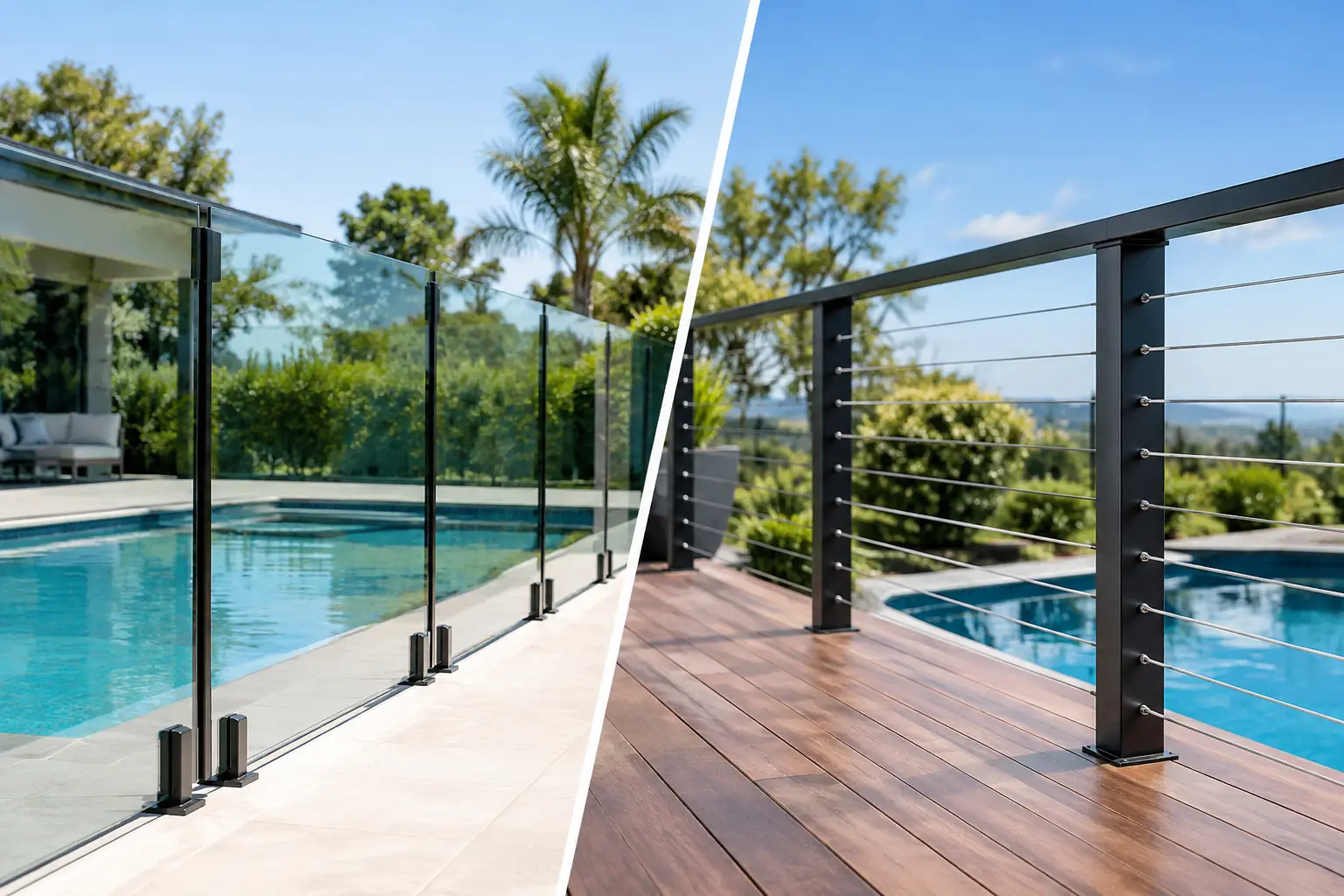
Exterior applications demand additional care. Pool fencing, wind screens, balcony guards, and patio enclosures are subject to safety glazing requirements, structural loading, weather exposure, and local code considerations. Decorative treatments should never be allowed to obscure the performance requirements of the glass system itself. The assembly must be engineered and installed as a complete architectural element, not treated as a decorative panel alone.
Shower Enclosures Require a Different Standard
Privacy glass in a shower is often selected for comfort, but fabrication and maintenance deserve equal attention. Frameless shower glass must meet safety requirements and be properly tempered or otherwise specified for its application. Cutouts, notches, hinges, door swing, wall conditions, and hardware placement should be resolved before fabrication. Glass cannot be casually altered after tempering.
The surface also lives in a demanding environment. Hard water, soap residue, and mineral deposits can dull the visual quality of frosted, textured, or clear glass over time. Surface protection and disciplined maintenance preserve the investment. Capistrano Valley Glass & Mirror also provides certified Diamon-Fusion® field application for qualifying glass, helping restore and protect surfaces affected by mineral buildup and corrosion without automatically moving to replacement.
A privacy treatment can make maintenance marks less obvious than clear glass, but it does not make a shower enclosure maintenance-free. Homeowners should use non-abrasive cleaners, avoid harsh chemicals, and remove standing water regularly. The correct care routine depends on the glass finish and any protective treatment applied.
How to Specify the Right Level of Privacy
The most useful question is not, “Which glass is private?” It is, “Private from where, at what time, and for whom?” A guest bath window facing a side yard has a different requirement than a primary suite facing a nearby second-story window. An office conference room may need visual separation while still allowing borrowed light. A restaurant partition may need to soften views without losing the energy of the dining room.
Before selecting a finish, evaluate sightlines from inside and outside, daytime and nighttime illumination, desired light transmission, cleaning access, and whether the panel must satisfy safety or structural requirements. Review samples against the actual finishes whenever possible. Glass changes character beside warm oak, veined stone, dark bronze hardware, and direct coastal sunlight.
For distinctive work, scale is part of the decision. A small sample can suggest color and texture, but it cannot fully show distortion, transparency, or reflection across a large panel. Mockups, showroom displays, and experienced glazing input help prevent a costly mismatch between expectation and installed reality.
Privacy Should Still Feel Like Light
The finest privacy glass installations do not announce themselves as compromises. They allow a room to remain bright, composed, and open where it should be, while quietly protecting the moments that are meant to be private.
For a new home, a major renovation, or a specialty commercial interior, bring the sightline question into the design conversation early. The right glass selection can preserve the architecture’s openness without asking its occupants to live on display.