
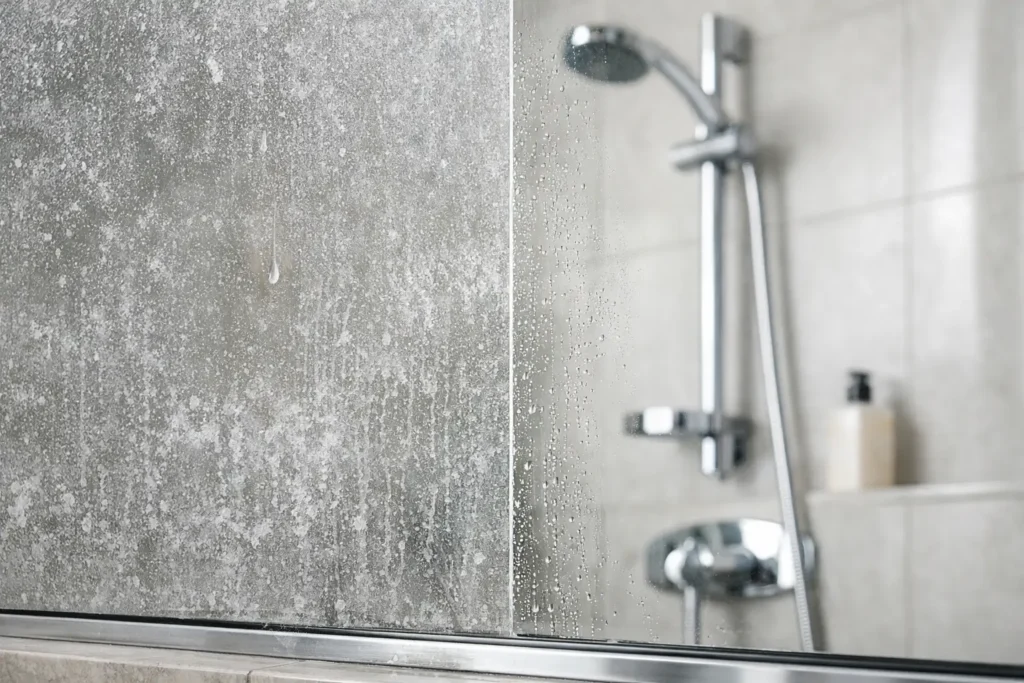
A frameless shower enclosure can look immaculate at installation, then gradually develop a hazy cast, white spotting, or dull areas that no amount of ordinary cleaning seems to remove. Homeowners often ask what causes shower glass corrosion when this change appears. In most cases, the glass is not rusting. It is being affected by mineral deposits, chemical exposure, and repeated moisture cycles that can permanently alter the surface.
For a premium bathroom, this distinction matters. A surface-level deposit may be cleaned away. True etching or corrosion can require professional restoration – and, if neglected, may eventually make replacement the only practical option.
What Causes Shower Glass Corrosion?
Shower glass corrosion begins when water and contaminants remain on the glass long enough to react with its surface. Clear architectural glass may appear perfectly smooth, but it contains microscopic irregularities where minerals, soap residue, and airborne contaminants can collect. Repeated wetting and drying concentrates those materials, particularly in areas with mineral-rich water.
The term “corrosion” is commonly used to describe the resulting damage. More precisely, the issue is often glass etching or chemical degradation. Water deposits can bond to the surface and, over time, create a rougher texture. Once that happens, the glass holds more residue after each shower. It becomes a compounding maintenance problem rather than a simple cleaning issue.
Southern California homes can be especially vulnerable where hard water is present, bathrooms receive heavy daily use, or coastal air contributes additional salts and moisture. Large, minimally framed enclosures also make even minor spotting highly visible. The more expansive the glass, the more exacting the maintenance standard needs to be.
Hard-water minerals are the primary culprit
Hard water contains dissolved minerals, most commonly calcium and magnesium. When shower water evaporates, these minerals remain behind as pale spots or cloudy streaks. Early deposits usually sit on top of the glass and can be removed with the right non-abrasive method.
The problem changes when deposits are allowed to remain for weeks or months. Heat, humidity, and continual exposure can help minerals bond tightly to the surface. Some deposits become so dense that homeowners mistake them for soap scum, then use increasingly aggressive cleaning products that create a second source of damage.
Water quality varies by property and plumbing source. A home with a water-softening system may see fewer mineral deposits, but soft water does not eliminate the need to manage soap film and standing water. Conversely, a home with notably hard water may require more disciplined daily care and periodic professional service.
Alkaline cleaners can etch glass
A common mistake is treating shower glass like tile. Strong alkaline cleaners, harsh degreasers, and products containing abrasive particles may remove visible residue quickly, but they can also attack the glass surface or leave a residue that attracts future buildup. Repeated use is particularly risky on unprotected glass.
Acidic cleaners deserve equal caution. Mild products formulated specifically for shower glass can have a place when used according to instructions, but highly acidic descalers can damage metal finishes, natural stone, grout, and nearby hardware. They are not a substitute for proper restoration when the glass has already been etched.
Avoid scouring pads, steel wool, razor blades, and powdered abrasives. These methods can scratch glass or disturb protective coatings. Under directional bathroom lighting, fine scratches can make an enclosure look permanently dull even after mineral deposits have been removed.
Soap, body-care products, and neglected ventilation add to the problem
Soap film is not always the main cause of corrosion, but it traps water and minerals against the glass. Conditioner, body oils, and aerosol personal-care products can leave a stubborn film that makes hard-water spotting worse. In a busy family bathroom or hospitality setting, this buildup can develop surprisingly quickly.
Ventilation also affects the rate of deterioration. A shower that remains humid for long periods dries slowly, giving dissolved minerals more time to settle. Poor airflow can encourage mildew around seals and hardware as well, creating an enclosure that looks aged before its time. An exhaust fan should run during the shower and continue afterward until moisture has cleared.
How to Tell Deposits From Etched Shower Glass
The simplest test is visual and tactile. If the glass feels smooth and the haze changes after a careful cleaning, the problem may still be surface residue. If it feels rough, shows persistent white or gray clouding, or remains dull after appropriate cleaning, etching is more likely.
Etched areas can appear as irregular patches rather than uniform spotting. They may be most obvious at the bottom of the panel, near the shower head, or where water repeatedly runs down the glass. Glass with advanced mineral damage can also develop a slightly iridescent or chalky appearance under natural light.
There is no universal rule based on appearance alone. A professional assessment is useful because some enclosures have a removable mineral crust over intact glass, while others have deposits combined with surface damage. The restoration approach depends on which condition is present, the type of glass, and whether a prior coating has been applied.
Why Frameless Enclosures Need a More Deliberate Care Plan
Frameless shower systems rely on clean expanses of tempered safety glass, precision hardware, and carefully managed clearances. Their appeal is architectural restraint: fewer visual interruptions, more light, and an uninterrupted view of stonework, tile, or a carefully composed bath. That same clarity makes damage difficult to disguise.
Hardware selection and installation quality matter, but even an exceptionally fabricated enclosure cannot prevent mineral-rich water from drying on its surface. The trade-off is straightforward. A low-iron or oversized glass enclosure delivers a more refined visual result, yet it asks for more attentive care than a framed shower with textured or obscured glass.
A well-designed shower should also shed water effectively. Panel layout, door swing, sweep placement, threshold details, and the location of fixed panels influence where water collects. During a new build or renovation, these details should be considered alongside aesthetics. They are not merely installation details; they affect long-term serviceability.
Preventing Further Damage
The most effective routine is modest but consistent. After showering, use a clean squeegee to remove water from the glass, then leave the enclosure open enough to promote airflow. This takes less than a minute and prevents most mineral deposits from drying in place.
Clean the glass regularly with a non-abrasive product intended for shower enclosures and a soft microfiber cloth. Rinse thoroughly, because cleaner residue can create its own haze. If household water is especially hard, consider water treatment as part of the broader bathroom-maintenance strategy rather than relying on stronger chemicals.
For large custom installations, it is worth establishing a maintenance standard with household staff or property management. The relevant question is not whether the glass looks clean immediately after housekeeping. It is whether mineral-rich moisture is being removed before it has the opportunity to etch the surface.
When Restoration Is Preferable to Replacement
Replacement is not always necessary when shower glass appears corroded. Professional restoration can remove bonded contaminants and improve clarity when the underlying glass remains recoverable. The process should be performed with materials and methods suited to architectural glazing, rather than with improvised abrasives that may worsen the condition.
After restoration, a permanent protective treatment can reduce mineral adhesion and make daily maintenance more manageable. Capistrano Valley Glass & Mirror provides certified Diamon-Fusion® field application technology for qualifying glass surfaces, offering property owners an alternative to premature replacement when restoration is appropriate.
There are limits. Deep etching, extensive scratching, edge damage, failed seals, or damaged tempered glass may make replacement the sounder long-term decision. A candid evaluation should weigh restoration cost, visual expectations, glass condition, and the value of matching the enclosure to the surrounding architectural finishes.
A shower enclosure is one of the few architectural elements touched by water every day and expected to remain optically clear for years. Treating the first signs of haze as a surface-care issue – rather than waiting for permanent damage – protects both the glass and the quiet precision of the room around it.