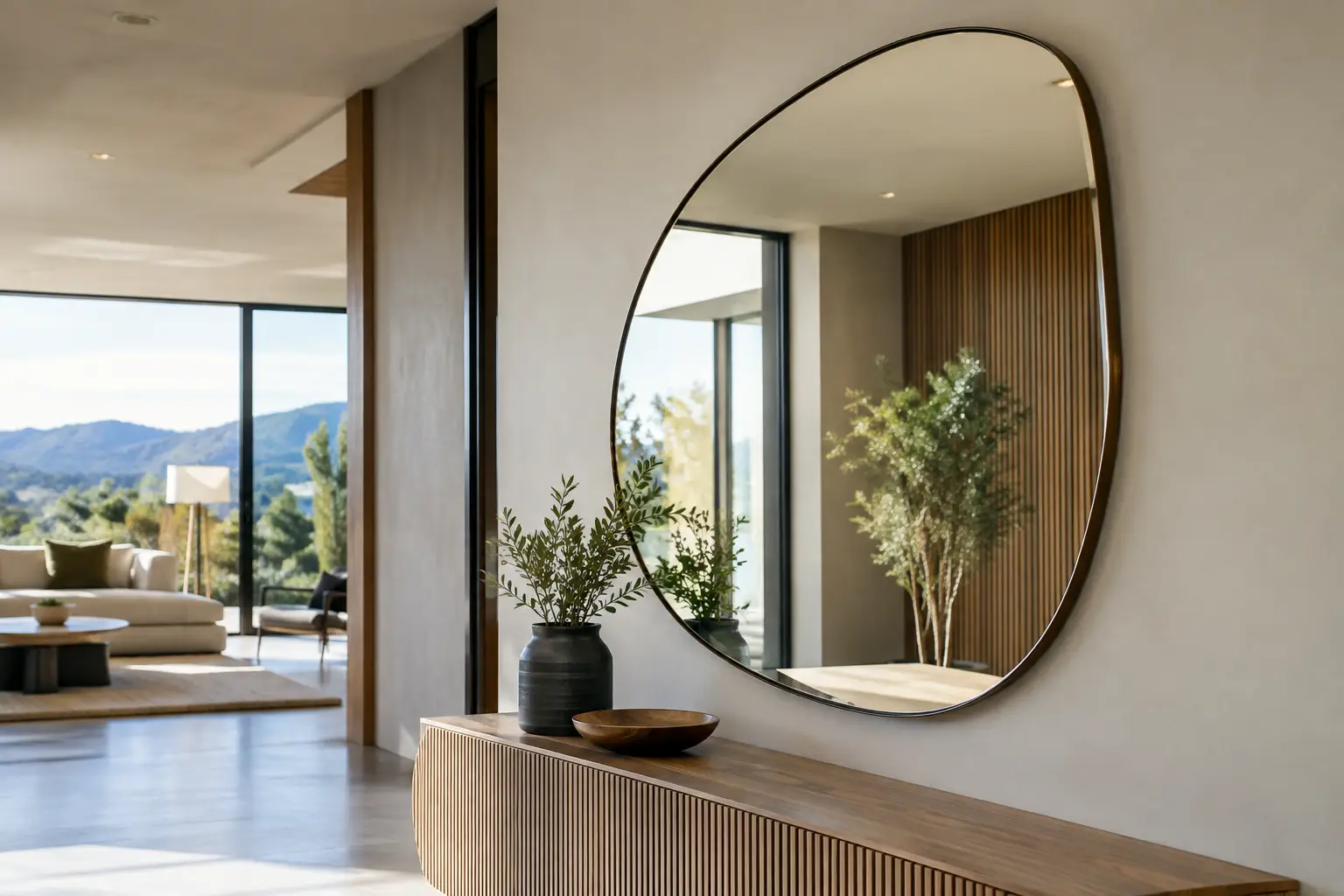
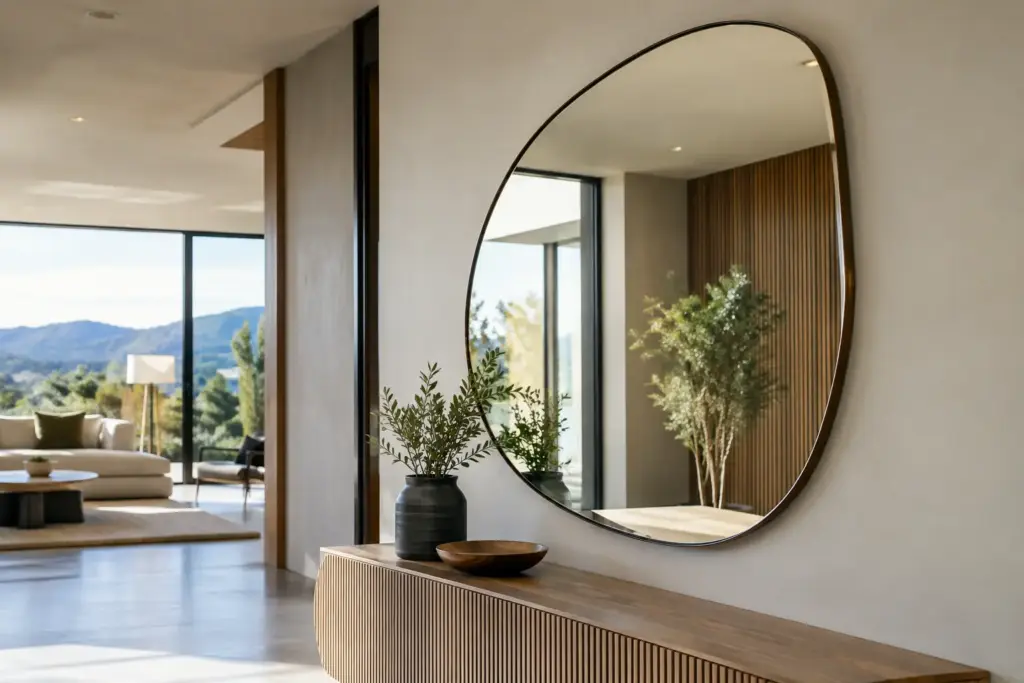
A mirror can make a room feel larger, brighter, and more composed. It can also expose every compromise in a wall, a ceiling line, or an installation. That is why custom mirrors are not simply decorative accessories in a high-end residence or hospitality setting. They are precision architectural elements, specified for proportion, reflection, durability, and the conditions of the space around them.
For a primary bath overlooking the coast, a mirrored dining wall in Newport Beach, or a carefully detailed fitness room in a Laguna Niguel estate, the difference lies in the decisions made before fabrication begins. Glass thickness, edge treatment, panel layout, substrate condition, lighting, hardware, and sightlines all determine whether the finished work feels intentional.
Custom Mirrors Start With the Room, Not the Opening
A standard mirror is made to fit a standard condition. Architectural mirror work begins with a more useful question: what should the room reflect, and what should it conceal?
In a compact powder room, a mirror may be sized to expand the perceived width of the wall while leaving enough stone or plaster visible to retain character. In a large dressing room, a full-height installation may need carefully placed joints so the reflection reads as one continuous plane from the entrance. In a dining room, the mirror may be designed to capture a chandelier, ocean light, or a garden view without doubling visual clutter.
This is where scale matters. A mirror that stops a few inches short of an adjacent casing can look accidental. A panel that extends precisely to a cabinet edge, floating shelf, or ceiling reveal can make the same room feel tailored. On specialty projects, the mirror often needs to coordinate with millwork, wallcovering, stone fabrication, electrical locations, and decorative lighting long before installation day.
For architects and designers, that coordination protects the original design intent. For homeowners, it avoids the costly disappointment of a beautiful material installed at the wrong size or with an awkward reflection.
The Details That Define Precision Mirror Work
Mirror is visually unforgiving because it reflects its own surroundings. Slight wall irregularities, uneven lighting, exposed adhesive, and imprecise cuts are difficult to ignore once the room is complete. The material deserves the same level of planning given to stone, cabinetry, and architectural metalwork.
Thickness and flatness
For many residential applications, 1/4-inch mirror provides a refined, substantial appearance and dependable flatness. Larger panels, high-traffic settings, and particular design conditions may call for a different specification. The correct choice depends on panel size, backing, wall condition, transportation access, and the intended visual effect.
Large mirrors require special attention during measuring and fabrication. A seemingly square opening may not be square, and a wall that appears flat can vary enough to affect the fit. Field verification is essential, especially when mirror panels meet stone returns, finished millwork, or ceiling details with little tolerance for adjustment.
Edgework changes the character
Polished edges suit clean-lined contemporary interiors, where the mirror is intended to read as a crisp plane of glass. Beveled edges introduce dimension and can complement more traditional millwork or a formal dressing area. Seamed edges are appropriate when the mirror edge is concealed by a frame, molding, or recessed condition.
The selection should not be made in isolation. A bright polished edge can catch light sharply in a dark, moody room. A bevel adds visual movement, but it also creates a perimeter that may compete with a highly figured stone vanity or intricate wallcovering. The strongest choice is the one that serves the broader material palette.
Color, aging, and decorative treatments
Clear mirror remains the most versatile option, but it is not the only one. Bronze, gray, and antique mirror can soften a reflection, deepen an interior, or introduce a more layered effect. These treatments are particularly effective on bar fronts, fireplace surrounds, feature walls, and cabinetry inserts.
There is a trade-off. Tinted and antique mirrors provide atmosphere, but they do not offer the same clear reflection needed at a vanity or in a dressing room. Patterned antiquing also varies by panel, which is part of its character but should be reviewed against the scale of the installation. Samples and full-size showroom displays are valuable when a finish will occupy a prominent wall.
Bathrooms Require More Than a Beautiful Reflection
The bathroom is often the most demanding setting for a mirror installation. Steam, cleaning products, direct water exposure, lighting, and tight intersections with tile or stone create conditions that reward careful planning.
A vanity mirror should be proportioned to the fixture and the people using it, not automatically to the width of the countertop. In some spaces, a single broad mirror gives a double vanity a calm, continuous appearance. In others, two individual mirrors create more structure and allow sconces to become part of the composition. Either approach can work. The deciding factors are the scale of the room, the lighting layout, the faucet centers, and the visual weight of the vanity.
Backlit mirrors and integrated lighting can produce a controlled, flattering glow, but they require early coordination with the electrical plan and mounting system. A mirror installed after tile, stone, or wallcovering is complete has little room for improvisation. The location of outlets, blocking, dimmers, and service access should be understood before the finish work is closed up.
Moisture management also matters. Proper installation methods, appropriate clearances, and suitable materials help protect the mirror backing in humid environments. A premium mirror should not be treated as an afterthought after a shower enclosure, ventilation plan, and tile layout have already been finalized.
Panel Layout Is a Design Decision
Not every wall can be served by one oversized sheet of mirror. Access paths, elevator dimensions, stair geometry, weight, and safe handling all influence what can be fabricated and installed. When multiple panels are required, the joints should be planned rather than merely accepted.
A vertical seam might align with a cabinet division, a lighting centerline, or a change in wall plane. A horizontal seam may work above a wainscot or beneath a ceiling feature. On a wide feature wall, symmetrical panels can create rhythm, while asymmetrical paneling can feel more contemporary when it follows the architecture.
The goal is not always to hide every seam. It is to make each division look deliberate. This is one of the clearest distinctions between commodity mirror installation and architectural glazing work: the panel layout is considered as part of the design, not just as a solution to material limits.
Installation Is Where the Specification Is Tested
Accurate measurement is only the beginning. Successful installation depends on a stable substrate, correct mounting methods, clean handling, and installers who understand the tolerances of finished interiors. The work may involve coordinating around plumbing trim, sconces, outlet covers, stone ledges, millwork, or framed openings that cannot be damaged or altered after the fact.
Walls should be assessed for flatness and readiness before mirror fabrication is released. If the substrate is materially out of plane, the mirror may reflect distortions or be placed under stress. In some cases, wall preparation is the correct remedy. In others, a framed detail, stand-off system, or adjusted panel strategy may provide a better result.
For larger pieces, safety and logistics are equally important. Weight, access, glazing equipment, and protection of finished surfaces must all be accounted for. This is particularly relevant in occupied homes, luxury hotels, and active renovation sites where the installation must proceed with minimal disruption.
Since 1979, Capistrano Valley Glass & Mirror has approached specialty glasswork with this level of field awareness. The work is not complete when a mirror fits the opening. It is complete when the mirror belongs to the architecture.
Where Custom Mirror Work Adds the Most Value
Custom mirrors are especially effective where light, view, or spatial proportion are central to the experience of a room. They can widen a narrow hall, brighten a stair landing, bring depth to a wine room, or give a custom closet the finish expected of tailored cabinetry.
They are also useful in commercial and hospitality interiors, where mirrors must withstand daily use while supporting a carefully controlled guest experience. Reception areas, elevator lobbies, lounges, fitness spaces, and guest bathrooms often benefit from mirror systems designed around durability and maintainability as well as appearance.
The right application is not always the largest possible mirror. A smaller, precisely placed piece can be more powerful than a wall covered without regard for what it reflects. Before selecting a finish, stand in the room at different times of day, identify the views worth repeating, and consider what the mirror will reveal when the space is fully furnished. That simple exercise often leads to a better decision than choosing from a catalog alone.