A faint scratch across a shower panel may be visible only in morning light. On an ocean-view railing, that same mark can interrupt an entire sightline. To repair scratched glass surfaces properly, the first question is not which polish to use. It is whether the apparent damage is truly a scratch, how deep it extends, and whether restoration can preserve the glass without compromising its clarity, coating, or performance.
For premium residential and hospitality properties, glass is rarely a background material. It is a defining architectural surface in frameless showers, railings, skylights, windows, mirrors, pool fencing, and entry systems. The wrong repair method can turn a limited blemish into optical distortion that is more noticeable than the original damage.
Why scratched glass requires a measured response
Glass is hard, but its surface can still be damaged by abrasive cleaning pads, construction debris, metal tools, windblown sand, mineral deposits, or an object dragged across it. What looks like a scratch may also be hard-water etching, surface staining, coating failure, transfer from another material, or a fine crack within the glass itself.
These conditions require different responses. Mineral buildup may be removed and the surface protected. A shallow abrasion may be a candidate for controlled polishing. A deep scratch, particularly on tempered safety glass, may call for replacement rather than aggressive restoration. The distinction matters because polishing removes material. If performed unevenly or too aggressively, it can create a lens effect, haze, rippling, or a visible change in reflection.
This is especially relevant on large panes and low-iron glass, where clarity exposes every inconsistency. It also matters on glass railings, doors, and enclosures specified for safety performance. Cosmetic improvement is not worth introducing a question about structural integrity.
First, determine what is actually on the glass
Before any repair begins, the glass should be inspected in direct and raking light. A qualified technician will look at the damage from multiple angles, feel it carefully, and identify the glass type and any existing surface treatment.
A simple fingernail test can provide a preliminary indication. If a fingernail catches firmly in the mark, the scratch is likely deep enough that a complete invisible repair may not be realistic. That does not automatically mean the glass must be replaced, but expectations should be set correctly. Restoration may reduce the visual impact rather than eliminate it.
If the mark does not catch, it may be superficial abrasion, residue, or etching. A professional evaluation can establish whether cleaning, stain removal, limited polishing, or a protective treatment is the appropriate course.
The location also changes the decision. A light scratch at the edge of a fixed window may be acceptable after improvement. The same scratch at eye level on a frameless shower door, a lobby storefront, or a panoramic guardrail deserves more exacting consideration.
Scratches, etching, and cracks are not interchangeable
A scratch is physical damage caused by abrasion or impact. Etching is a change in the surface itself, often produced by hard water, alkaline runoff, salt exposure, or neglected mineral deposits. It can appear cloudy, iridescent, spotted, or permanently dull even after ordinary cleaning.
A crack is a different concern altogether. Fine lines at the edge of tempered glass, radiating damage near hardware, or any evidence of breakage should be assessed promptly. No polishing compound can correct a crack, and attempting to work the area can make the condition worse. Safety glass near doors, showers, railings, and pool areas should never be treated as a casual do-it-yourself repair.
When a professional can repair scratched glass surfaces
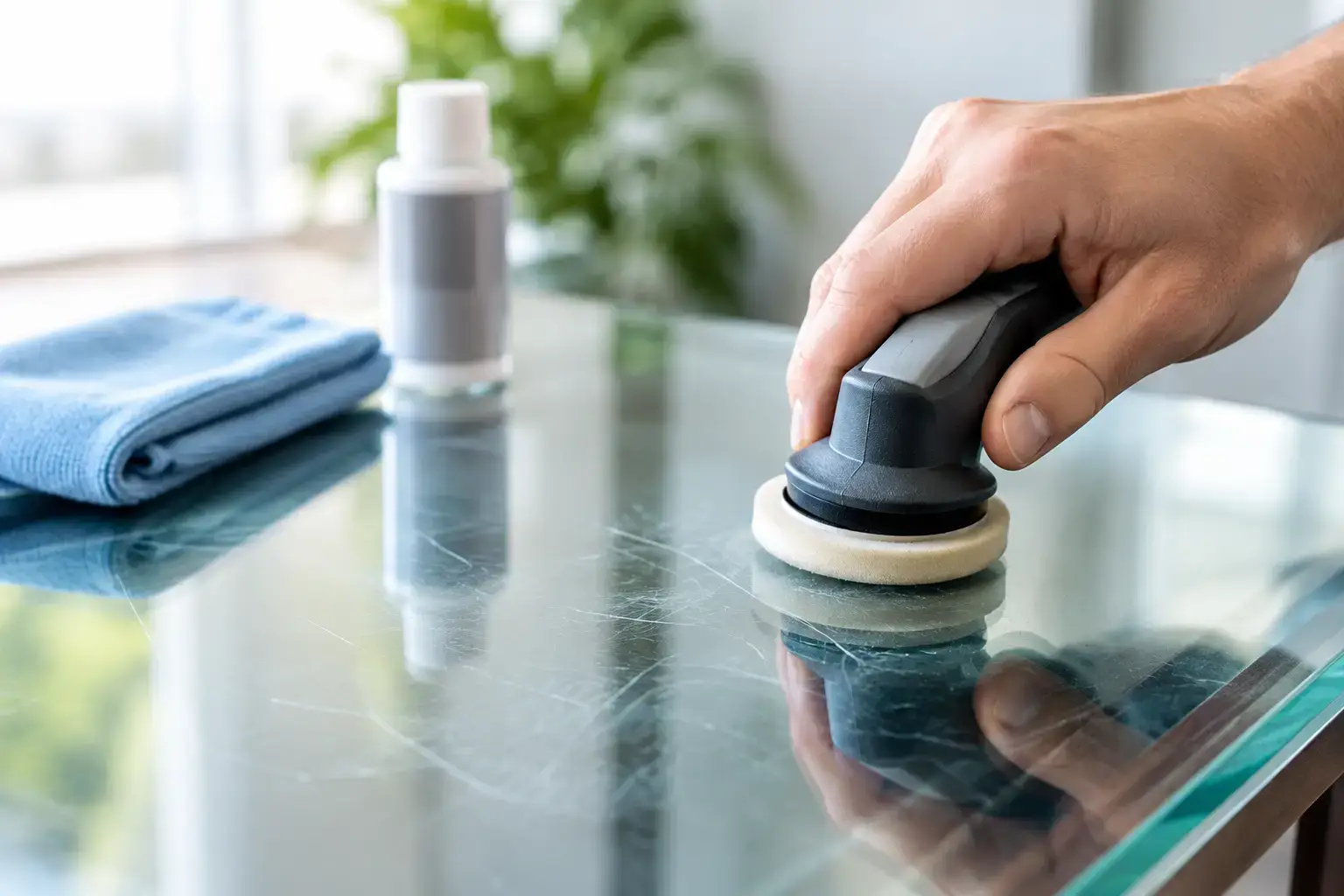
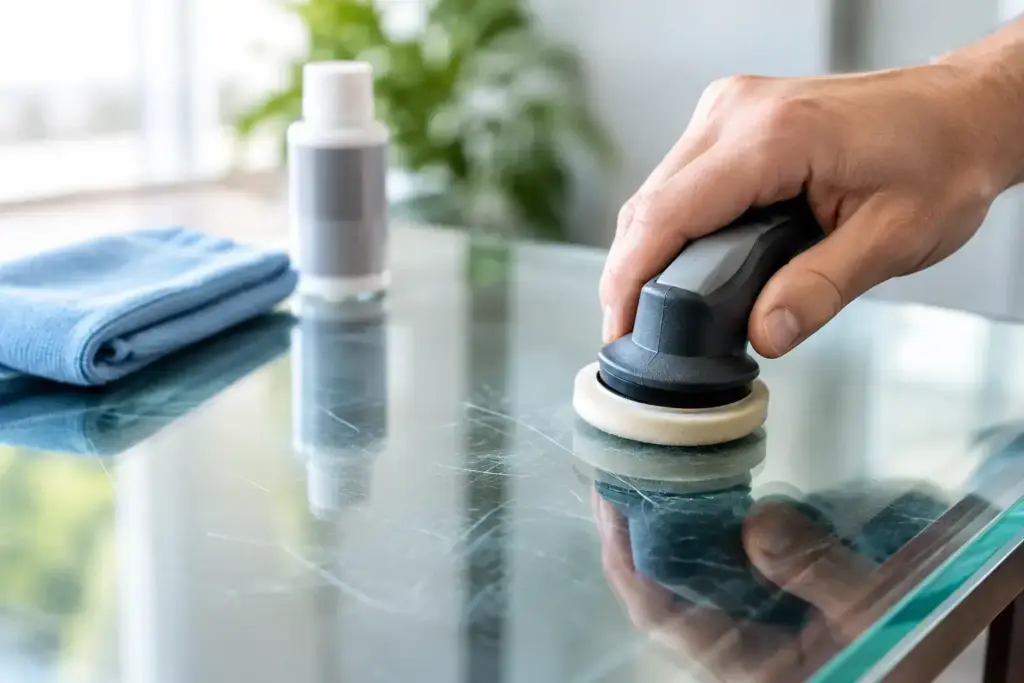
Professional glass restoration is most successful when damage is limited to the surface and the pane remains structurally sound. Controlled methods may improve light scratches, scuffs, corrosion staining, and certain forms of hard-water damage. The work requires specialized abrasives, polishing equipment, careful heat management, and the judgment to stop before clarity is sacrificed.
There is no universal repair process because glass composition, thickness, fabrication, coatings, and viewing conditions vary. Annealed window glass, tempered shower glass, laminated railing glass, mirror, and insulated glass units each present different limitations. A mirror, for example, may appear scratched on the face but actually have deterioration in the backing. Exterior insulated glazing may have surface damage on one lite or damage within the sealed unit where restoration is not possible.
For high-visibility architectural glazing, a restoration specialist should also assess the surrounding conditions. If hard water from a shower valve, irrigation overspray, roof runoff, or coastal exposure caused the original damage, repair alone addresses only half the problem. The source should be corrected before the glass is returned to service.
Capistrano Valley Glass & Mirror approaches restoration as a preservation decision, not a one-size-fits-all cleaning service. With certified Diamon-Fusion® field application technology, suitable glass can be restored and given a protective coating designed to reduce future staining, mineral adhesion, and cleaning difficulty.
Why household remedies often disappoint
Online advice commonly recommends toothpaste, baking soda, metal polish, steel wool, or a consumer scratch-removal kit. These methods can be tempting on a small mark, but they are poorly suited to architectural glass.
Toothpaste and baking soda are inconsistent abrasives. They may leave fine haze without meaningfully changing a scratch. Metal polishes can leave residue or alter the appearance of adjacent surfaces. Steel wool, even products promoted as fine grade, can introduce additional scratching or leave metallic particles that later stain in wet environments.
Consumer polishing kits can be useful for a very small, noncritical piece of ordinary glass when the homeowner accepts a variable result. They are not appropriate for a custom shower enclosure, a low-iron panel, a glass railing, decorative glazing, or a large window wall where optical quality matters. Polishing generates friction and heat. Without proper technique, an isolated repair can become a distorted circular area visible every time sunlight crosses the pane.
Avoid scraping glass with a razor unless the manufacturer specifically permits it and the surface is known to be uncoated. Factory-applied protective coatings, low-e surfaces, and specialty decorative finishes can be damaged by methods that would be harmless on basic clear glass.
The role of protective coatings after restoration
Restored glass remains glass. Without protection and better maintenance practices, the same environmental conditions can produce the same problems again. This is why a permanent protective treatment is often the most valuable part of the restoration plan.
Diamon-Fusion® creates a durable, water-repellent surface treatment that helps reduce the adhesion of minerals, soap scum, and contaminants. On shower glass, it can simplify routine cleaning and reduce the opportunity for hard-water deposits to bond to the surface. On exterior glass, skylights, pool fencing, and solar panels, it can support easier maintenance where water spotting and environmental buildup are recurring concerns.
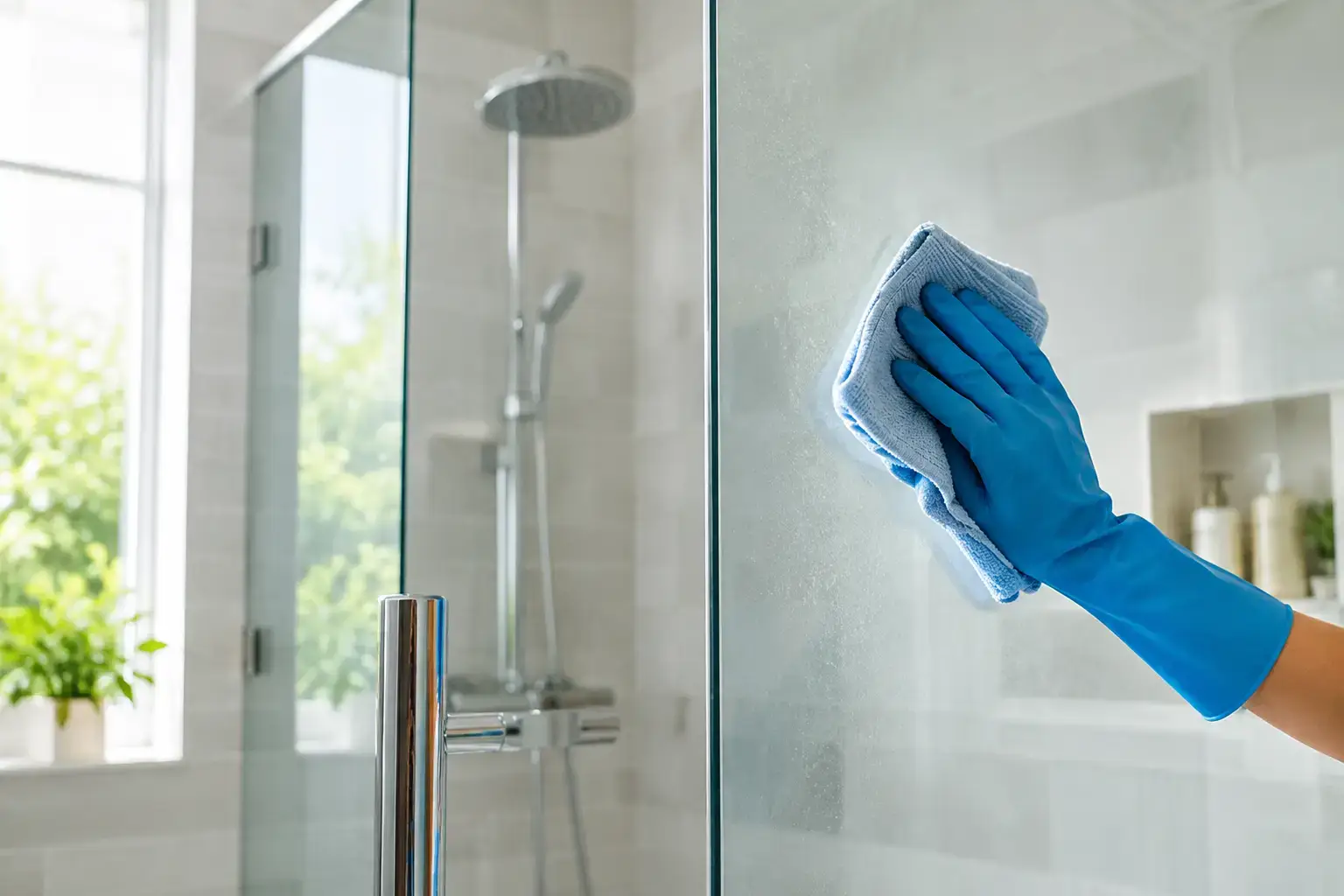
A coating is not a license to stop cleaning. It is a way to make appropriate cleaning more effective and less labor-intensive. Mild, nonabrasive products, a soft microfiber cloth, and routine drying in wet areas remain the right maintenance standard. In coastal Southern California, salt air and mineral-rich water make that discipline particularly worthwhile.
When replacement is the better investment
Replacement is usually the prudent choice when scratches are deep, damage is concentrated in a highly visible area, glass has structural concerns, or polishing would create unacceptable distortion. It may also be necessary when a failed insulated unit has condensation or damage between panes, when a mirror backing has deteriorated, or when an existing pane no longer meets the design and safety needs of the space.
For custom work, replacement creates an opportunity to improve the original specification. A shower enclosure may benefit from protective treatment at installation. A glass railing may be reconsidered with a more suitable glass build-up or hardware detail. A frequently stained exterior panel may need a drainage correction, revised irrigation pattern, or a finish selected for the exposure.
The correct decision is not always the least expensive immediate option. It is the option that protects the visual standard of the project and avoids spending money twice.
A clear standard for lasting glasswork
Scratched glass deserves the same care as any other finished architectural surface. Begin with an informed diagnosis, restore only when the result will remain optically sound, and address the water, cleaning, or environmental condition that caused the damage. When repair is appropriate, professional restoration and protective treatment can preserve valuable glass and defer unnecessary replacement. When it is not, a precisely specified replacement keeps the architecture looking as it was intended to look.