Morning light is unforgiving on a frameless shower enclosure. What looked like a clear, quiet plane of glass the night before can suddenly show white spotting, cloudy streaks, and dull areas around the lower panels. To prevent shower glass mineral buildup, the objective is not aggressive cleaning. It is controlling what remains on the glass after every shower, then protecting the surface before minerals have time to bond to it.
In coastal Southern California, this is more than a housekeeping concern. Water chemistry varies by community, bathrooms often combine large glass panels with stone finishes and open layouts, and premium enclosures are expected to retain their clarity for years. A disciplined care routine, thoughtful ventilation, and the right protective treatment will do far more for the glass than an occasional heavy-duty cleaner.
Why Mineral Buildup Becomes Permanent Looking
The marks on shower glass are usually left behind when water evaporates. Calcium, magnesium, silica, and other dissolved minerals remain on the surface, creating the familiar white spots and hazy film. Soap residue, body oils, and shampoo overspray give those deposits something to adhere to, particularly near handles, hinges, and the lower portion of a door.
At first, the issue is cosmetic and removable. Over time, however, repeated wet-dry cycles can damage the glass itself. Mineral deposits may begin to etch the surface, creating microscopic irregularities that catch light and hold more residue. At that stage, a homeowner may assume the enclosure needs replacement when restoration could still be an option.
This distinction matters. Buildup sits on the surface; etching changes the surface. No daily cleaner can reverse substantial etching, and abrasive methods can make it worse by scratching the glass or damaging protective coatings.
Prevent Shower Glass Mineral Buildup at the Source
A squeegee is still one of the most effective tools in a luxury bath. After each shower, pull water from the glass in overlapping passes, starting at the top and working downward. It takes less than a minute and prevents most mineral spotting from forming in the first place. Finish by wiping the bottom edge, threshold, and hardware with a clean microfiber cloth, where standing water is most likely to collect.
This routine works because it removes the water before evaporation concentrates the minerals. It is particularly valuable on large fixed panels and minimal-hardware enclosures, where uninterrupted glass makes even a small amount of haze visible.
Ventilation is the second part of the equation. Run the bath fan during the shower and for at least 15 to 20 minutes afterward. If the bathroom has operable windows, use them when weather and privacy allow. A well-designed ventilation system reduces the humidity that slows drying, limits mildew around seals, and helps the glass clear more quickly.
Water treatment can be worthwhile, but it depends on the property. A whole-house softener may reduce calcium and magnesium substantially, while a filtration system may address other water-quality concerns. It will not eliminate the need to dry the glass, and it should be selected as part of a broader plumbing decision rather than solely for the shower enclosure. In homes with especially persistent spotting, a water-quality test can clarify whether hard water is the principal cause.
Use a Cleaning Method That Respects the Glass
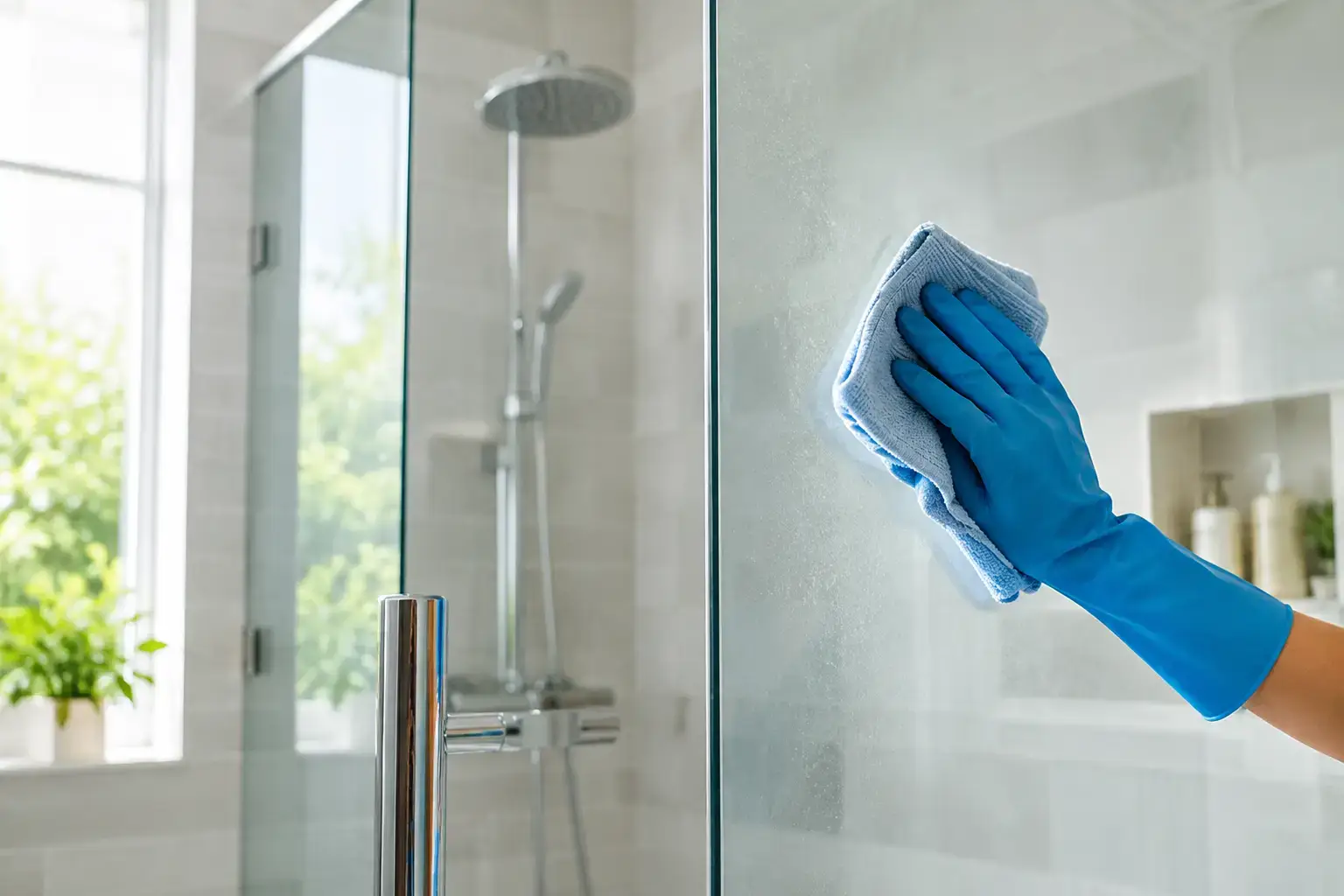
Frequent light cleaning is preferable to infrequent aggressive cleaning. Once or twice each week, clean the glass with a pH-neutral, non-abrasive product approved for shower glass and the surrounding finishes. Apply it with a clean microfiber cloth or a soft, non-scratch sponge, then rinse thoroughly and dry the surface.
Avoid scouring powders, steel wool, abrasive pads, and harsh acidic or alkaline products unless a glazing professional has confirmed they are appropriate for the specific condition. These materials can scratch the glass, discolor hardware finishes, weaken sealants, and damage adjacent natural stone. The wrong cleaner can turn a manageable maintenance issue into a restoration project.
Vinegar is often suggested for mineral spots, but it is not a universal answer. Diluted vinegar may help with light deposits on untreated glass, yet its acidity can be problematic around marble, limestone, travertine, certain metal finishes, and vulnerable grout. A high-end bath should be cleaned as a complete material system, not as separate surfaces. When stone is close to the enclosure, use a product compatible with both the glass and the surrounding finishes.
Do not overlook the door seals and hardware. Clean along the vertical seals, sweep, clips, and hinge areas where soap film can accumulate. Wipe polished chrome, brushed nickel, brass, and matte black hardware dry after cleaning. Mineral residue is not limited to the glass, and neglected hardware can make an otherwise well-maintained enclosure look prematurely worn.
Protective Coatings Change the Maintenance Burden
A professionally applied glass protectant can provide meaningful long-term protection, especially for custom frameless enclosures. These coatings modify the surface at a microscopic level, helping water sheet or bead away more readily and making mineral deposits less likely to bond tightly to the glass. They do not make glass maintenance-free, but they make routine maintenance faster and less demanding.
The quality of the coating and the preparation beneath it matter. A protective treatment applied over existing haze, soap film, or developing etching will not correct the underlying problem. The glass should first be properly cleaned or restored, then treated under controlled conditions according to the manufacturer’s requirements.
Capistrano Valley Glass & Mirror provides certified Diamon-Fusion® field application technology for eligible glass surfaces. The treatment is particularly valuable when a new enclosure is being installed or when clear, restorable glass needs protection after professional service. For homeowners managing multiple baths, guest suites, or a coastal second home, reducing the day-to-day effort can be as valuable as preserving the original appearance.
There is a practical trade-off: coatings are an investment, and their performance still depends on regular drying and compatible cleaners. Yet on a large custom enclosure, the cost is often modest compared with the visual and financial consequences of etched glass replacement.
Enclosure Design Also Affects How Glass Ages
Preventing buildup begins before the first shower when a bathroom is being designed or remodeled. Proper door clearances, panel overlaps, showerhead placement, slope at the threshold, and drainage all influence how much water lands and remains on the glass. A showerhead aimed directly at a fixed panel will create a different maintenance profile than one positioned to keep the primary glass surfaces out of the heaviest spray.
Hardware selection deserves the same consideration. High-quality hinges, properly fitted seals, and accurately aligned doors help direct water into the shower rather than onto the threshold or adjacent floor. They also reduce standing moisture at the edges of the glass, where mineral deposits often become most stubborn.
For a highly exposed installation, such as a steam shower or a bath used by a large household, consider the realities of maintenance when specifying the enclosure. Extra-large panels, dark hardware, and expansive open-entry designs can be visually exceptional, but they require consistent care. The best design is not simply the most minimal one. It is the one that balances architectural intent, water management, and the owner’s willingness to maintain it.
When Buildup Has Already Turned Into Etching
If standard non-abrasive cleaning no longer restores clarity, stop experimenting with increasingly aggressive products. Persistent cloudiness, rough-feeling areas, rainbow-like staining, or white marks that remain after cleaning may indicate mineral etching or surface corrosion.
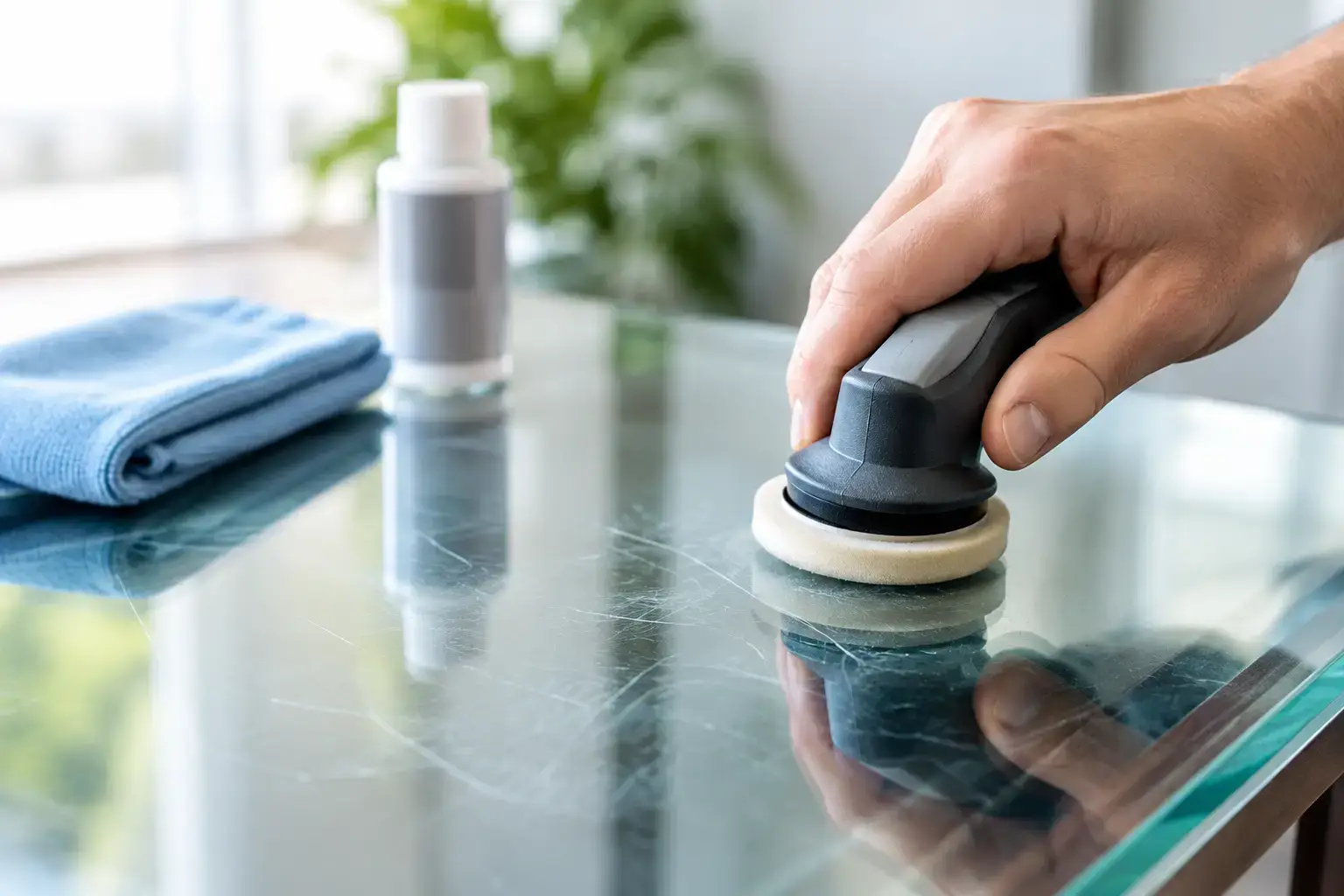
Professional glass restoration can often improve affected shower panels without full replacement, depending on the depth and extent of damage. The process is not cosmetic concealment. It requires an assessment of the glass condition, controlled restoration methods, and, when appropriate, a permanent protective coating to help prevent the cycle from returning.
Replacement may still be the correct choice when damage is severe, glass has deep scratches, hardware is failing, or the enclosure no longer meets the homeowner’s design or performance expectations. The key is to make that decision from an informed evaluation, not because harsh cleaners have exhausted the easy options.
Clear shower glass is maintained through small, consistent decisions: remove water before it dries, clean gently, ventilate well, and protect the surface early. Treat the enclosure as architectural glass rather than a disposable bathroom fixture, and it will continue to frame the room with the precision it was designed to deliver.