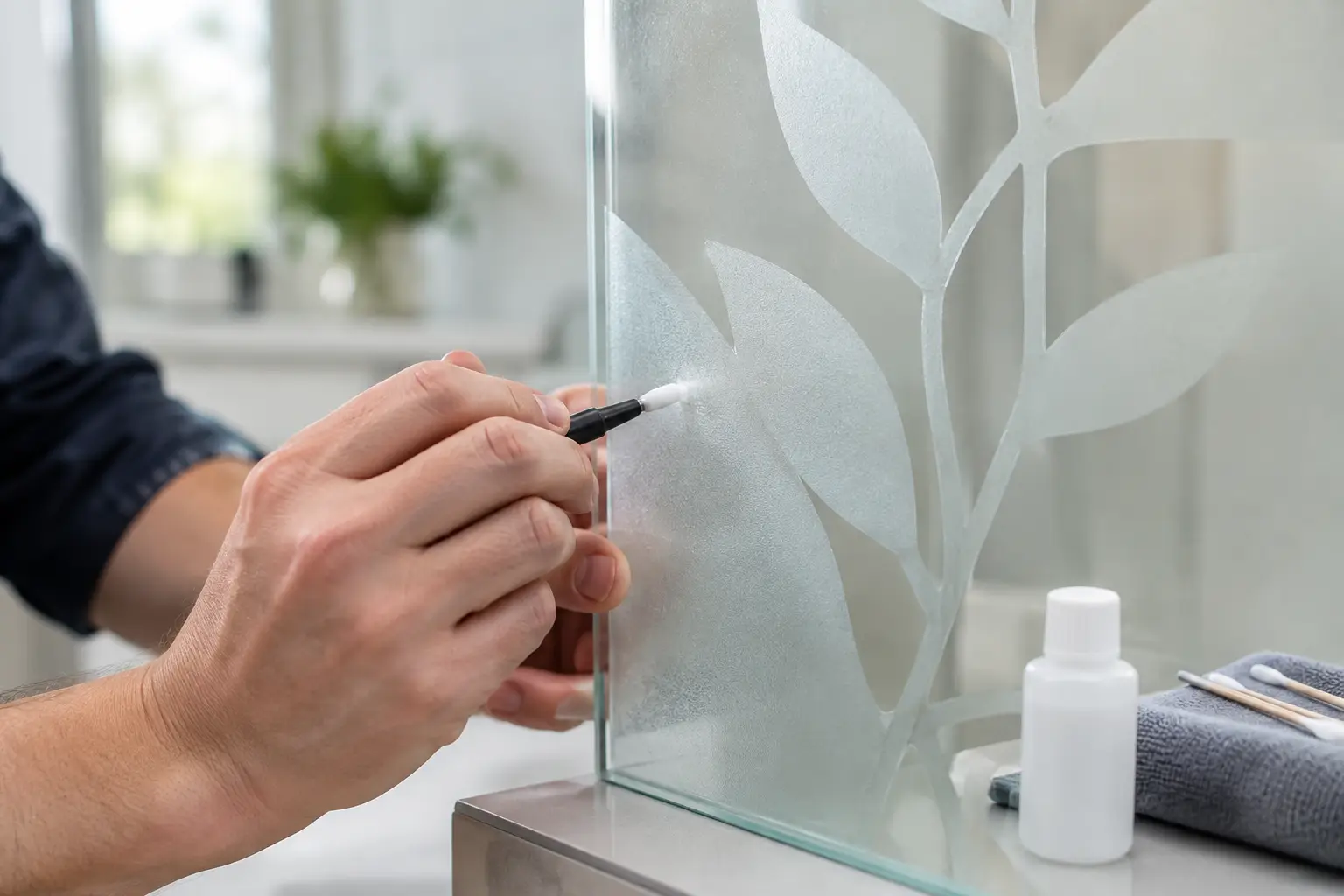
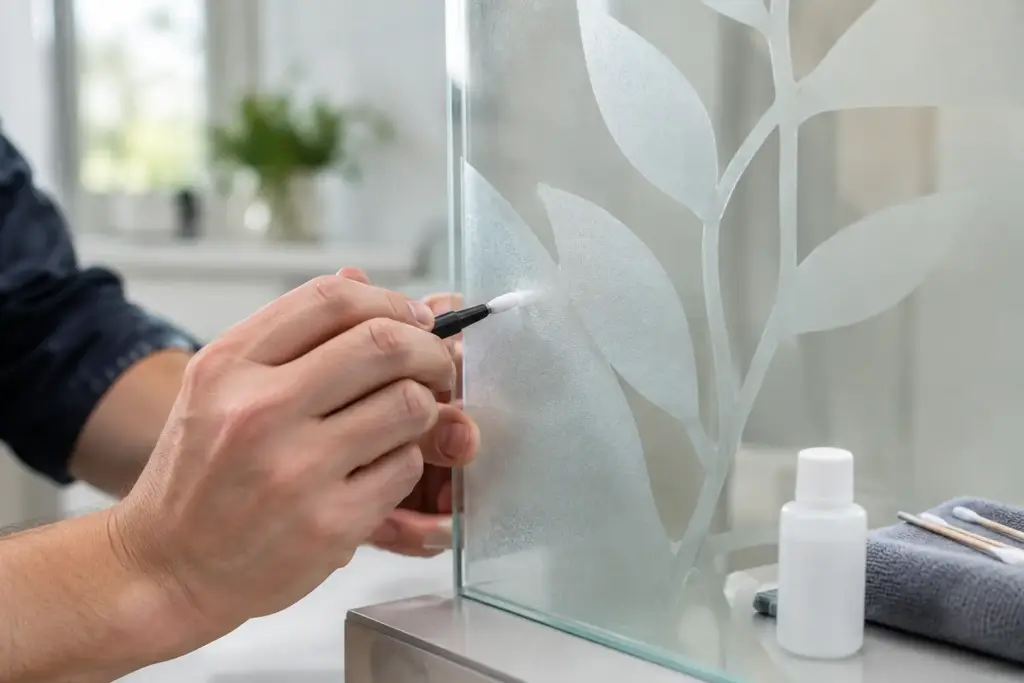
A frameless shower enclosure can look immaculate when it is installed, then slowly lose its clarity to pale spotting, cloudy streaks, and rough patches near the bottom of the glass. Coastal air, mineral-heavy water, sprinkler overspray, and cleaning products can all contribute. So, can etched glass be repaired? Often, yes – but the answer depends on whether the damage is sitting on the surface or has permanently altered the glass itself.
For premium architectural glazing, the distinction matters. A poorly chosen abrasive treatment can turn a recoverable shower panel, glass railing, skylight, or window into a replacement project. Proper evaluation comes before polishing, coating, or ordering new glass.
Can etched glass be repaired without replacement?
Many cases of apparent glass etching can be substantially improved through professional restoration. Mineral deposits and early-stage corrosion may be removed, and the glass can then receive a protective treatment that makes future maintenance far easier. This is particularly valuable for large custom shower enclosures, oversized exterior glazing, pool fencing, and specialty glass that would be expensive or disruptive to replace.
True etching is more difficult. Glass is primarily silica, and when hard-water minerals, salt exposure, or chemical residues remain on the surface, they can begin to react with it. The result is not simply a film that can be wiped away. The surface becomes microscopically uneven, scattering light and creating that familiar hazy appearance.
A skilled restoration technician can determine whether the affected area is mineral buildup, surface corrosion, or deeper damage. In many instances, restoration produces a dramatic visual improvement. In severe cases, however, replacement is the only way to return the glass to its original optical quality.
What looks like etching is not always etching
The terms hard-water stain, corrosion, and etching are often used interchangeably, but they describe different conditions. That distinction guides the repair method.
Mineral buildup is usually the most favorable condition. Calcium, magnesium, and silica deposits can leave white spots or a chalky veil over the glass. These deposits may feel rough and are commonly concentrated where water dries repeatedly. When addressed early with the correct professional process, they can often be removed without materially affecting the glass.
Surface corrosion occurs when deposits or chemicals have remained in contact with glass long enough to damage its outer layer. It may appear as dullness, iridescence, a gray cast, or cloudy areas that remain after cleaning. Restoration may still be possible, although the result depends on depth, location, and the amount of glass affected.
Deep etching is a physical change in the glass. It may be caused by prolonged exposure to hard water, aggressive acidic or alkaline cleaners, concrete runoff, salt air, or improper construction cleanup. If the damage is visible from several angles, has a pronounced dull texture, or extends broadly across the panel, polishing may not produce an acceptable result. This is especially relevant on clear glass installed to preserve ocean, canyon, or pool views.
Why ordinary cleaning can make the problem worse
When glass begins to cloud, the instinct is often to reach for a stronger cleaner, a scouring pad, or a razor blade. That approach can compound the damage. Abrasive pads can leave fine scratches. Household products marketed for mineral removal may be too aggressive for repeated use, particularly around metal hardware, stone, tile, and adjacent finishes.
There is also a practical concern with custom glazing. Frameless shower doors, tempered rail panels, insulated windows, and decorative glass are not interchangeable commodity pieces. Their dimensions, edgework, hardware preparation, coatings, and installation details may all be specific to the project. An unsuccessful do-it-yourself repair can create an avoidable replacement expense.
For minor surface spotting, a soft microfiber cloth and a cleaner approved for glass and surrounding finishes are sensible. But when haze remains after normal cleaning, a professional assessment is preferable to escalating the chemistry or abrasion.
How professional glass restoration works
A restoration process should begin with a close inspection in proper lighting. Technicians look at the glass from both sides, identify the likely source of damage, check nearby hardware and seals, and determine whether a factory coating is present. On insulated units, they also need to rule out a failed seal, which can cause fogging between panes and cannot be corrected by surface restoration.
The affected surface is then carefully prepared and treated with a glass-specific restoration system. The goal is to remove deposits and improve the damaged surface without introducing visible distortion, scratches, or uneven sheen. The appropriate method varies with the type of glass, extent of corrosion, accessibility, and architectural use.
After restoration, a protective coating can be the difference between a short-lived improvement and a durable result. Capistrano Valley Glass & Mirror provides certified Diamon-Fusion® field application technology, which bonds a protective layer to the glass surface. The treatment helps reduce water spotting, mineral adhesion, and cleaning time while improving resistance to future staining and corrosion.
A protective coating is not a substitute for reasonable care. It does, however, give water and contaminants less opportunity to bond to the glass, which is especially useful in high-use showers, coastal residences, hospitality settings, skylights, and exterior railings exposed to irrigation overspray.
When replacement is the better decision
Restoration is not always the responsible recommendation. Replacement should be considered when etching is deep enough that polishing would leave noticeable optical distortion, when damage covers a large and highly visible area, or when the glass has cracks, edge damage, or safety concerns.
Replacement may also be warranted when a project presents an opportunity to improve the original specification. An older shower enclosure might benefit from updated heavy glass, better drainage details, premium hardware, and a protective treatment applied before the enclosure enters service. A deteriorated exterior panel may require a revised glass makeup suited to solar exposure, wind loads, code requirements, and its location within the building envelope.
For insulated windows and doors, moisture or haze between panes is a separate issue. That generally indicates seal failure rather than etched exterior glass. The insulated glass unit typically needs replacement, even if the exterior surface also requires cleaning or restoration.
Protecting restored glass in coastal Southern California
The most effective maintenance routine is uncomplicated and consistent. Remove water from shower glass after use with a clean squeegee or microfiber cloth. Avoid allowing sprinkler water to strike windows, fencing, and doors. Rinse salt residue from exterior glazing where appropriate, particularly on ocean-facing properties. Use nonabrasive tools and cleaners compatible with the glass, hardware, stone, and tile surrounding it.
Construction and renovation sites deserve special attention. Concrete dust, grout haze, metal filings, paint overspray, and alkaline runoff can damage glass quickly. Newly installed architectural glazing should be protected from trades working nearby, and final cleanup should be performed with methods suitable for the exact glass type and coating.
For property managers and hospitality teams, scheduled inspections are often more economical than waiting for visible degradation. Early treatment can preserve expensive glass assets and prevent a small maintenance concern from becoming a capital replacement decision.
Choose restoration expertise, not a quick fix
The best outcome depends on an honest diagnosis. A contractor should be able to explain whether the issue is removable contamination, restorable surface damage, failed insulated glazing, or glass that has reached the point of replacement. They should also understand how restoration affects tempered glass, specialty coatings, decorative finishes, adjacent materials, and the visual expectations of a high-end project.
Etched glass does not automatically mean a new enclosure or new panels. When the damage is evaluated early and treated with the right process, restoration can preserve both the glass and the architecture it was selected to serve. The right next step is a careful inspection before anyone reaches for an abrasive pad or a replacement order.